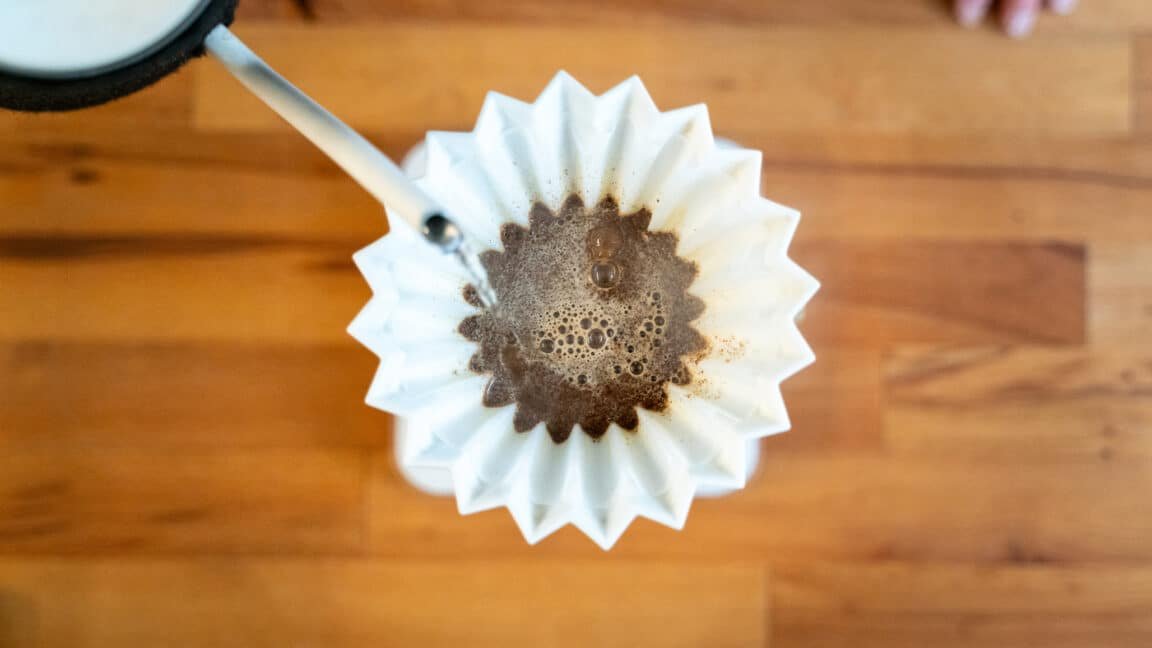
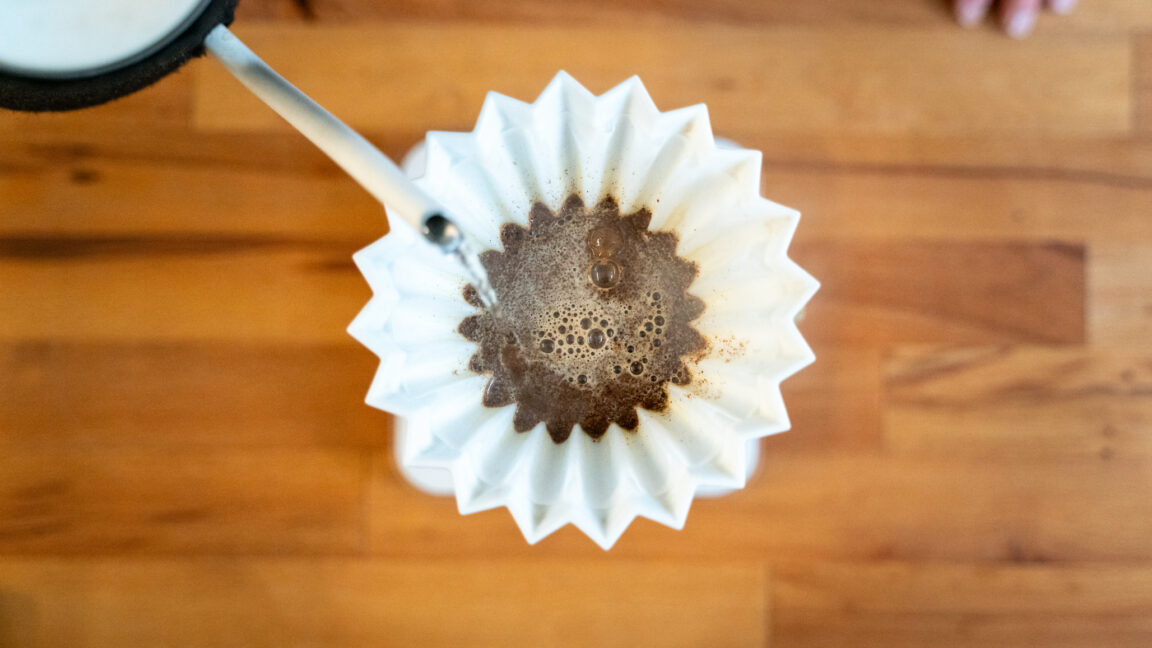
University of Oregon chemist Christopher Hendon loves his coffee – so much so that studying all the factors that go into making the perfect cuppa is an important area of research for him. His latest project: finding a new means of measuring the flavor profile of coffee by sending an electric current through a sample beverage. The results appear in a new paper published in the journal Nature Communications.
We have been following Hendon’s work for several years. For example, in 2020, Hendon’s lab helped create a mathematical model for brewing the perfect cup of espresso again and again, while reducing waste. The flavors in espresso are derived from approximately 2,000 different compounds that are extracted from the coffee grounds during brewing. So it can be challenging for baristas to reproduce the same perfect cup over and over again.
That’s why Hendon and his colleagues tailored their model to a more easily measurable property, known as extraction yield (EY): the fraction of coffee that dissolves in the final drink. This, in turn, depends on controlling the flow and pressure of water as the liquid seeps through the coffee grounds. The model is based on how lithium ions diffuse through a battery’s electrodes, similar to how caffeine molecules diffuse through coffee grounds.
Three years later, Hendon’s team turned their attention to studying why microscopic flakes form in the first place, especially at very fine grinding levels. Static electricity resulting from fracturing and friction between beans during grinding is to blame. Hendon thought reducing static would be a good way to eliminate those clumps. The technical term is triboelectricity, which results from the accumulation of opposite electrical charges on the surfaces of two different materials due to their contact with each other.
Similar charge formation also occurs during volcanic eruptions. So Hendon collaborated with volcanologists Joseph Dufek and Joshua Méndez Harper, who were regulars at the same local coffee house and had noticed remarkable parallels between the science of coffee and plumes of volcanic ash, magma, and water.
His experiments confirmed that adding a squirt of water to coffee beans before grinding could significantly reduce the static electrical charge on the resulting grounds. This, in turn, reduces clogging during brewing, generating less waste and the strong, consistent flow needed to produce a delicious cup of espresso. Good baristas already use the water trick; This is known as the Ross droplet technique. But this was the first time scientists had rigorously tested that famous hack and measured the actual charge on different types of coffee.
<a href