sneaky insects
taenia solium It can infect people in two ways: by eating cysts in undercooked meat or by eating eggs through fecal contamination. The parasites infect pigs, and when they eat eggs from the feces, the worms grow in the pigs’ intestines, burrow through the intestines, enter the bloodstream, and move into various tissues and muscles. There, they develop into encapsulated larvae called cysticerci. If a person eats undercooked meat containing cysticerci, the larvae will develop into adult tapeworms in the person’s intestinal tract and possibly remain there for years. Meanwhile, those infected people may be shedding eggs in their stool.
If those eggs spread in water, food, etc. due to poor sanitation and hygiene and get into a person’s mouth, they do the same thing as they do in pigs. The eggs hatch, enter the bloodstream, and then travel around, embedding in various tissues, muscles, and organs, including the brain.
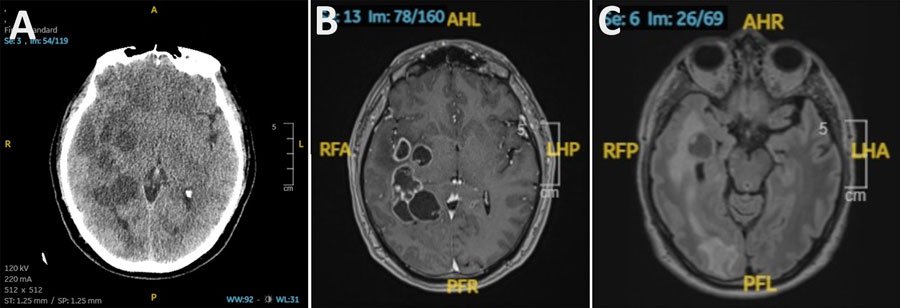
When cysticerci enters a person’s central nervous system, it causes a disease called neurocysticercosis (NCC), which was diagnosed by doctors in Spain. Tests after his MRI showed that his immune system had made antibodies taenia soliumConfirmation of infection.
NCC can be serious, causing seizures, significant neurological deficits, cognitive decline, stroke, and other problems. But it can also be asymptomatic. The severity depends on where the worms settle in the brain. Fortunately for the person, the effects were relatively mild. Doctors gave him two anti-parasite medicines and he recovered.
“Our case emphasizes that the absence of travel history should not prevent NCC from being differentially diagnosed with many ring-enhancing brain lesions, even in areas where metastatic cancer is statistically much more likely,” they concluded. If they had caught the worms early, it could have “prevented unnecessary invasive oncological procedures and enabled prompt, targeted antiparasitic therapy.”
<a href