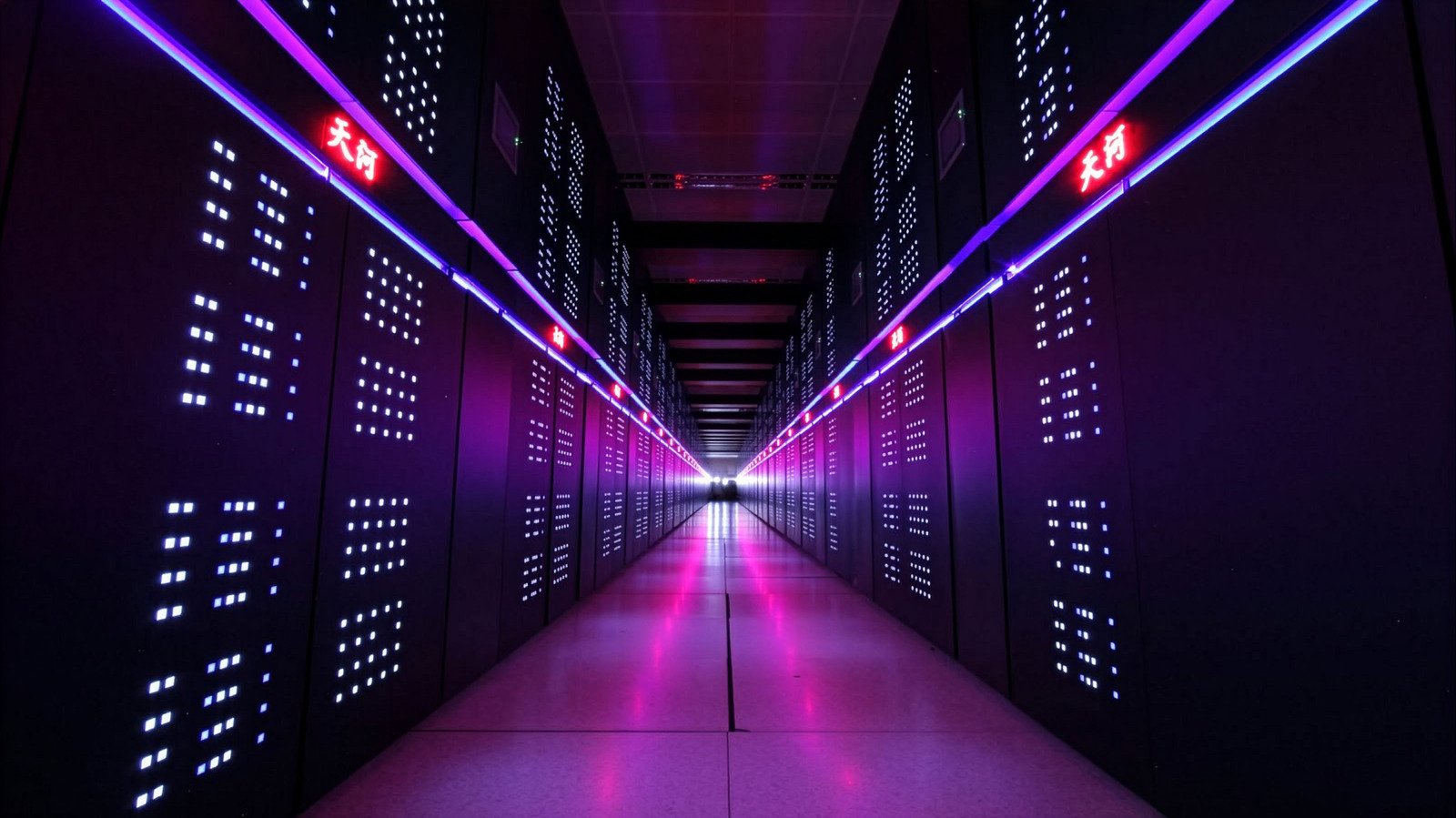
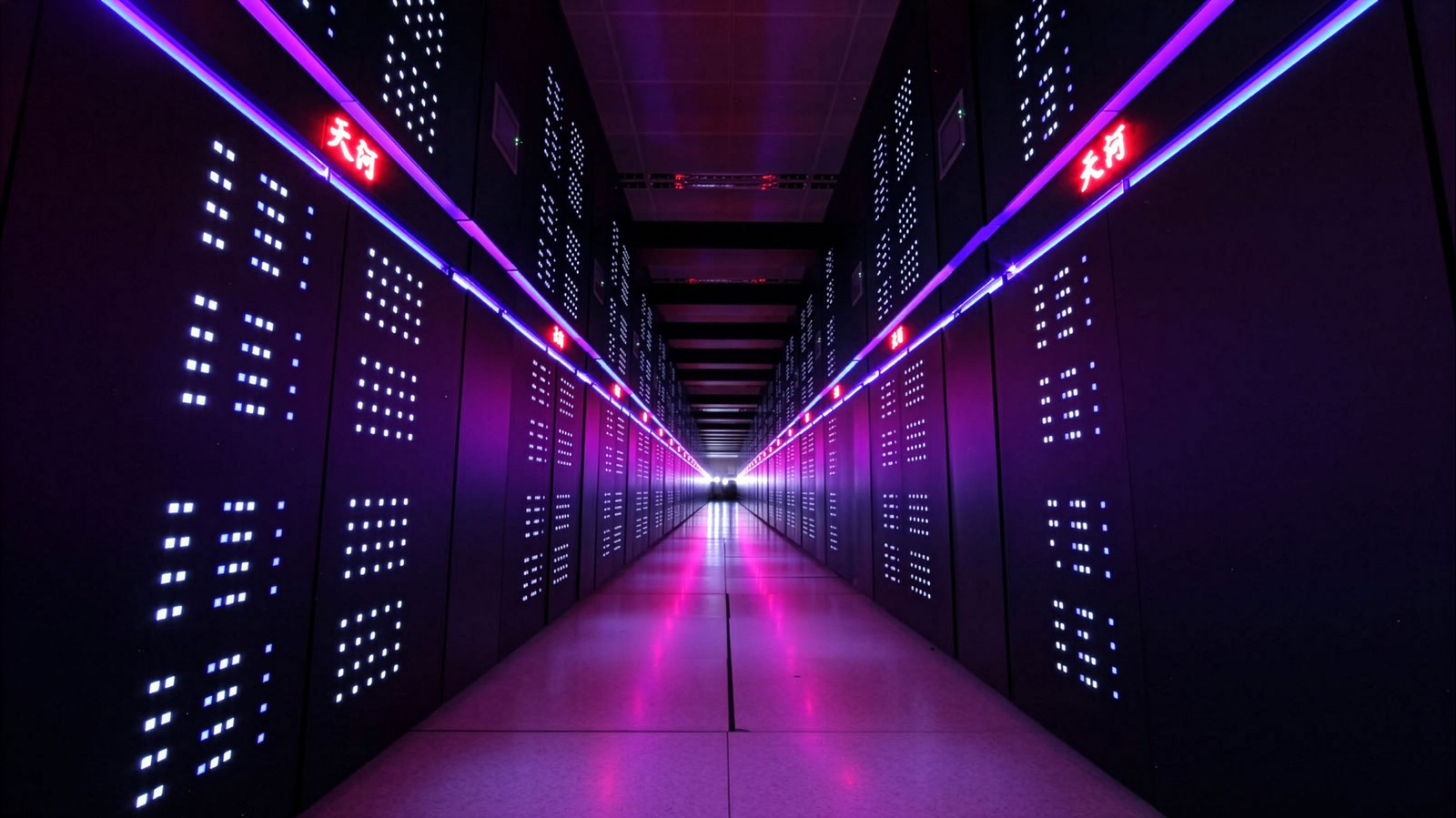
China has won the crown of the world’s fastest supercomputer for the first time since 2017. Lineshine from the country’s National Supercomputer Center demonstrated 2.198 exaflops, beating the previous winner El Capitan (1.809 exaflops), based at Lawrence Livermore National Laboratory in the United States. Lineshine, a previously unlisted machine, is the first supercomputer to exceed two exaflops of “continuous double-precision performance using only the CPU”. Top500.org.
China’s new machine was able to outperform its American counterpart despite technology restrictions because it doesn’t rely on a GPU like other flagship models. Instead, it is designed around a custom 304-core processor, with 13.79 million cores running at 1.55GHz and connected by a proprietary interconnect. It takes about 42.2 megawatts of power for an efficiency of 52.07 gigaflops per watt. “It’s an efficient system,” said Dr. Jack Dongara, organizer of Top500. the new York Times. “They pushed us forward by developing a system that doesn’t rely on GPUs.
Although China managed to take the top spot, the new ranking now has five systems crossing the exascale threshold, one in China, three in the US and one in Germany. Oak Ridge National Laboratory’s Frontier jumped to No. 3 at 1.353 exaflops, while Argonne National Laboratory’s Aurora is No. 4 at 1.012 exaflops. The Jupiter booster at the Jülich Supercomputing Center has reached No. 5 at exactly one exaflop.
The Top500 noted a great deal of architectural diversity on this year’s list, with various supercomputer models using Intel, AMD, NVIDIA, and other architectures. Top500 wrote, “There is no single dominant technology path to leadership-class computing; instead, vendors are adopting a variety of CPU, GPU, APU, and custom-accelerator approaches.”
China often keeps its supercomputer designs secret due to government restrictions. However, Lineshine was developed without public funding, so its designers felt they could submit it to Top500’s tests without any problems. NYT. The company did not reveal any details such as which company manufactured the CPU or what type of chip technology was used.
<a href