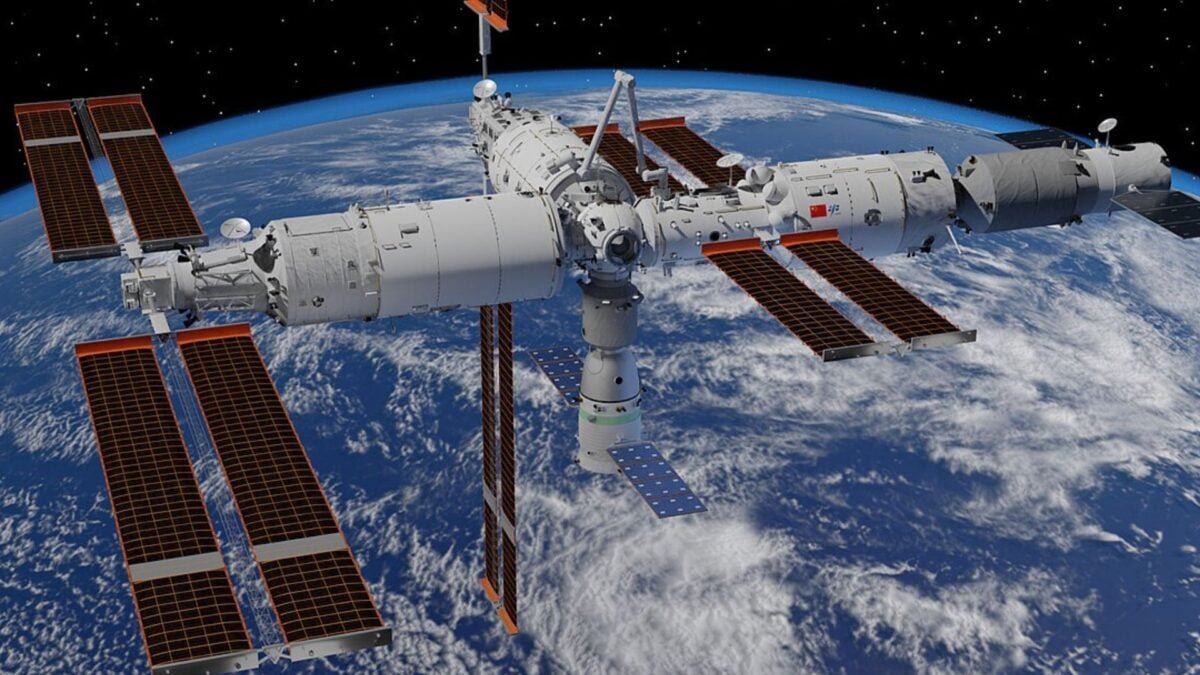

China launched embryo-like structures made from living human stem cells to its Tiangong space station in a first-of-its-kind experiment. The artificial embryo flew on May 10 aboard the Tianzhou-10 cargo ship and spent about five days in low-Earth orbit to replicate the early development stage that occurs after fertilization.
orbital baby making
The experiment, led by researchers from the Chinese Academy of Sciences, is designed to test the effects of microgravity environments on early human embryonic development.
Artificial embryos include two types of models that represent different stages of embryo development. The first set of samples were cultured on uterine cells to recreate the critical stage when an embryo attaches to the uterine wall. Other samples were placed inside a microfluidic chip, which mimics the point when a layer of cells reorganizes itself into different layers that eventually form tissues and organs.
“The human artificial embryo is made of human stem cells as raw material,” Yu Leqian, project leader of the experiment, said in a statement. “It is not an actual human embryo and does not have the potential to develop into a person. However, it can serve as a model to study early human development.”
Each embryo was placed in its own chamber within a culture container. The embryos were allowed to develop for a period of five days before they were frozen. The samples will then be returned to Earth for analysis. Meanwhile on Earth, similar samples were also being studied inside a laboratory to compare how the space embryos performed in the microgravity environment.
“We hope that by comparing the development of space and ground samples, we can identify factors influencing early human embryonic development in the space environment, and address the risks and challenges facing humans during long-term space habitation,” Yu said.
human colony
The period of embryo development on the Chinese space station corresponds to approximately 14 to 21 days after fertilization. This critical window is when human organs begin to form, and any abnormalities occurring during that period will impact fetal development.
Although no one has attempted to have a baby in space before, previous research has shown that the harsh environment can have negative effects on human reproduction. Cosmic radiation and microgravity can damage reproductive cells and interfere with fetal development.
To help mitigate those negative impacts, scientists need to learn more about the risks of reproducing beyond Earth. Hopefully the recent experiment will help fill those knowledge gaps so that humans can be better prepared for the interactions of the birds and bees on another planet.
<a href