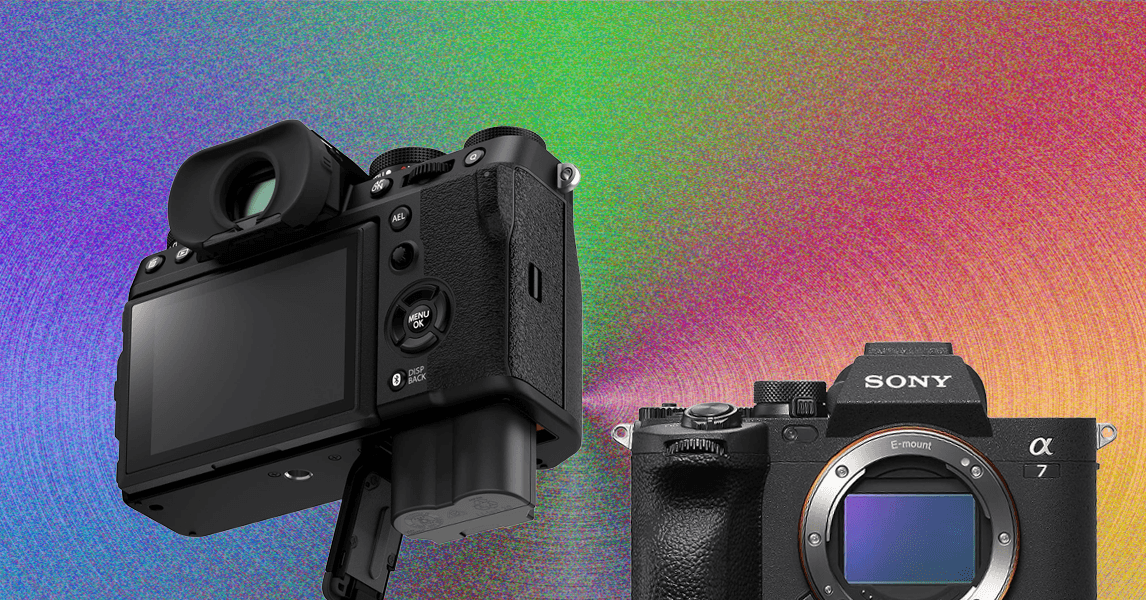
Here are some features to keep in mind depending on the type of images you’re interested in creating. While all the cameras below have these features, performance varies and some, for example, are better at low-light photography than others.
sensor size: Yes, I said it doesn’t and doesn’t matter, but you need to understand this. For example, if you’re interested in shooting wildlife, a higher resolution sensor, such as Sony’s 60 MP sensor in the A7R V, will allow you to crop more images than a 24 MP sensor. On the other hand, there’s no reason to spend extra for more megapixels if you’re not going to use them.
autofocus: When I first picked up a camera in the 1980s, autofocus was a brand new thing. The Minolta Maxxum 7000 was the first SLR camera with an integrated autofocus system and completely changed the way photography worked. The flip side of this is that every image made before the early 80’s was manually focused, so no, you don’t need autofocus to create a great image. Each of the cameras below has extremely fast autofocus. However, accuracy varies, so pay attention to those notes if this feature is important to you.
In-body image stabilization: Often referred to as IBIS, stabilization in the camera body helps eliminate hand shake, allowing you to shoot at slower shutter speeds and still get a clear image. This is especially important for those who want to shoot in low light conditions.
electronic viewfinder: Often abbreviated to EVF, the viewfinder is what you use to compose your shots and there is probably more variation here than any other features between cameras. The viewfinder has a huge impact on how much you’ll enjoy using the camera. This is one place where I suggest you visit your local camera shop to try out the viewfinder in person and make sure it works for you, especially if, like me, you wear glasses.
weather sealing: An often overlooked feature that is important if you want to shoot in adverse conditions. Although it’s never 100 percent, keep your gear out of the weather whenever possible, no matter how sealed it is. A related feature worth looking at is a sensor cover that protects the sensor from dust and dirt when changing lenses.
battery life: All camera bodies have pretty good battery life these days, but there are still some that are better than others. For example, my Sony A7RII runs on battery and I rarely leave with less than 2 backups, which is a pain.
In-camera JPEG quality: All cameras here can save your images as RAW files, JPEG files, or both at the same time. However, some cameras produce better JPEGs than others. Fujifilm is particularly known for the amount of control it provides for fine-tuning in-camera JPEGs, but these days every manufacturer has embraced the idea, with Nikon providing its own system, Sony also having tools, as does Canon. Panasonic’s Lumix line is probably the best with its new ability to put LUTs into the camera.
Once you get your camera, read the manual and learn what it can and can’t do, and then use it over and over again until it becomes a natural extension of your mind. Once you have a comfort level, the gear fades into the background where it belongs, and you can focus on creating the images you’ve always dreamed of creating.
<a href