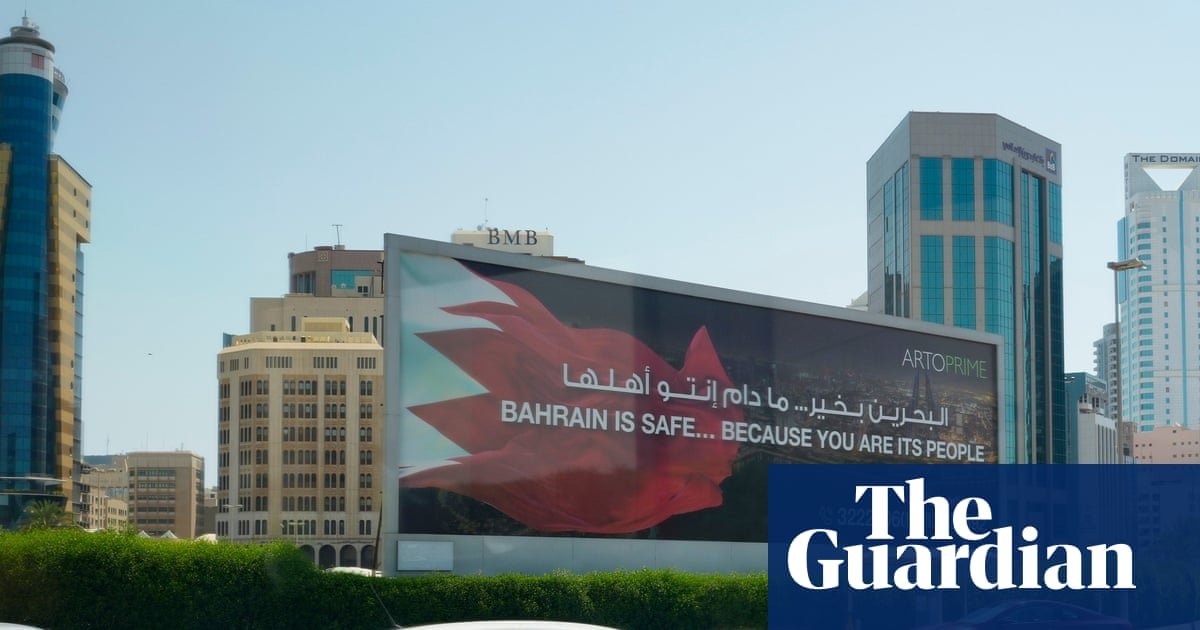
Bahrain said it was attacked by Iran with drones on Saturday, apparently in response to overnight US attacks on Iran. A ship was also attacked in the Strait of Hormuz.
Bahrain’s Foreign Ministry said “several drones” were launched into the country, although there were no immediate reports of damage. It condemned the attack and described it as a “serious threat to the security of civilians and residents”.
No damage or casualties have been reported in an attack on a tanker in the Strait of Hormuz. No one took responsibility for the attack, but Iran is suspected to be behind it.
Iran’s Islamic Revolutionary Guard Corps said earlier on Saturday it had targeted several positions of “US terrorist forces in the region”, without specifying where. Bahrain is home to the US Navy’s Fifth Fleet.
The strikes came as the US military said it struck Iranian missile and drone positions as well as coastal radar sites overnight, in what it said was a response to an Iranian drone attack on a ship in the Strait of Hormuz.
The tit-for-tat attacks are the first incidents of violence between the US and Iran since a memorandum of understanding (MOU) was signed between the two countries last week. The MOU – the first memorandum of understanding of its kind signed by the US and Iran since the 1979 Islamic Revolution – extended a fragile ceasefire and set a 60-day period for negotiations to achieve lasting peace.
Many gaps remain between the two sides, and one of the main obstacles is the Strait of Hormuz, which US President Donald Trump is keen to renegotiate as energy prices remain high and US midterm elections are just months away.
The strait was de facto closed by Iran during the war and its status is still being worked out by Iran, Oman and other regional mediators trying to create a post-war framework for controlling the waterway.
A multinational maritime agency overseen by the US Navy said on Saturday it would expand a passage near Oman across the Strait of Hormuz to increase inbound and outbound traffic. That would threaten a key source of leverage for Tehran, which has used its control of the strait and surrounding shipping as a playing card in negotiations with the US.
The International Maritime Organization halted its efforts to free stranded ships from the strait on Friday, and said it would not resume until guarantees were given that the ships would not be attacked. The organization said it had succeeded in freeing about 115 ships in recent days, while other tankers remained stranded, some for months.
Iran has said ships must obey its orders and has threatened to start charging tolls for ships trying to sail through the waterway. Despite threats and attacks, ships have been trying to leave the strait in recent days.
The US and Gulf countries have rejected Iran’s efforts to control the strait, as it is considered an international waterway.
US Vice President JD Vance, who plays a central role in talks with Iran, said on Friday night that Iran should “pick up the phone” in the event of disagreement, warning that “violence will be responded to with violence”.
Meanwhile, in Lebanon, Hezbollah on Friday rejected a framework agreement reached in Washington between Israel and the Lebanese government. Despite the war between Hezbollah and Israel, Hezbollah is not taking part in the talks.
Hezbollah leader Naim Qassim described the 14-point agreement as a surrender to Israel and said it was “invalid and meaningless”. He accused the Lebanese government of making unnecessary concessions to Israel that undermined the country’s sovereignty.
The document planned for a phased withdrawal of Israeli troops from southern Lebanon, replacing them with Lebanese Army troops who would be tasked with ensuring that no Hezbollah members returned to the area, as well as destroying the armed group’s infrastructure there.
Israel has captured more than 600 square kilometers of south Lebanon, saying it will not give it up. Israeli forces have demolished dozens of villages in the occupied territories and displaced more than one million residents, mainly from southern Lebanon.
Under the terms of the framework agreement, Hezbollah’s disarmament is a prerequisite for the withdrawal of Israeli forces. Hezbollah criticized the effort to disarm the group, with Qassim saying that such a situation would legitimize Israel’s presence in south Lebanon.
Despite the disagreements, a US-brokered ceasefire between Hezbollah and Israel last week has mostly held, with a few exceptions. Israeli army carried out drone attack in Nabatieh area on Saturday. Israel said, without providing any evidence for the claim, that it targeted an individual who “posed a threat to its forces”.
Iran has repeatedly linked the durability of the Lebanon ceasefire and the withdrawal of Israeli troops from Lebanon to the success of peace talks with the US – which Israel and the US have opposed.
<a href