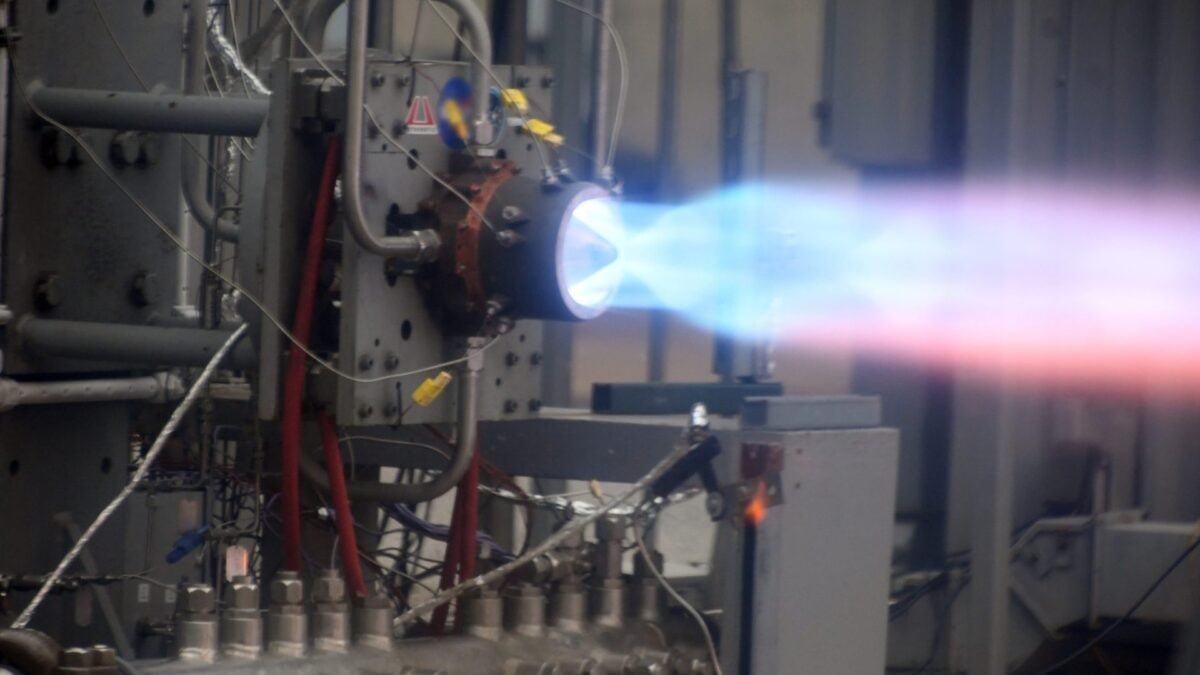
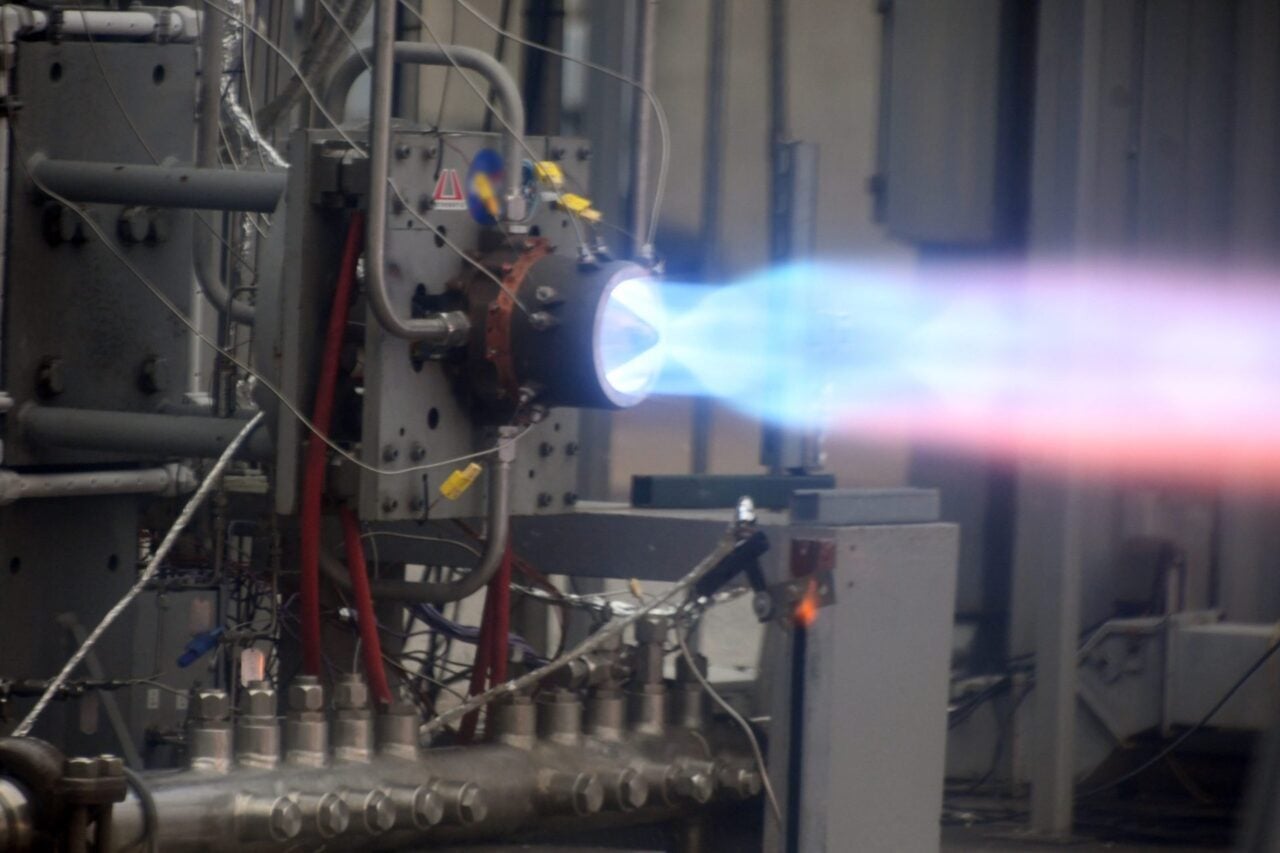
Astrobotic completed a series of hot-fire tests on two engine prototypes at NASA’s Marshall Space Flight Center in Alabama. Each engine produced over 4,000 pounds of thrust (1,800 kg) for a total of 470 seconds of runtime, which included a 300-second burn.
The recent demonstration brings the private space industry closer to a more efficient rocket propulsion system that could allow crewed landers to travel to deep space destinations such as the Moon and Mars.
fire in the Hole
An RDRE produces thrust through a series of explosions that rotate around a circular channel, combining highly pressurized propellant with an oxidizer inside a combustion chamber. Whereas conventional rockets ignite vehicles through engine exhaust, RDREs are powered by shockwaves. As a result, RDRE is designed to be more efficient, using less fuel than other types of propulsion systems, in addition to being compact.
Astrobotic’s prototype engine, named Chakram, is designed and developed with the support of two NASA Small Business Innovation Research Awards and a Space Act agreement with NASA Marshall. “It was designed by a small group working on a modest budget,” Travis Wazanski, Astrobotic’s RDRE program manager, said in a statement. “To see the engine perform flawlessly on the first attempt is a testament to his acumen, ingenuity and cleverness.”
The Pittsburgh-based company said the engine prototypes passed eight hot fire tests, with no evidence of damage to the engine during firing. “With any cutting-edge technology like RDREE, moving from design to testing, you’re always concerned about unknown factors that may be critical to performance. But the engine performed even better than expected,” Bryant Avalos, Astrobotic’s principal investigator for the Chakram program, said in a statement.
on the moon
Astrobotic is a self-proclaimed moon company, developing a lunar lander for NASA’s Commercial Lunar Payload Services (CLPS) program. The startup became the first US commercial company to launch a lander on the Moon with its Peregrine mission in 2024, which unfortunately botched its lunar landing due to a propulsion system anomaly.
A follow-up mission to the Moon’s south pole is currently in the works and is scheduled to launch sometime this year. Astrobotic is hoping to use Chakram-like engines to power its upcoming lunar landers. “RDRE technology can support a wide range of astrobotic missions, from propulsion on future lunar landers to space orbital transfer vehicles and other capabilities that will help expand operations throughout cislunar space,” Avalos said.
Following the recent hot fire test, Astrobotic will continue development of its engine through a series of upcoming design iterations and test campaigns.
The company isn’t alone in working to mature the new technology. In May 2025, Houston-based propulsion company Venus Aerospace used its own RDRE to propel a small rocket to an altitude of 4,400 feet (1,340 m) over the New Mexico desert.
NASA is also developing its own detonation engine, which the agency is scheduled to test for the first time in 2022. A year later, a 3D printed prototype of the engine produced more than 5,800 pounds of thrust for a total of 251 seconds during hot fire testing.
Related Articles: Gizmodo Science Fair: A rocket engine that turns controlled explosions into thrust
<a href