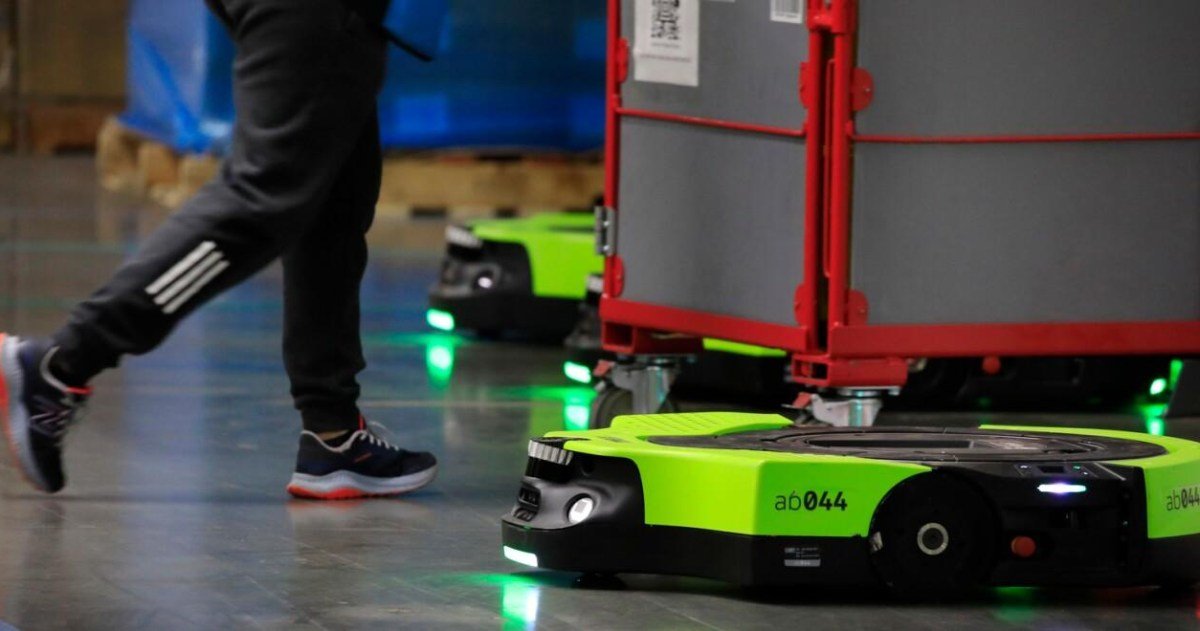
Amazon has announced a new version of its fully autonomous warehouse robot, Proteus, that can interact using language instead of code. The expanded capabilities are part of a growing pivot toward automation as e-commerce giants replace their human workers with robots.
Amazon says the AI-powered upgrade means its human employees can delegate tasks to robots in the same way they communicate with coworkers. Previously, workers needed to use special software to direct floor-level, tortoise-like systems, which are designed to lift heavy items and move large carts in Amazon warehouses. “You tell it what needs to be done. It figures out the priority, the route, the timing,” says Scott Dresser, vice president of Amazon Robotics.
The next generation of Proteus will also operate in a much larger area than the one currently in use, which Amazon says will only operate in dock areas. “The new system can work anywhere objects need to be transported,” the company says. This includes transporting containers as they arrive on site, moving them between jobsites, and assisting staff at fulfillment centers and distribution sites.
The new system is currently being tested in Amazon’s labs, but the company says it plans to deploy it in Europe during the first half of 2027.
Proteus is part of Amazon’s broader robotics roadmap. It said it plans to expand its touch-sensitive robot, called Vulcan, and a collaborative tote-handling system first piloted in Barcelona to more sites across Europe in the coming year.
Amazon says it is “creating new jobs alongside these technologies” and claims to have hired hundreds of thousands of employees globally since introducing robotics into its operations. The company emphasizes that its robots are designed to support workers and streamline operations rather than replace hundreds of thousands of workers with robots.
<a href