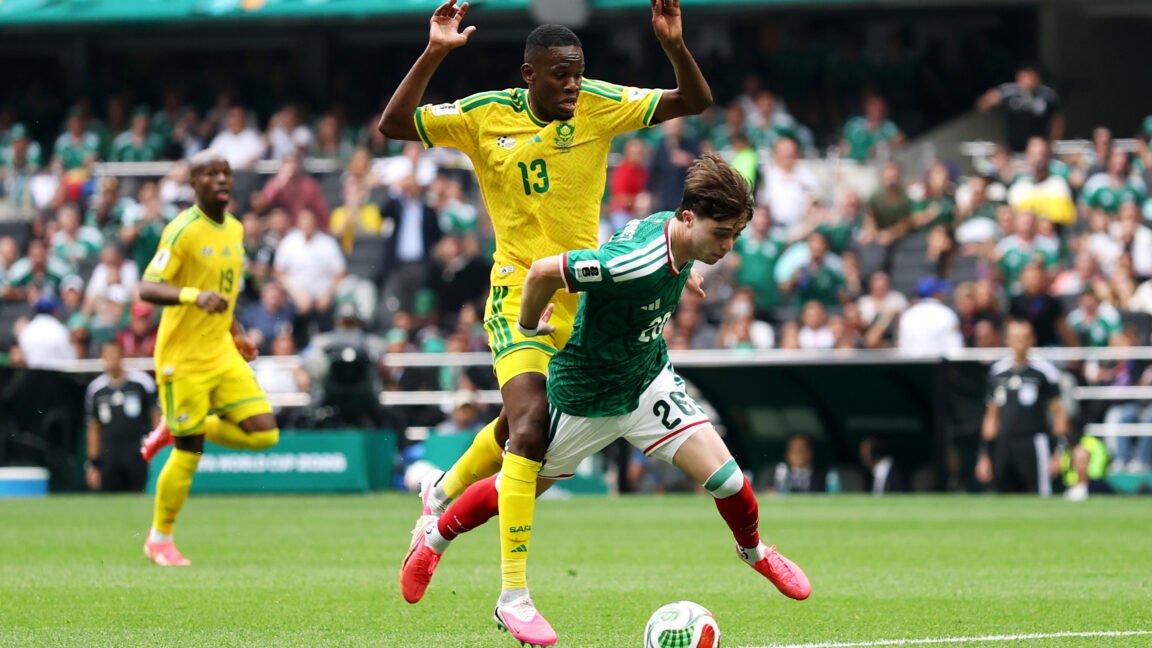
In another effort to reduce time wasted in reviews, VAR will now send instant alerts to sideline officials for obvious, instantly detectable offside decisions, stopping play immediately. This differs from previous systems which allowed play to continue after an infringement, only stopping the action afterward if a notable event such as a goal or penalty occurred.
Holzmüller says his team is confident that upgrades to the accuracy of the VAR system will allow the right calls to be made more often, even on particularly subtle decisions, such as “when only a toe is offside.”
keeper peeper
While most offside plays can be seen by watching slow broadcast footage in video replays, a small number of violations (or non-violations) occur at precise moments between video frames. Despite the rarity of this problem, FIFA is not ready to solve it: Holzmüller says that the combination of 3D scans and ball-tracking data – which can generate higher-resolution data than the 60 frames per second of video by capturing positions 500 times per second – will complement the video footage to provide as complete a picture as possible.
Perhaps the most interesting feature of the Digital Twin technology is the “3D Goalkeeper View” within VAR. This visualizer can show the goalkeeper’s approach and, using the system’s digital inputs, determine whether an attacking player in an offside situation has interfered with the keeper. This interference has long been illegal in football, but the number of players and the size of the field have made it difficult to name accurately.
Hu points to the wide range of potential uses for digital twin technologies in sports, from officiating applications like these to athlete health and performance. As models become more powerful and computing costs fall, they will only improve.
It’s fair to wonder whether the juice is really worth the squeeze just to get an inch or two of resolution on some rare calls. Holzmüller readily admits these advances, and all the technical and financial legwork that come with them, can change only a few calls throughout the tournament. However, from FIFA’s perspective, there is no questioning its value when it comes to the world’s biggest sporting event.
“We have to bring the best technology to the World Cup,” he says. “That’s our goal.”
This story originally appeared on Wired.com
<a href