Drive south from Joshua Tree on 111 and find the Salton Sea, a huge salt lake, on your right. Hydrogen sulfide gas clouds the far edge, vanishing the vanishing point. To your left, the Chocolate Mountains appear like a shadow over the boundless microwave of the desert. Gold mines with names like American Girl and Picacho once attracted hotshot prospectors; Today, Chemgold Corporation owns the latter, and the former is defunct. Now, the ranges host Marines from Yuma who come to practice their targets. While driving 35 miles along the lake on the hottest day of August, the daytime temperature is recorded at 118℉. The relief is 100℉ in the dark of night. With the air conditioning on, the inside of my windshield burns my hand. On this single-lane highway, there are no floodlights and few exits; On the same Highway 86 along the left bank, bright neon gas stations actually serve as beacons.
You’d be forgiven for not believing that you’re headed towards some of the most productive farmland in the world. Nearly all the produce Americans eat in the winter — and much of the alfalfa and Bermuda hay that is fed to dairy cows across the country — grows on Imperial County’s 425,000 irrigated acres, where water is available on demand. On this drive, you might even be surprised to learn that you’ve probably passed enough unused lithium to provide the battery material needed for every person in the United States to own an electric vehicle.
Although the Imperial Valley is one of the largest producers in the US food supply chain and is poised to transform the global trade of lithium, it also has one of the highest unemployment rates in the country. And it’s possible that many Americans have never heard of it. “I would absolutely say this area is unknown. Whenever I try to explain where it is, I say, well, it’s near San Diego, near Palm Springs, near Yuma,” says Imperial Valley historian Tyler Brinkerhoff. “And people are like, so Salvation Mountain? Okay, you’re getting close.”
One Hundred Years of Desert Farming
Yuha and this perennially hot stretch of the Colorado Desert – and its position below sea level and downstream of the Colorado River – became a suitable American winter breadbasket in the early 1900s. That’s when the Imperial Land Company encouraged global settlers to migrate to the valley and claim the rich productive lands. Before capital development, the river would flood and dry up unpredictably, posing challenges to the new farming community.
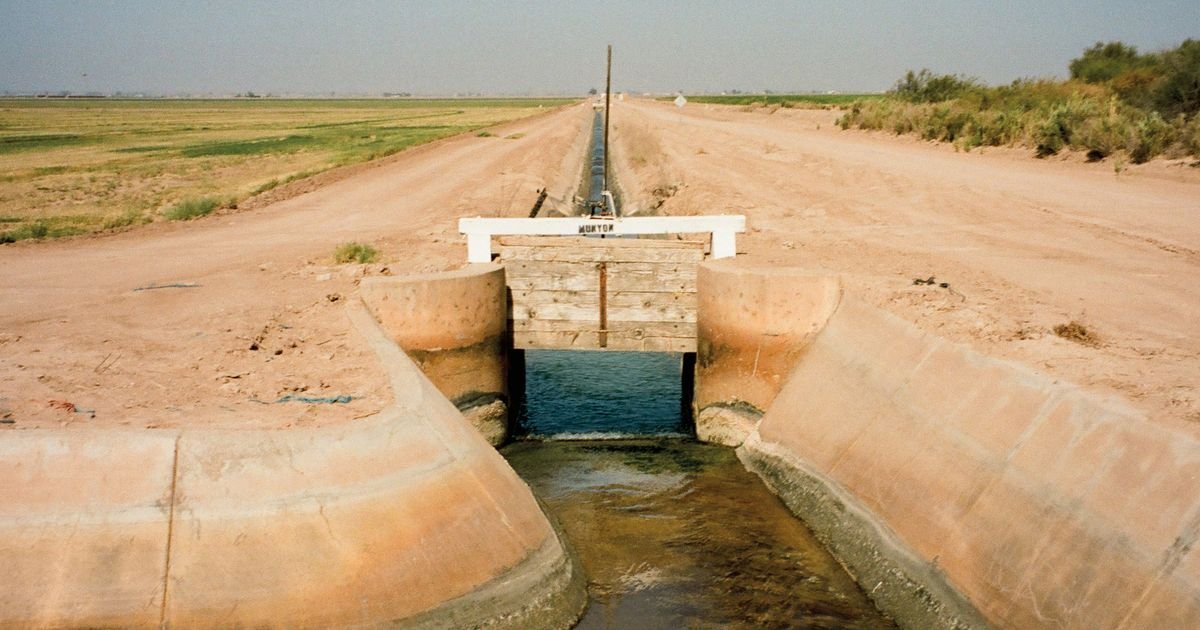
But in 1928, the Boulder Canyon Project Act created both the Hoover Dam and the All-American Canal, an 82-mile-long aqueduct that stretched from the Colorado River, delineating Arizona and California, to Imperial County. The resulting engineering today allows a farmer to order water in the afternoon and have it flowing into his fields the next day through irrigation drains that line the farm’s square plots.
It becomes clear that Imperial County is a sandbox of extremes, a place where land use can quickly turn into a lose-lose game. In 1905, torrential rains caused irrigation canals originating from the Colorado River to flood. Two hundred feet below sea level, the Salton Sea was the result of an agricultural accident. By the 1990s, polluted runoff turned the rest site into one of the country’s largest ecological disasters.