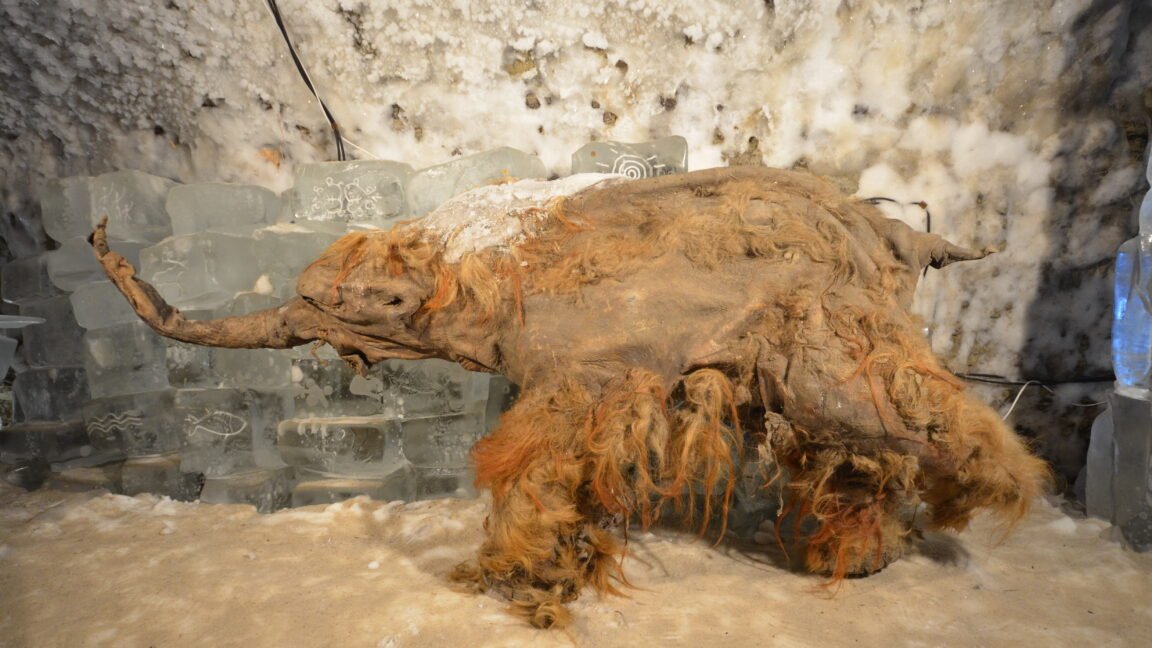
A young woolly mammoth now known as Yuka was frozen in Siberian permafrost for about 40,000 years before being discovered by local tusk hunters in 2010. Hunters soon handed it over to scientists, who were excited to see its excellent level of preservation, with its skin, muscle tissue and even red hair intact. Later research showed that, while complete cloning was impossible, Yucca’s DNA was in such good condition that some cell nuclei could initiate even limited activity when placed inside a mouse egg.
Now, a team has successfully sequenced yuca’s RNA – a feat that many researchers once thought impossible. Researchers at Stockholm University carefully collected pieces of muscle and other tissues from Yuka and nine other woolly mammoths, then used special chemical treatments to take out the remaining RNA fragments, which are typically considered too fragile to survive even hours after an organism dies. It takes considerable effort for scientists to extract RNA even from fresh samples, and most previous attempts with very old samples have either failed or been contaminated.
a different view
The team used RNA-handling methods adapted to ancient, fragmented molecules. His scientific practice allowed him to discover information that was never available before, including which genes were active at the time of Yuka’s death. In the creature’s final terrified moments, its muscles were tense and its cells were signaling distress – perhaps not surprising since Yuka was believed to have died as a result of a cave lion attack.
This is an outstanding level of detail, and one that scientists cannot achieve by analyzing DNA alone. “With RNA, you can access the real biology of a cell or tissue, happening in real time in the last moments of an organism’s life,” said Emilio Marmol, the researcher who led the study. “In simple terms, studying DNA alone can give you a lot of information about the entire evolutionary history and lineage of the organism under study. “By obtaining this delicate and mostly forgotten layer of cell biology in old tissues/specimens, you can get a complete picture of the entire pipeline of life (from DNA to proteins, with RNA as an intermediate messenger) for the first time.”