England is likely to face tighter restrictions on wood-burning stoves under new pollution targets set as part of an updated environment plan released by ministers on Monday.
Speaking to the Guardian ahead of the publication of the updated Environmental Improvement Plan (EIP), Emma Reynolds, the Environment Secretary, said it would promote the restoration of nature in many areas, replacing the EIP under the previous government which she said was “not credible”.
Reynolds said efforts to restore nature would now be at a “strategic level” rather than the earlier piecemeal approach, meaning that the government’s push to build housing and infrastructure could still come with a net gain in habitats.
One element of the new EIP will be tightening targets for concentrations of PM2.5 particle pollutants to match current EU targets, something that was not part of the previous plan published in 2023 under the Conservatives.
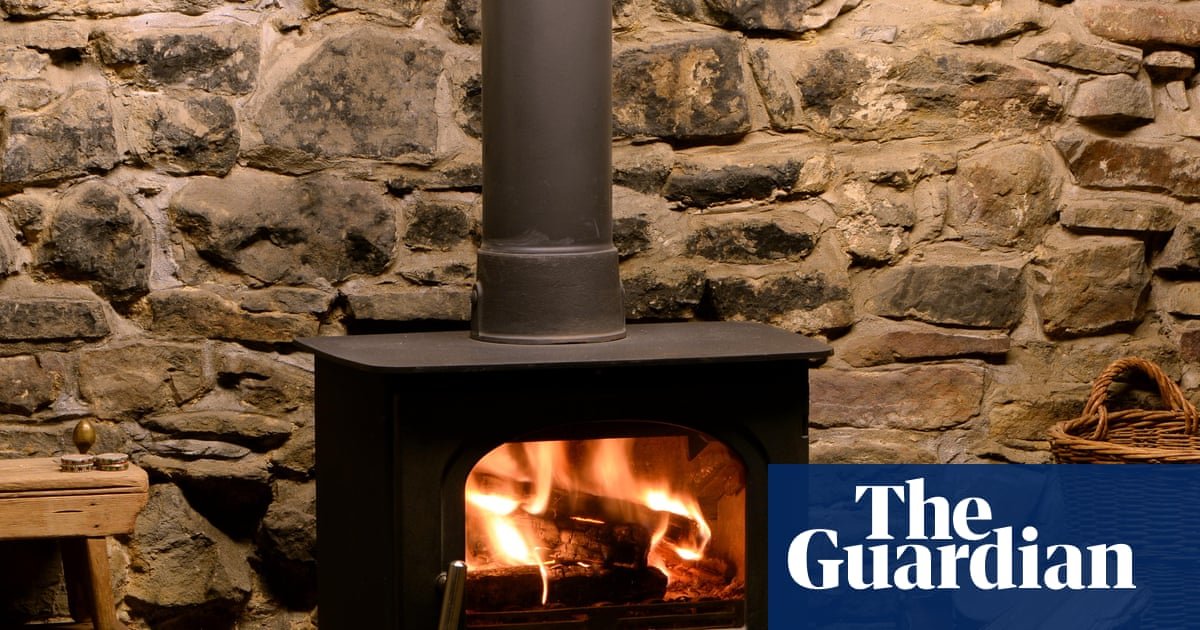
According to Reynolds’ department sources, this will include consultation on possible measures to reduce PM2.5 pollution, including from wood-burning stoves and fireplaces.
This could include tightening pollution limits in smoke control areas that limit the burning of already limited fuels: for example, stipulating that wood can only be burned in approved types of stoves or burners, not in fireplaces.
This could mean effective bans on older appliances and, in some places, it may not be possible to use a wood-burning stove at all.
The current annual PM2.5 limit is 25ug/m3 (micrograms per cubic meter), with the goal of meeting 10ug/m23 By 2040. EU standards are stricter, with a new directive passed last year calling on member states to meet 10ug/m2.3 By 2030.
The World Health Organization recommends an annual limit of 5ug/m3It is understood that the EIP will ultimately bring UK standards into line with those of the EU with the aim of meeting WHO targets,
Exposure to PM2.5, which settles deep into the lungs, is linked to many health conditions, including asthma, lung disease, heart disease, cancer and stroke. Domestic combustion accounted for 20% of PM2.5 emissions in 2023 and was found to produce more pollution than traffic.
Elsewhere in the EIP, Reynolds will set out how £500m of existing departmental funding is to be allocated to landscape recovery projects, large-scale efforts to restore landscapes and ecosystems, often working with farmers and other landowners.
This will include a specific target of restoring or creating 250,000 hectares (618,000 acres) of wildlife-rich habitats by 2030.
The EIP is required under the Environment Act with the intention that it should implement a more general commitment to improving the environment within a generation.
For the first time, as part of the new EIP, the Government will publish detailed Environment Act target delivery plans, which will set out how action will contribute to its targets and help measure progress.
Reynolds argued that such steps should reduce fears about nature depletion due to house building and other projects, after raising fears that government planning and infrastructure bills could reduce protections and lead to green spaces being lost.
After newsletter promotion
“What we’re talking about is restoring nature, not door-to-door, but at a more strategic level. We can be both pro-growth and pro-homeownership and pro-nature,” he said.
“The last EIP, under the previous Tory administration, was not credible. I believe our EIP is credible, because it has these delivery plans built into it. You can’t just set targets. You have to explain how you’re going to achieve those targets. And that’s what we’ve done.”
The new EIP is also expected to include the previous plan’s commitment for every household to be within 15 minutes’ walking distance of a green space or waterway.
Other measures to be announced Monday include a new “Chemicals Forever” plan to reduce the amount of PFAS in the environment and a ban on illegal waste dumping.
Ruth Chambers of the Green Alliance thinktank said the new EIP is “an important milestone and an opportunity to use the collective influence of government to do better for nature”.
He said: “Now this must be swiftly translated into the sustained action needed to restore nature, clean our rivers and air, create a circular economy and help people reconnect with the natural world.”
<a href