Mary O’Reilly,bbc local investigation

 BBC
BBCBreast cancer patients at an NHS trust in north-east England faced unnecessary mastectomies, delayed diagnoses and a lack of compassionate care, the BBC has learned.
More than 200 cases are now being investigated at County Durham and Darlington Foundation Trust (CDDFT) – 43 of which are reported to have caused significant harm. One death is also being investigated.
Women have told us they felt “butchered” because of the surgery, while a leading expert says what happened at the trust was “a textbook example of how not to manage breast cancer”.
In addition, we found that almost £6 million was paid by the trust to privately run clinics run by its chief breast cancer surgeon.
In total, the medical records of around 1,600 patients treated from 2023 are now being examined after concerns were raised about the service provided by the trust.
An independent review of the CDDFT’s operations by governance expert Mary Aubrey has also been published this week. Among the shortcomings highlighted are:
- Outdated clinical practices that did not meet guidance on best practice, and which led to delayed diagnosis and missed cancers
- Higher rates of “re-excision” (repeated procedures) and lower rates of breast reconstruction immediately after mastectomy
- Operations that may have been performed “too quickly”
- Many patient appointments were outsourced in a way that created a “conflict of interest” and “threatened clinical standards”
The Aubrey review said “persistent concerns” had been raised since 2012, when the trust lost its status as a training center for breast surgery services. In subsequent years, it “failed to act on repeated warnings and evidence… which allowed unsafe and outdated practices to persist”.
The CDDFT has apologized “to the women and their families who suffered harm as a result of our poor care”, and acknowledges that “over many years, warning signs were repeatedly missed or not acted upon”.
delays and wounds
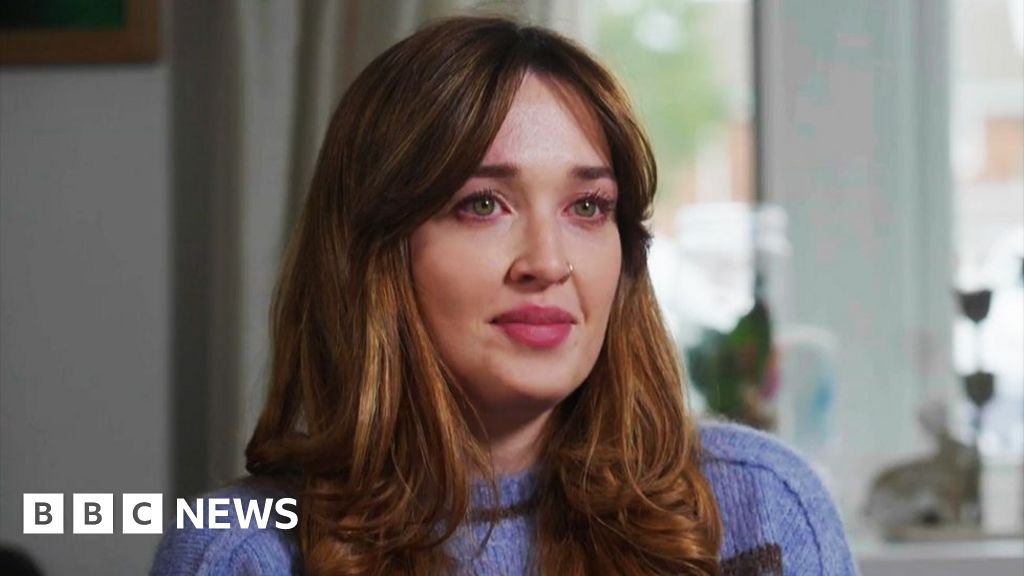
Kate Driver, who is 31 and from Chester-le-Street, is one of several women we spoke to who were treated by CDDFT’s breast cancer service.
Before Christmas 2023, Kate found a lump in her right breast. She was referred to the Trust by her GP for an appointment with a specialist.
Although this was an NHS appointment, it took place at a private clinic held at Spire Hospital in Washington, where she was seen by Mr Amir Bhatti, the trust’s clinical lead for breast surgery.
They performed a test called fine needle aspiration (FNA), during which a sample of cells is removed to test for cancer.
What she did not know was that FNA tests are not considered best practice for breast biopsies, as they may yield inadequate samples, and pose a risk of missed, incomplete, or delayed diagnosis.
According to the trust’s website, Kate’s test results were to be made available within 48 hours. In fact, the testing was inconclusive, and Kate had to wait several weeks before she was finally told she had breast cancer.
“Waiting so long and chasing everything made it a hundred times worse than it needed to be,” says Kate. “I couldn’t eat, I couldn’t sleep. It felt like no one really cared, no one was taking it seriously.”
There was more bad news to come. Kate was told that she would need a mastectomy, but was advised that because of her particular type of cancer, she should not have breast reconstruction at the same time.
“They would completely remove my right breast and leave me with nothing, just a big scar,” she says.
Kate sought a second opinion at another trust in Newcastle, where she was told there was no reason why she should not have breast reconstruction immediately after her mastectomy. Instead he chose to get treatment there.
County Durham and Darlington NHS Trust has apologized to Kate, saying her care was “below acceptable standards”.
She made a formal complaint about Mr Bhatti’s treatment of her, which she says left her traumatised.
Spire Healthcare says the treatment and follow-up care of the clinic’s patients was the responsibility of CDDFT.
Mr Bhatti told us he was unable to comment on specific cases due to patient confidentiality and urged patients to contact the trust directly.
Research by 2024 shows that almost half of women with breast cancer at County Durham Trust had a mastectomy. According to 2022 parliamentary evidence given by the charity Breast Cancer Now, the UK average was around 27%.
Furthermore, only 7.5% of mastectomies performed by CDDFT were followed by immediate breast reconstruction – well below the national recommended minimum of 25%.
Dawn Guillot is another breast-cancer patient whose treatment is being investigated at the trust.
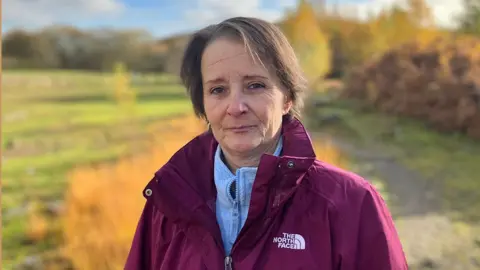
She told us she was given no option but a mastectomy: “I felt like I had no choice. It was like ‘You’ve got this and that’s all there is to it’.”
She says she was left with a large wound that left her feeling “butchered”.
“I can’t look at myself in the mirror after showering because this scar is a constant reminder that it’s horrible.”
Due to the operation, Don is experiencing constant pain in his chest and under his armpits.
“Was my mastectomy necessary?” She reflects. “Maybe it wasn’t. Maybe I could have had a lumpectomy.”
An ‘overly liberal’ system?
Between 2022 and 2024, more than half of patients referred to CDDFT for breast cancer testing or urgent screening – like Kate – are initially referred to one of two private two-week-wait clinics paid for by the NHS.
Amir Bhatti ran these clinics, and was also the director of one of the companies behind them – Durham Surgical Services.
The BBC found that the companies were paid on a per-patient, or per-appointment, basis, costing the trust almost £6m between 2019 and April 2025.
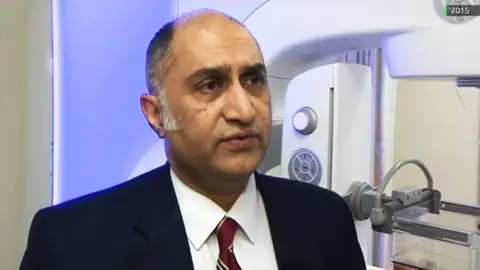
This arrangement was considered “overly generous” by some staff who were interviewed for a Royal College of Surgeons (RCS) report on treatment and care at the trust published earlier this year.
The clinics generally operated out of hours, seeing patients in the evenings and weekends.
The RCS raised concerns about the high turnover of appointments and commented that it is not unusual for a clinic to “run by 23:30”.
“Obviously there was an incentive to see as many people as possible because of the per capita payment,” says Professor Ian Fentiman, emeritus professor of surgical oncology at King’s College London.
lack of compassion
The BBC has also heard allegations from breast cancer patients of a lack of compassion and care at both the trust’s clinics and hospitals.
Catriona McEvoy, from Stanley, County Durham, told us she feels women are being treated “like a conveyor belt” by doctors.
She says she was shocked by a doctor’s response during a hospital appointment when she told him her breasts had become infected after a lumpectomy.
She says that, without talking to her, giving her painkillers or asking her permission, the doctor simply “took out his surgical knife” and cut off her breast to drain the infected area.
“There was no dignity in it,” says Catriona.
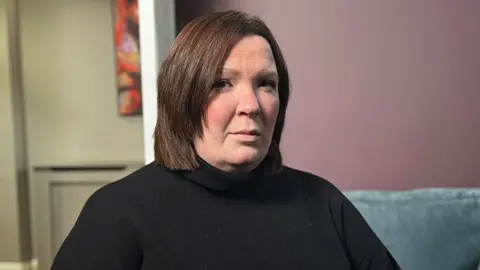
We contacted the doctor who Catriona says performed the procedure, but he declined to comment. The trust has told the BBC that he is now under surveillance.
The Royal College of Surgeons report identified serious concerns about the speed and quality of breast surgery. “It appears that some surgical procedures were performed very rapidly,” it said.
These included a mastectomy and lymph node procedure performed in 28 minutes and excision of benign thick breast tissue in 10 minutes, “which the review team considered unnecessary”.
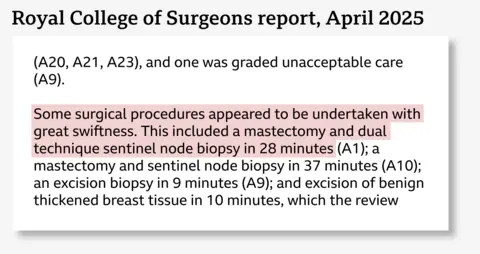
The RCS also noted “a very high re-excision rate” – in other words, repetitive operations.
According to Professor Fentiman, the RCS review was a “terrible indictment” of a “third-rate” breast clinic service. “Things were being done wrong in every way,” he says.
This followed two other important reports into the breast care service at CDDFT.
In 2019, an internal NHS Getting It Right First Time (GIRFT) report highlighted a number of concerns about breast surgery in CDDFT. Catherine Byrne, the trust’s executive director of nursing, told the BBC that concerns were discussed in the report, but no further action was taken.
The GIRFT report, with a 2024 review carried out by a team of experts from the Northern Cancer Alliance, was not made public until the BBC made a freedom of information request.
‘Not very good’
Steve Russell, who will be appointed chief executive of County Durham and Darlington Foundation Trust in September 2025, says: “The important thing… is to say how deeply I regret that we have let down the women who have been cared for in our breast services.”
“I can only imagine the distress and pain that has been caused to individuals and their families and the loss of trust and confidence in us as an organization.”
“It’s fair to say that there were a lot of missed opportunities. It wasn’t good enough and it’s not good enough that we were too slow to act on the information that was out there.”
He adds, “I’m committed to making changes so this never happens again.”
Along with the new Chief Executive, a new interim Chairman of the Trust has also been appointed. NHS England told us it would “continue to support the new leadership and partner organizations to make the necessary improvements”.
In a statement, Mr Bhatti said he was disappointed at not being given the opportunity to comment on the draft findings of the RCS report. He told the BBC that it contained “some factual inaccuracies” which he believed led to “wrong conclusions”.
He also told us that “serving the best interests of all our patients is paramount” and, when things go wrong, “we learn from it and make the necessary changes and improvements”.
Earlier this year, the trust had stopped using the clinics run by Mr Bhatti. She is no longer in clinical leadership of the breast service, treating breast cancer patients or performing surgery while the investigation continues.
In a statement to the BBC, his spokesperson said: “Mr Bhatti has been raising concerns about the adequacy of equipment in the breast cancer department since May 2021. He looks forward to working with everyone involved in any way possible.”
If you or someone you know is affected by cancer, bbc action line There is a list of organizations that may be able to help.
Additional reporting by Ben Milne
<a href