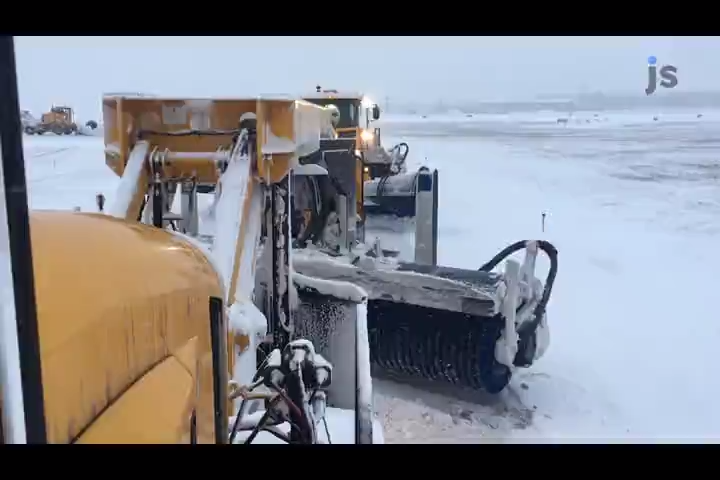

How snow is cleared at Mitchell International Airport
Mike De Sisti, Milwaukee Journal Sentinel
The first major winter storm of the year is forecast to hit northern Wisconsin on Tuesday, November 25, dropping up to 30 inches of snow in parts of the state.
As of 3 p.m. Tuesday, the National Weather Service office in Duluth, Minnesota has issued a winter storm warning for most of northern Wisconsin, including Vilas, St. Croix, Rusk, Barron, Price, Burnet, Sawyer, Washburn, Oneida, Forest and Florence counties. The northernmost areas – Bayfield, Ashland, Iron and Douglas counties – are under a blizzard warning.
Warnings begin at 6pm on Tuesday, November 25 and continue until 6am on Thursday, November 27 in some areas. You can find the full list of warnings and advisories here.
Although northwest Wisconsin will see the heaviest snowfall, the NWS has also issued winter weather advisories as far south as La Crosse and Sheboygan. Areas under winter weather advisories could see two to five inches of snowfall, along with strong winds, according to NWS meteorologist Ketzel Levens.
Levens said that while potential snow accumulations vary, warm water temperatures in Lake Superior will likely result in heavy lake-effect snowfall in many counties. Douglas and Bayfield counties are expected to see up to 18 inches of snow, while Ashland and Iron counties and northwestern Vilas County could see 24 to 30 inches.
Along with Ironwood, Michigan, the town of Hurley — known as the snowiest place in Wisconsin — will be the “bulls-eye” of the event, Levens said. These two cities, located on the Wisconsin-Michigan border, could see more than 30 inches of snowfall.
The NWS warned that travel could be very difficult, with winds up to 45 mph and snow. High winds can knock down tree branches and isolated power outages are possible.
Levens said travel during the Tuesday morning and evening rush hours “shouldn’t be too bad,” but anyone traveling after Tuesday evening or on Wednesday should be prepared for snow. He said in areas under blizzard warnings, travel could be “almost impossible” during the storm.
“If you’re driving north between 6 p.m. and midnight Tuesday, we’ll see rain start to change to snow,” Levens said. “By Wednesday, everything should be iced over.”
The NWS says visibility on the road could drop to a quarter mile. The warning says hunters in the Northwoods should prepare for very difficult travel conditions Tuesday and Wednesday evening.
What else to know about warnings:
View Wisconsin Weather Radar
what to do in a winter storm
During a winter storm, the NWS recommends staying indoors, stocking up on food and water, and charging essential devices in case of power outages.
If you are without shelter, you can visit the 211 Wisconsin website or call 211 to locate the nearest warming services.
wisconsin road conditions
The NWS recommends not driving during the storm, as snow, sleet or ice can create hazardous driving conditions. For live updates on winter road conditions and accidents in Wisconsin, see the 511 Wisconsin map.
If you must drive, here are some guidelines for driving on icy roads, according to the Wisconsin Department of Transportation:
- Keep a safe distance between snow plows and large trucks. Stay at least 200 feet back from any working plow to ensure that your visibility is not obscured. Maintain a safe distance even behind trucks on the highway, as chunks of snow or ice may fly over fast-moving commercial vehicles.
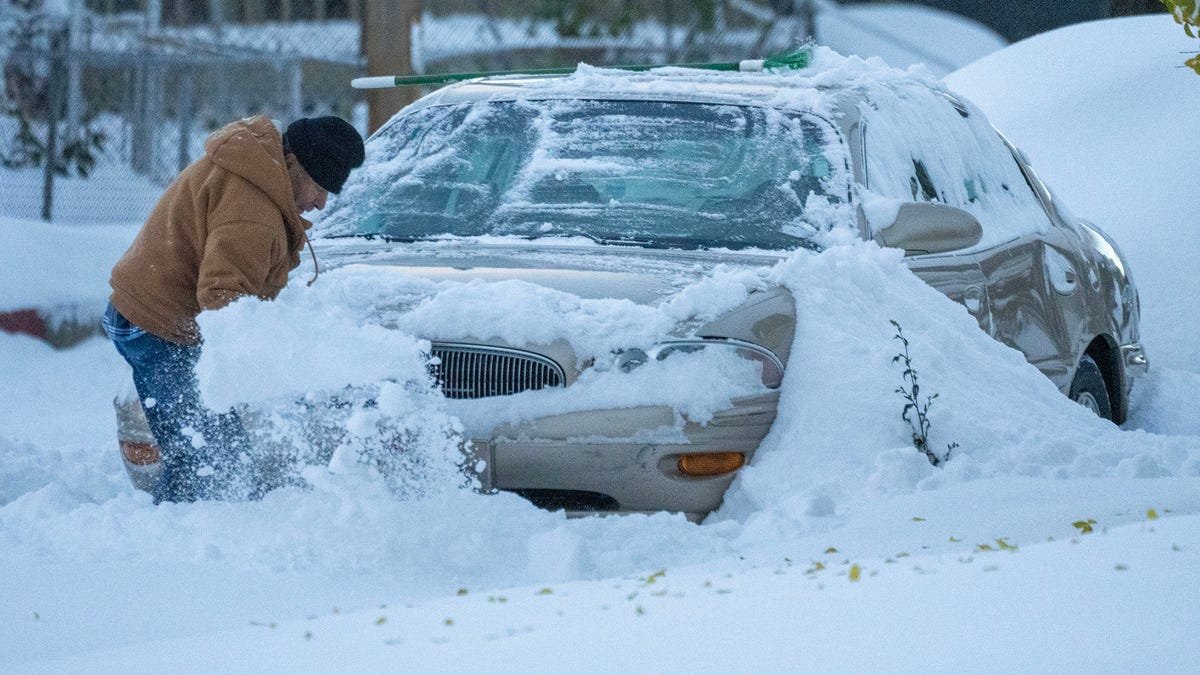
- clear snow and ice From your vehicle’s windows, roof, hood, and front and rear lights. You can do this by warming up the car and then using a snow brush and ice scraper to clear the snow and ice.
- drive slowly, Allowing extra travel time and leaving extra distance between vehicles.
- Turn on your low-beam headlights. WisDOT says state law requires drivers to turn on their vehicle’s low-beam headlights any time weather or other conditions make it difficult to see objects 500 feet ahead.
- Use brakes quickly and carefully. With anti-lock-brake, use strong, steady pressure and drive slowly. Never use cruise control during winter weather.
- Be careful on bridge decks and overpasses. These areas can be especially slippery when snow accumulates on the roads.
What is a winter storm warning?
A winter storm warning is more serious than a watch or advisory. Here’s what the different alerts mean, according to the NWS:
- A winter storm warning means snow, sleet or freezing is possible, so take action.
- A Winter Storm Watch means such conditions are possible, so be prepared.
- A Winter Weather Advisory means that winter weather is expected, so be careful.
This weather report was generated automatically using information from the National Weather Service and a story written and reviewed by an editor. It was updated to add new information and correct an inaccuracy,
Check out the latest weather alerts and forecasts here
<a href=