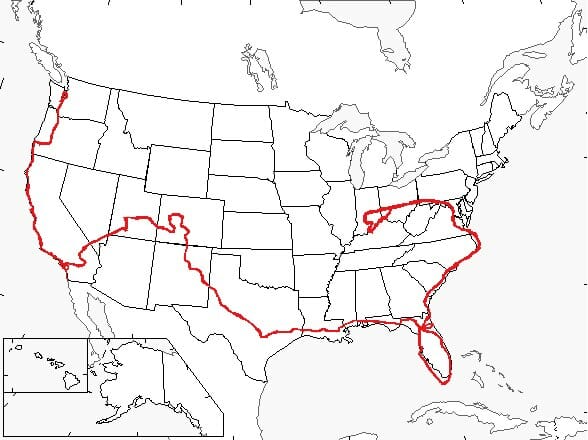
Computing across America (1983–1985)

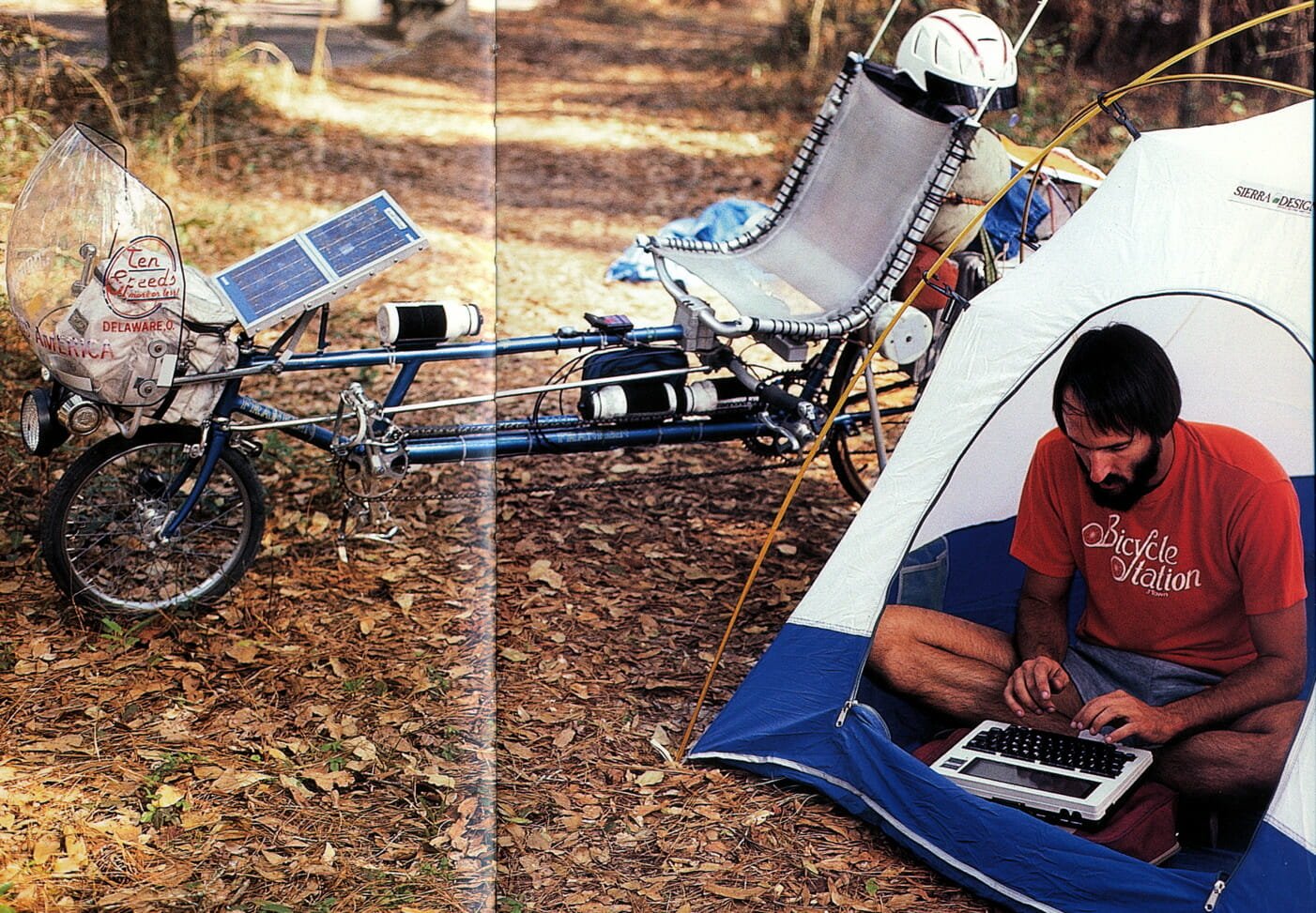
Original Winnebiko In January, 1984 – already 3,000 miles into the adventure, which would make a total of 17,000 miles. (Photo by Katie Peden near Clearwater, Florida)
technology the story begins In a time of primitive computer and communication technologies. Cellular phones did not yet exist, cumbersome text-only services online cost a few dollars an hour, and people were debating whether one could actually work at home rather than in the office.
I had just turned 30, and was looking for a publishing-inspired geek adventure… a way to escape Ohio suburbia and combine all my passions into a nomadic lifestyle. After six months of obsessive preparation, I hit the road in September 1983 on a custom recumbent bicycle with a solar-powered portable computer (the venerable Radio Shack Model 100), a CompuServe account, and a base office. The idea was to have a way to stay in touch with clients and publishers while traveling full time, and as the months went by I Refined toolset To make my physical location less and less relevant. ,work from home? Work anywhere!“I wrote excitedly, feeling that I was on the cusp of great cultural change.

Steven K. roberts is riding Winnebiko – Photo by John Delzell in Palatka, Florida
It started out simply as a high-tech bicycle trip, but I didn’t expect the media to become enthralled with the idea of nomadic connectivity… combining new information tools into a mobile lifestyle that also happened to be visually distinctive with recumbent bicycles, solar panels, antennas, and more. My bike commuting was becoming a career.
As the adventure progressed, I wrote a book called Computing across Americaproduced column And features To various magazines, gave regular interviews and watched his whole life change. The Ohio suburbia faded to the size of a speck in my rear-view mirror, and I fantasized about the next generation of technological gadgets.
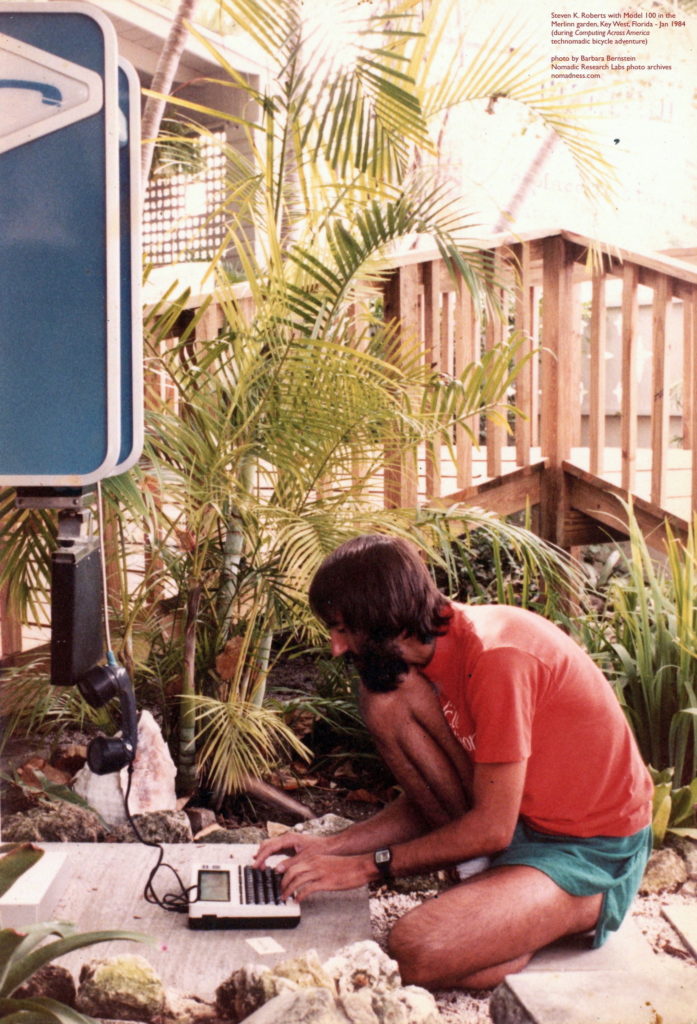
This first iteration took place between 1983 and 1985, but the technological world was rapidly developing and some parts soon began to seem obsolete. By the end of 1984, I had switched to a more capable Hewlett Packard Portable, and was designing a system that would allow me to write while riding as well as maintain a stable wireless link to readers. When the 10,000-mile mark rolled around (in Silicon Valley, appropriately enough), I decided to take a year off the road to finish the book and create a whole new system. On the reliable framework that had gotten me here.
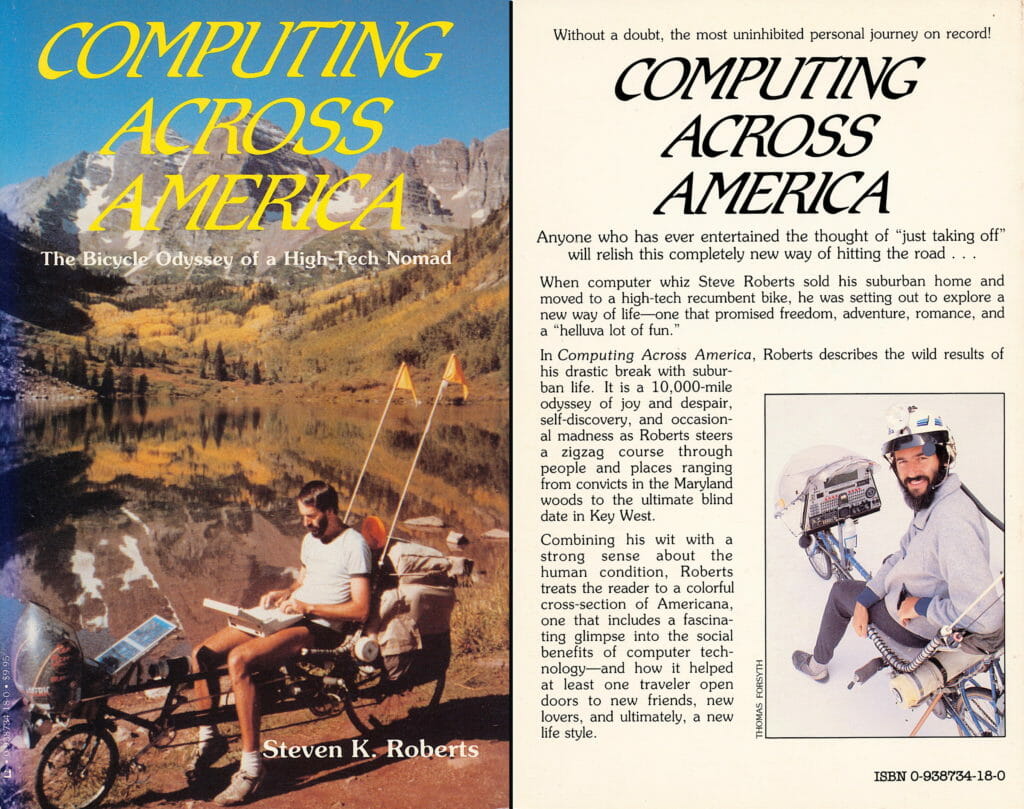
My book about the first 10,000 miles. Cover photo by Jeffrey Aronson at Maroon Bells near Aspen, Colorado; Back cover photo of Winnebico II by Thomas Forsyth in Eureka, California
Here are some of my favorite references to the post in the archives Winnebiko Era. There are links to previous/next articles below each if you want to learn further; There are dozens of stories, newspaper articles, and technical pieces covering this leg of the journey:
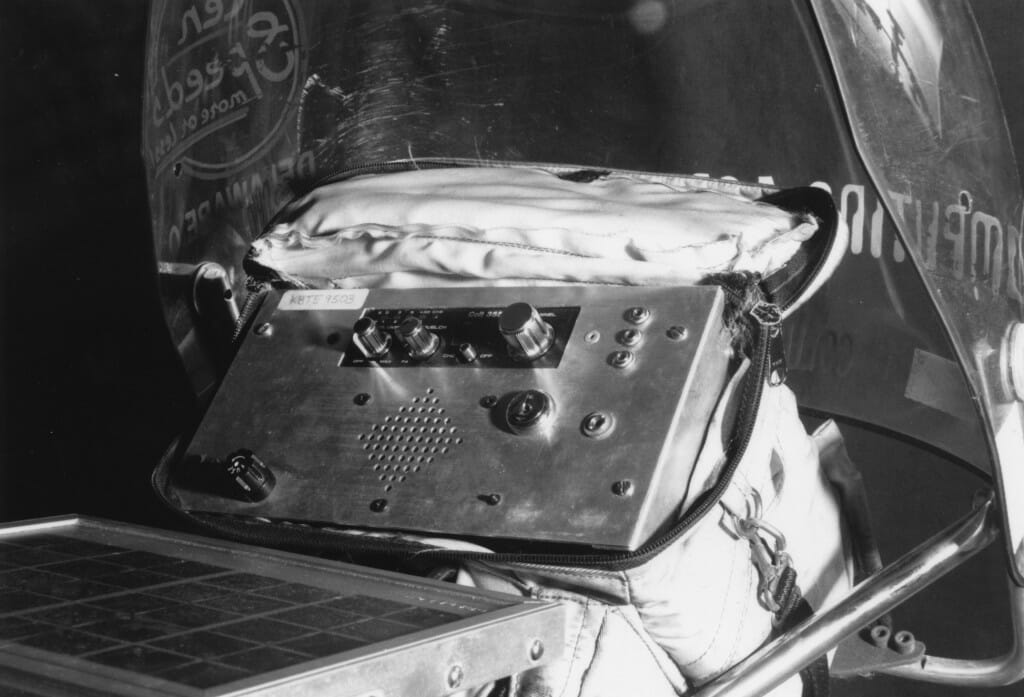
In primitive days… Winnebiko Electronics package and 5-watt solar panel in 1983. Photo by Katie Peden.
Winnebiko Specifications
Created over a period of 6 months until the initial departure on September 28, 1983, this was the fundamental form of my techno adventure substrate. Total weight including pack varied from 135 to 195 pounds during the 10,000-mile tour, and the gearing was a straightforward wide-range 18-speed system. There were no provisions for writing while riding, although I did have a remote-controlled audio cassette deck for taking notes – this, along with a large stack of spiral notebooks, helped considerably while writing. Computing across America Book.
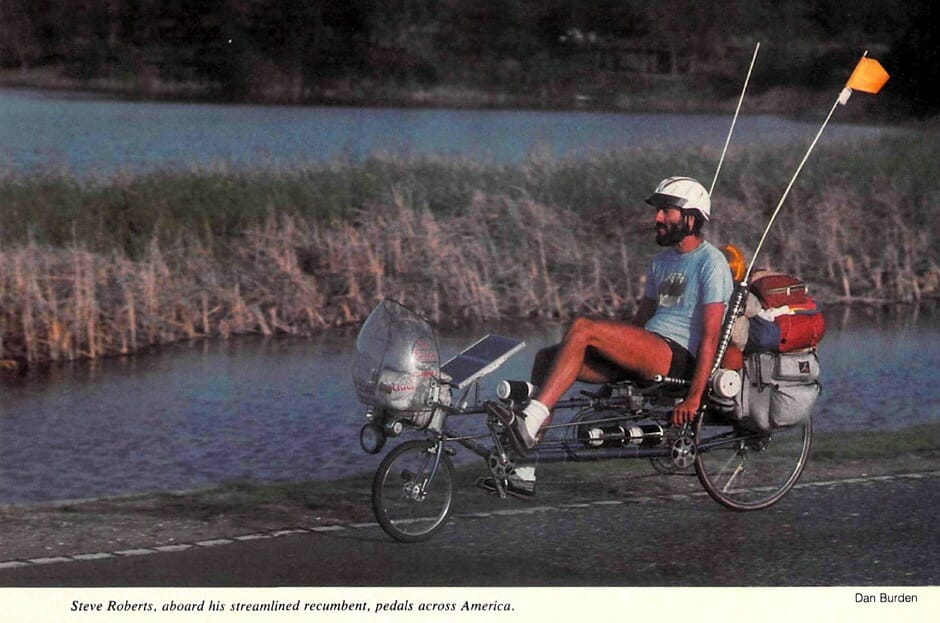
Basic mechanical characteristics
- 48-spoke, 27” uncut rear wheel
- 16” front wheel
- Under seat steering with stainless steel tie-rod to fork
- Blackburn rack carrying early standard touring load, gradually refined during travel
- 4130 Chrome-moly frame, lugless, filleted/brazed construction, triple stay, manufactured by Franklin Frames (Jack Trumbull)
- Small zipper fairing around the handlebar pack for electronics, mounted at the front head tube
- Crossover drive with 1:1 input chain and 18-speed derailleur, forward bottom bracket in tandem-style eccentric
electronics
- Simple electronics package installed above the front wheel; switch box under seat
- “Push” speed/distance sensor, later cat-eye solar
- Paging security system with piezoelectric vibration sensor
- CB radio for emergencies
- 12V battery, 5-watt solar panel and AC charger for lights and other loads
- Yellow barricade flasher behind seat, xenon strobe on pole, taillight, sealed-beam headlight
- Pack includes Radio Shack Model 100 laptop; Later HP-110 Portable
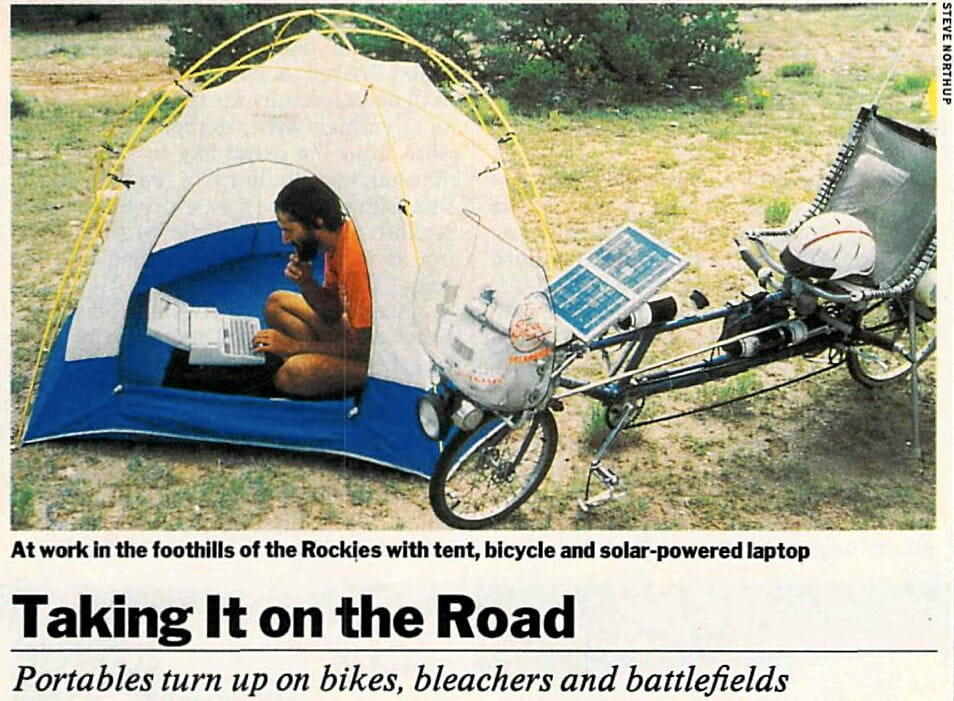
Winnebiko In New Mexico, as seen Time Magazine (September, 1984)