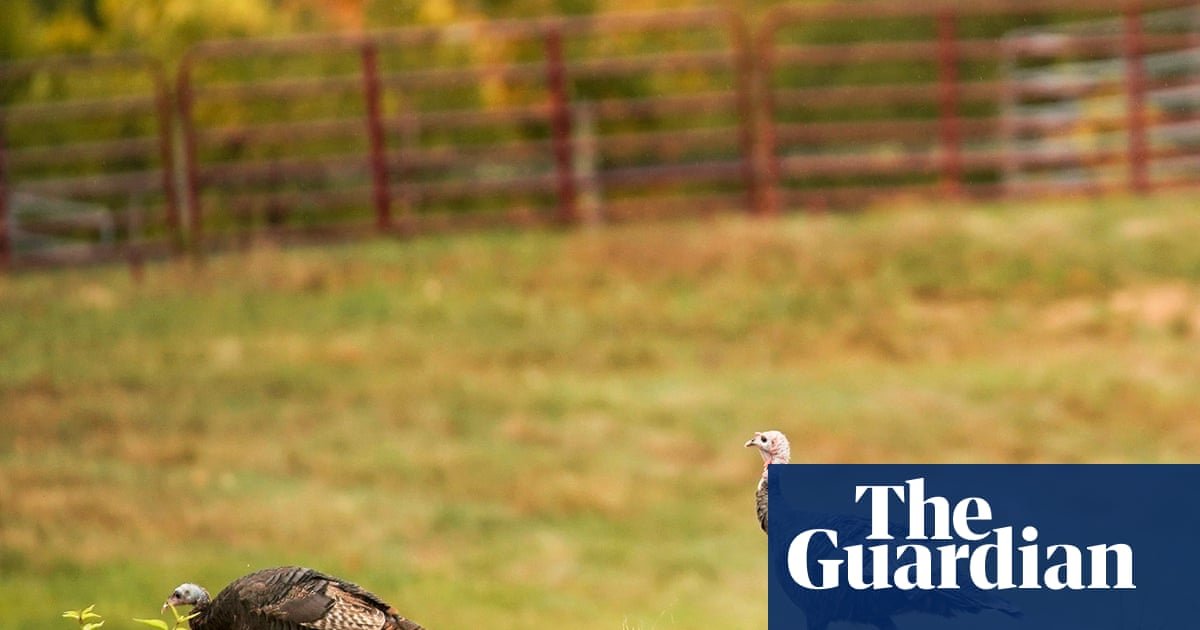
Hunters in Maine have been warned not to eat wild turkeys in some parts of the state because “persistent chemicals” have been found in the birds that may increase the risk of cancer.
Maine officials warned that high levels of PFAS – per- and polyfluoroalkyl substances – have been found in wild turkeys and deer killed and harvested in areas of the state’s southwest.
This warning could derail Thanksgiving plans for those who like to hunt and shoot their own dinner centerpieces. But the reality is that wildlife contamination with PFAS is becoming a problem in the US.
Earlier this fall, Wisconsin and Michigan also issued “do not eat” advisories for deer, fish and birds, while in January health officials in New Mexico warned hunters after harmful chemicals were found in wildlife in a lake in the state’s south.
Maine’s Department of Inland Fisheries and Wildlife issued a “do not eat” advisory earlier this month in four areas north of Maine’s capital, Augusta.
Inland Fisheries and Wildlife said, “It was found that sampling wildlife within one mile of areas with high soil PFAS concentration levels turned up animals that had levels of PFAS in their muscle tissue that required an advisory.” “The department and Maine CDC (Centers for Disease Control) recommend that no one eat deer or wild turkeys harvested in these wildlife consumption advisory areas.”
PFAS are a group of chemicals that have been used in manufacturing and added to consumer products since the 1950s. They can take hundreds or thousands of years to degrade, meaning if they leak into soil or water they can remain there for centuries. The chemicals have been linked to cancer, birth defects, low immunity, high cholesterol, kidney disease and many other serious health problems.
“Wildlife globally is already contaminated with PFAS, and this contamination will continue to be an issue unless we reduce the use of PFAS in consumer products and industrial applications,” Tasha Stoiber, a senior scientist at the nonprofit Environmental Working Group, said in an interview with the Guardian.
Maine, which said it is sampling other areas of the state for PFAS, is not alone in being forced to confront the problem of the chemicals forever. At least 17 states have issued advisories against eating fish containing PFA, and birds and mammals are increasingly becoming a concern.
The Michigan Department of Health and Human Services and Natural Resources did not issue advisories in September at Clark’s Marsh, near the former Wurtsmith Air Force Base. Officials warned that deer were likely to contain “various” PFAS substances, and also said people should not eat any fish, aquatic or semi-aquatic wildlife taken from marshes.
Various advisories have been in place in the area since 2012, linking PFAS contamination to the military’s use of foam to extinguish fires. In August dangerous levels of PFAS were found in the blood of people living or working near Canon Air Force Base in New Mexico – again due to military use of firefighting foam.
Wisconsin issued advisories against eating fish and deer in the area around the city of Stella in the north of the state. Officials said people should only eat deer muscles once a month and avoid eating deer liver altogether.
Stoiber said it would take “decades” to fix the existing PFAS contamination.
“The most effective and important steps are to phase out the widespread use of PFAS in commerce and prevent the continued discharge of PFAS into the environment,” he said.
“Federal regulations such as enforceable drinking water standards and strong protections for source waters are essential to reducing PFAS contamination and limiting future exposure.
“Public education is equally important. People need clear information about how PFAS exposure occurs, as well as informed public pressure, which often requires policymakers to take action and end the widespread use of PFAS.”
<a href
Здесь доступны как классические игровые автоматы, так и современные видеослоты.
Casino Pinco
Сайт адаптирован для мобильных устройств и ПК.