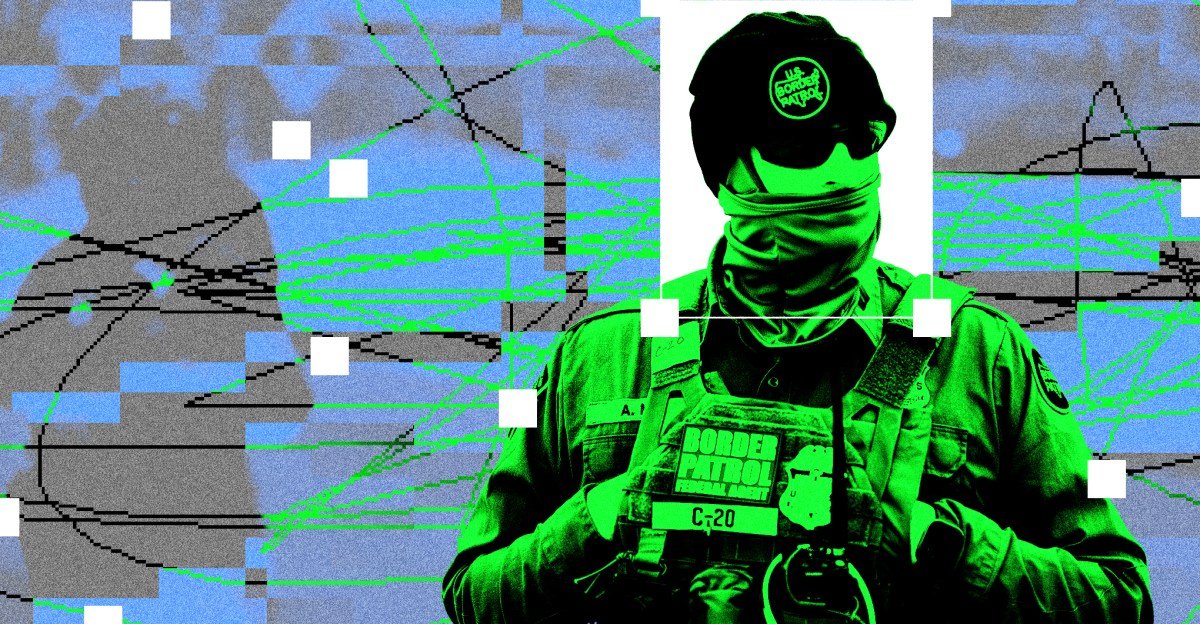
Americans don’t like masked secret police. There’s really no other way to put it. There are several reasons for this: accountability, trust in law enforcement and quite frankly overall sentiments. More concretely, not being able to tell who is a cop and who isn’t is dangerous. A killer disguised as law enforcement killed Minnesota Assemblywoman Melissa Hortman and her husband last year. How can anyone tell if they are being dragged from their home in underwear by ICE or simply by amateur thugs?
Last year, California passed the No Secret Police Act, which prohibits masking for federal law enforcement, along with the No Vigilantes Act, which requires law enforcement to wear some form of identification. The Department of Homeland Security immediately filed suit to strike down the law on constitutional grounds; No judge has yet ruled on whether to grant a preliminary injunction.
State legislatures across the country continued to introduce their own anti-masking bills
Bills banning masks on ICE agents have been introduced in Congress — from the No Secret Police Act in the House to the Visible Act in the Senate — but with Republican majorities in both chambers, none of these bills are expected to become federal law. State legislatures have moved forward without waiting for Washington, DC. Even after DHS filed suit to block California’s law, state legislatures across the country continued to introduce anti-masking bills of their own.
State legislatures introduced bills last summer and are now slowly beginning to move forward on them; Just last month, states like Maryland, Vermont, Washington, and Georgia introduced new bills. Los Angeles passed a city ordinance; The city of St. Paul is also considering it. A Minnesota lawmaker says she will introduce her bill when the session begins in February. In addition to California, at least 15 state legislatures have their own anti-masking bills pending.
For its part, ICE is clinging to the gators like life support. But in an interview face the nation Last week, Homeland Security Secretary Kristi Noem accused moderator Margaret Brennan of “doxxing” Jonathan Ross, the man who has been identified as the ICE agent who shot Renee Good, despite the use of a face-obscuring gaiter in multiple videos taken during the shooting.
Noem scolded Brennan, saying, “For God’s sake, don’t say his name. We shouldn’t be letting people mess with law enforcement while death threats against them have increased by 8,000 percent.” When Brennan pointed out that her name was public knowledge, Noem responded, “I know, but that doesn’t mean it should continue to be called that.”
The US Justice Department claimed in its lawsuit involving the No Secrets Police Act, “The threats to federal officers are serious and potentially lethal.” The list of such threats includes “taunting” and “online doxxing”.
A press release on the Department of Homeland Security website claims that death threats against ICE agents have increased by 8,000 percent and assaults have increased by 1,300 percent. The webpage contains a lot of blurry screenshots of mostly X posts. There are some photos of injuries allegedly caused by ICE agents – two photos are of a hand bleeding from a bite, and another photo (with the face partially obscured) is of an agent with a busted lip.
This 1,300 percent increase in blood loss from a minor skateboarding injury is not a particularly compelling reason to allow law enforcement to wear masks. Noem sounds like a clown when she talks about abuse by ICE agents. But he is a clown and the law is on his side.
California’s No Secrets Police Act faces an uphill battle in the courts. For one thing, the law targets federal law enforcement but does not impose the same requirements on local police. If that were the only problem, it would simply be a matter of getting the words right. But unfortunately for the 15 similar bills pending in other state legislatures, the most fundamental issue – the Supremacy Clause of the Constitution – gives the advantage to the federal government. States have very limited ability to influence how federal people do their jobs: after all, this is kind of the point of federalism. A legal expert claims it is “clear” that the No Secrets Police Act is constitutionally invalid; Another makes a more optimistic assessment that “under existing precedent, mask bans are neither clearly prohibited nor clearly permissible.”
But this being an open question of law, it is a strange insult to conscience. It’s not like it’s completely legal for ICE to hide itself, It may actually be illegal for the state of California to attempt to stop them.
Normal people hate masks. Only 31 percent of Americans think ICE agents should be allowed to wear them. Even the sheltered, shrinking bubble of Republicans — whose approval of ICE hovers between 70 and 80 percent — falters in enthusiasm when it comes to wearing down ICE agents. (63 percent of Republicans agree with masks, but most Republicans think agents should be in uniform.) After hearing the argument for masks by a Reagan-appointed federal judge, he called it “disingenuous, stupid and outrageous,” adding that “ICE wears masks for the same reason — to terrorize Americans.”
Most judges are not weird little internet forum trolls for whom doxxing is the biggest imaginable threat.
When faced with the Trump administration’s single-minded obsession with “doxxing,” judges have often been either astonished or angry. Part of this may be that most judges are not weird little Internet forum trolls for whom doxxing is the biggest imaginable threat anyone could face. But more importantly, a federal judge – whose name and face are a matter of public record – often makes decisions that offend very dangerous and violent people. The idea that an officer of the law must be faceless to do his job is an insult to his own style of work.
Policemen also aren’t completely sold on masks – the International Association of Chiefs of Police has issued a resolution warning against the use of face masks. In an interview with NPR last year, the head of the organization called face coverings “a really slippery slope” and said masks undermine the legitimacy of police. “We feel strongly that face coverings are inappropriate in most cases in policing in a democratic society in 2025,” he said.
This comes in defense of the No Secret Police Act and No Vigilantes Act in California – showing a face and a badge has long been a standard practice for policing at both the federal and local levels. “Prior to January 2025, when the practice of conducting civilian immigration enforcement without masks and identifiers began, officers typically wore ‘ICE’ or ‘ICE Police’ insignia with visible badges and numbers,” the state of California wrote in a response to Homeland Security’s lawsuit.
The state acknowledged that “while all law enforcement agents should be entitled to protection from harassment and doxxing,” it accused DHS that “there is no evidence that mandating masks or refusing to wear a badge or identification number – practices almost unheard of before 2025 – does anything to reduce this risk.”
Masks are not normal. Americans don’t like them. The fact that California’s attempt to ban them veers into dangerous legal territory is a strong indicator that things have gone seriously awry.
Policy should reflect the will of the people in a democratic society. California should not have to go to court to defend its law from the Supremacy Clause because it should never have passed the law in the first place. In a sane world, Congress would have passed a federal version of the No Secrets Police Act; Even more wisely, the executive branch would have been at all responsive to voters’ objections and stopped the practice altogether.
Faceless officers with guns and body armor crying about how scared they are of getting their names on the internet while shooting unarmed Americans in the face. The American system of government was not intended to be so insulated from reality; Normal constitutional functioning is under strain because the federal government is so busy being on the Internet that it is unable to tell the difference between doxxing and murder. California’s no secret police act is to turn on backup generators because the entire grid has collapsed. If it succeeds in holding up in court, it will not be enough to save our democracy. And if it gets destroyed – well, there is no backup for the backup generator.
<a href
Co wyróżnia Slottica na tle innych stron podobnych do Kasyno Total? Lobby gier stale rośnie dzięki współpracy z uznanymi studiami developerskimi, takimi jak Maskot Gaming, BGaming, Play’n Go, Gamzix, NetEnt oraz Playson. Dzięki temu gracze mają dostęp zarówno do klasycznych automatów, jak i nowoczesnych slotów z rozbudowaną grafiką i dodatkowymi funkcjami bonusowymi. Platforma obsługuje wygodne formy płatności, w tym BLIK kompatybilny z bankami mBank, ING, PKO BP, Pekao i Millennium, a także popularne karty Visa i Mastercard (Maestro). Pozytywne opinie użytkowników publikowane w serwisach Trustpilot oraz Opinie.com potwierdzają wysoki poziom zaufania do marki. Miłośnicy gry na smartfonach mogą korzystać z dedykowanej aplikacji dostępnej na urządzenia z systemem iOS oraz Android, która zapewnia płynną i stabilną rozgrywkę. Slottica to nie tylko polskie kasyno internetowe, lecz także przestrzeń, w której możesz cieszyć się grą i wygrywać na własnych zasadach.
Witamy w polskim legalnym internetowym kasynie Slottica – miejscu stworzonym dla hazardzistów online w Polsce! Casino Slotica w polskiej wersji językowej otwiera przed Tobą świat pełen emocjonujących gier za darmo i atrakcyjnych nagród bez rejestracji. Strona przyciąga nowych użytkowników między innymi premią powitalną 25 zł bez konieczności wpłaty depozytu. W badaniu przeprowadzonym wśród ponad 8500 graczy wielu z nich wskazało Slottica jako jedną z najciekawszych stron z automatami online dostępnych w Polsce. W katalogu gier znajdują się znane produkcje, w tym Chicken Road 2, Fire Joker, Funky Time, Dog House 1000 czy Energy Joker: Hold and Win. Od momentu startu projektu w 2019 roku platformie zaufało już ponad 350 000 użytkowników. Serwis działa na podstawie licencji wydanej przez regulatora z Curaçao, co zapewnia zgodność z europejskimi standardami branży iGaming. Ambicją marki jest oferowanie jakości usług, która może skutecznie konkurować z popularnymi serwisami pokroju TotalCasino.