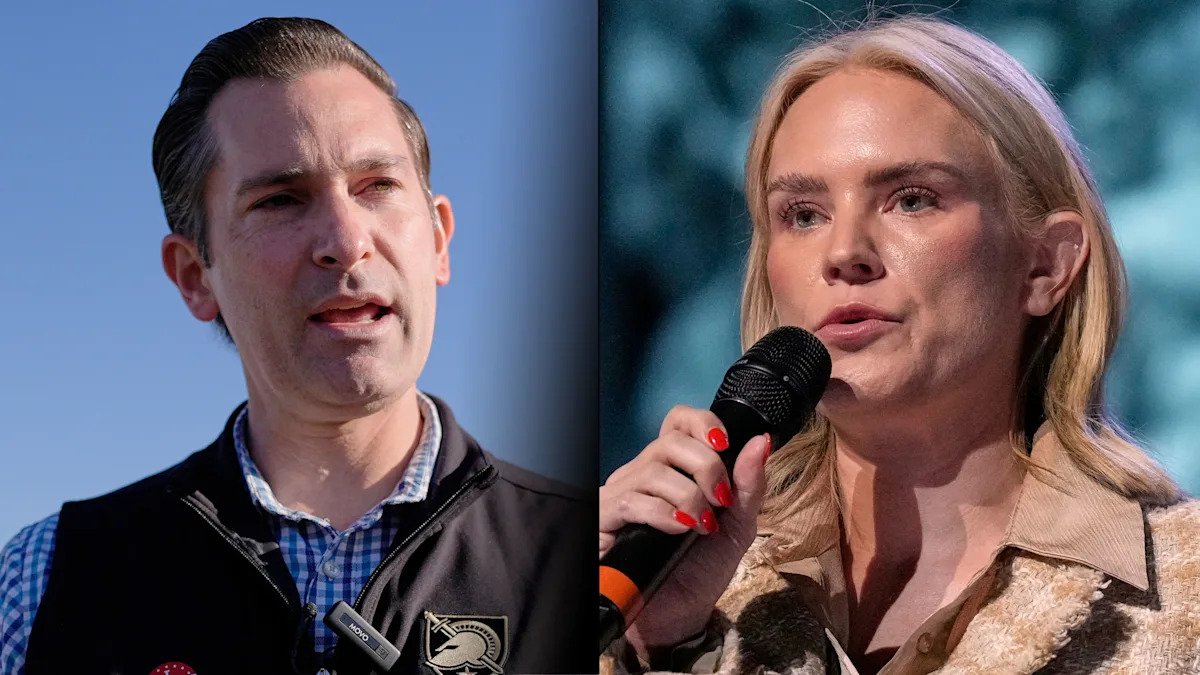
In normal times, a special election in a congressional district where no Democrat has been elected for more than 40 years would not be something in which the sitting president would be heavily involved. But President Trump has made a serious effort over the past few days to encourage voters in Tennessee to support Republican Matt Van Eps in Tuesday’s surprisingly tight race against Democrat Aftin Behn for a seat in the U.S. House of Representatives.
“The whole world is looking at Tennessee right now, and they’re looking at the district,” Trump said via speakerphone during a rally in support of Van Epps on Monday morning. “We have to win this seat,” he said.
Trump’s intervention in the special election — which included appeals on social media to “get out and vote” — is a sign of how important the contest is and how dramatically the political ground has shifted in more than a year.
Since 1983, the GOP has had uninterrupted control of Tennessee’s 7th District, which includes parts of Nashville and rural areas west of the city. Last year, the district voted for Trump by more than 20 points and helped GOP incumbent Mark Green win re-election to the House by the same margin. Green resigned his seat in July to pursue an opportunity in the private sector, saying it was “too exciting to give up.” That set the stage for Tuesday’s special election to fill the vacancy created by his resignation.
It will be the last major head-to-head contest between the two parties this year in the US, and the first since the Democrats’ impressive performance in last month’s off-year national elections.
Van Epps, a military veteran and former head of the Tennessee Department of General Services, easily won the Republican primary due to the endorsements of both Trump and the state’s current governor, Bill Lee. Behn, a member of the state legislature since 2023, won an incredibly tight Democratic primary for the opportunity to face off against Van Eps in the general election.
A recent poll shows Van Eps leading by only 2%, with enough voters still undecided to tip the race in favor of Behn.
Whether or not Behn is able to close the gap by Tuesday, the fact that the race is competitive at all is a sign of how much ground Republicans have lost with voters less than a year into Trump’s second term in the White House.
Beyond what it says about the national political climate at this time, the outcome of the race will also have important practical implications for Congress. Currently, Republicans have a slim majority of 219-213 in the House. Behn’s victory would tighten that margin even further, giving House Speaker Mike Johnson even less room for error as he navigates a long list of impending legislative challenges — including a late January deadline to pass a funding bill to prevent another government shutdown.
Pollsters are giving Democrats a strong chance of taking control of the House after next year’s midterms, but a win Tuesday in Tennessee could also help set up a scenario in which they won’t have to wait so long.
Behn’s victory would reduce the GOP’s lead in the House to just five seats. The gap is on track to narrow even further in January when Republican Rep. Marjorie Taylor Greene resigned and Democrats elected a new member to fill a vacant seat in Texas. Another special election in New Jersey in April could leave Republicans with a margin of just two seats, so small that they could risk surrendering their majority entirely if they lose another member to retirement or illness.
Given the stakes of Tuesday’s election, money is being poured into the race to support both candidates. The pro-Trump group has spent more than $1 million supporting Van Epps. The Democrat-aligned House Majority PAC has spent a similar amount on ads supporting Behn.
Pollsters say early polling has leaned in Behn’s favor, but Van Eps will have plenty of room to overcome her lead.
“The special election in Tennessee’s Seventh District will depend on which groups are driven to the polls and who stays home on Election Day,” Spencer Kimball, executive director of Emerson College Polling, said last week.
<a href=