
We are taught from a young age to call emergency numbers; Whether it’s 911 in the US, 999 in the UK, or 000 in Australia. The concept is simple – if you need assistance from police, fire or ambulance, you pick up a phone and dial and assistance will be dispatched in a short time.
This is a service that many of us have come to rely on; In fact, its function can balance between life or death. Tragically, a man died in Australia when his Samsung phone failed to reach the Triple Zero (000) emergency line. This has exposed an unexplained technical problem that could potentially put thousands of lives at risk.
danger
Australia’s triple zero emergency service is becoming a hot-button issue. September 2025 saw a massive failure of emergency calls on the Optus network, an incident that resulted in at least three deaths of people unable to reach help. A series of further isolated cases have drawn greater attention to edge case failures that have prevented people from accessing emergency services.
A major potential issue with the Triple Zero service has come to light following increased scrutiny over the operation of the system. Namely, the fact that a large group of older Samsung smartphones cannot be trusted to successfully call 000 in an emergency. The potential issue has been on the radar of telecom companies and authorities since at least 2024. Since then, on 13 November 2025, one person died in Sydney after their phone failed to dial the emergency line. When the incident occurred, his phone was using a Lebara SIM card managed by TPG and using the Vodafone network. Subsequent investigation revealed that the problem was caused by problems already identified in a wide range of Samsung phones.
The issue relates to the closure of Australia’s 3G phone service, which took place from 2023 to 2024. If you have a 3G phone, it will not be able to make any calls after the network is turned off. Common sense would suggest that phones with 4G and 5G connectivity will be fine going forward. However, there was one caveat. There were many phones sold that offered 4G or 5G data connections, but phone calls could not actually be made over these networks. This was due to manufacturers failing to implement the Voice-over-LTE (VoLTE) functionality required to make voice calls over 4G LTE networks. Alternatively, in some cases, a 4G or 5G handset can make VoLTE calls, but will fail to make emergency calls in certain situations.
communication breakdown
It all depends on how voice calls work over 4G and 5G. Unlike earlier 2G and 3G cellular networks, 4G and 5G networks are data only. Phone calls are handled via VoLTE, which uses Voice-over-IP technology, or Voice over NR (VoNR) in a purely 5G environment. Either way, the system is a data-based, packet-switched method of connecting phone calls, as opposed to the circuit-switched methods used for 2G and 3G calling.
The problem with this is that while 2G and 3G emergency calls still work if you have a tower, VoLTE calling is more complicated and less robust. VoLTE standards do not guarantee that a given handset will be interoperable with all LTE networks, especially while roaming. For example, a given handset may only prefer IPv4, which may be fine in its home region on its regular carrier. However, while roaming, or while making an emergency call, that handset may find itself in range of towers of a different network that only prefer IPv6, and thus VoLTE calling will fail. There can be many other configuration mismatches between the handset and the network that can also cause VoLTE calling to fail.
Typically, when you’re in range of your phone’s home network with a modern 4G or 5G handset, you won’t have any problems. Your phone will use its VoLTE settings profile to connect and the emergency call will go through. After all, older models without VoLTE support are already banned from the network. However, the situation becomes more complicated if your home network is not available. In those cases, it will consider “camping” on another provider’s network for connectivity. In this case, if the phone’s VoLTE settings are not compatible with the rival network, the call may fail to connect, and you may find yourself unable to reach emergency services.
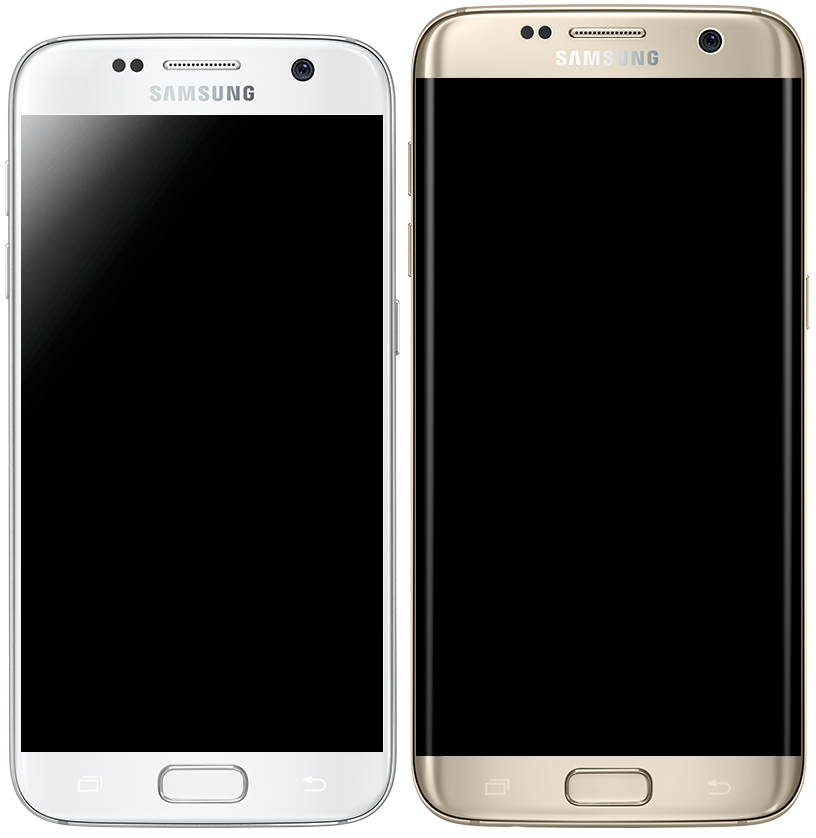
Specifically, in the Australian case, it appears to affect a range of older Samsung phones. Testing by telecommunications company Telstra found that some of these phones were unable to make Triple Zero emergency calls when only the Vodafone network was available. These phones will happily work if the Telstra or Optus network is available, but fallback has been found to fail on the Vodafone network. Research from other sources has also shown that some phones can reach triple zero when using a Telstra or Optus SIM card, but fail when equipped with a Vodafone SIM.
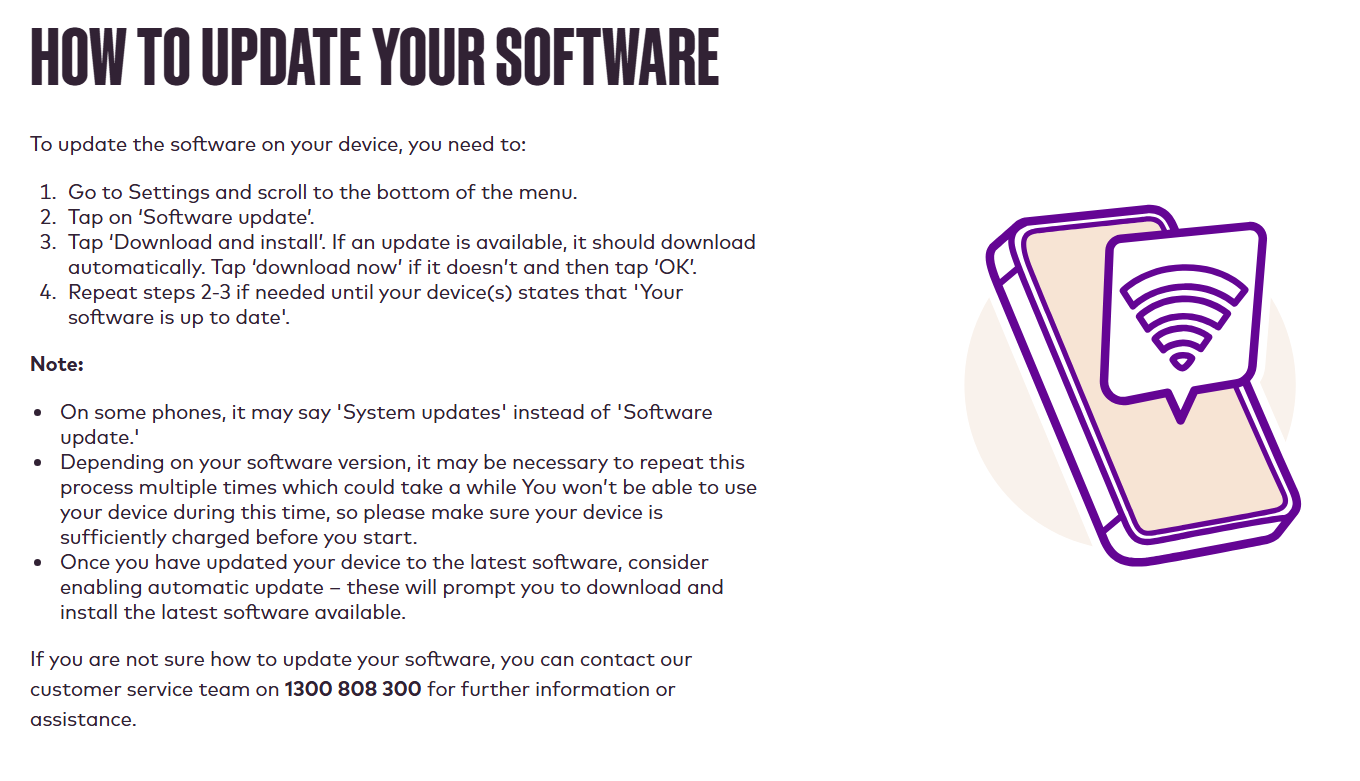
For its part, Samsung has provided a list of models affected by the problem. Some older phones, mostly from 2016 and 2017, will need to be replaced, as they will not be updated to reliably make emergency calls on 4G networks. Meanwhile, new phones like the Galaxy S20+ and Galaxy S21 Ultra 5G will be given software updates to enable reliable emergency calling. Telecom operators are contacting users of affected phones, indicating that they will need to be replaced or upgraded as necessary. Devices deemed unable to safely make emergency calls will be banned from Australian mobile networks 28 days after initial notification to customers.
widespread problem
This matter is not limited to Australia only. Indeed, European officials have been aware of issues with VoLTE emergency calling since at least 2022. Many phones sold in European markets are only capable of making emergency calls on 2G and 3G networks, and may fail to reach emergency services if only a 4G connection is available. This issue was particularly noted as a risk when roaming internationally, where a handset sold in one country may prove to be unfunctional with VoLTE calling on foreign networks.
Some blame has been placed on the loose standardization of the VoLTE standard. Unlike the 2G and 3G standards, global interoperability is almost negligible when it comes to phone calls. This was not initially seen as a major issue, because when 4G devices first came to market, 2G and 3G phone networks were readily available to make any voice calls that could not be handled by VoLTE. However, with the shutdown of 2G and 3G networks, the lack of VoLTE standardization and interoperability between carriers has been exposed.
While Australia is grappling with this issue at the moment, it is expected that it will soon arise in other parts of the world. Europe is currently working towards 2G and 3G shutdown like our other jurisdictions, and issues related to roaming functionality are still rife for those taking handsets abroad. Ultimately, the end user will ask a very simple question. If 2G and 3G technologies can handle emergency calls on almost any compatible network around the world, how did it go so wrong with the arrival of 4G and 5G? The old networks existed as a crutch that avoided the problem for a while, but they were never going to last forever. It definitely shouldn’t have been this way.