I’m struggling to tell whether the ads I see in my TikTok feed were created with generative AI tools. As someone who normally spends a lot of time examining images and videos to “tell” that something was artificially generated, some of the promotions I’ve seen have certainly aroused skepticism. However, for several weeks, I saw no examples of AI disclosures required by TikTok’s advertising policies, so I had no way of knowing for sure.
What bothers me is this Any It knows for sure whether the content is AI-generated or not. They’re not telling the rest of us. And if companies claiming to support AI-labeling initiatives really want them to succeed, they should probably do something about it.
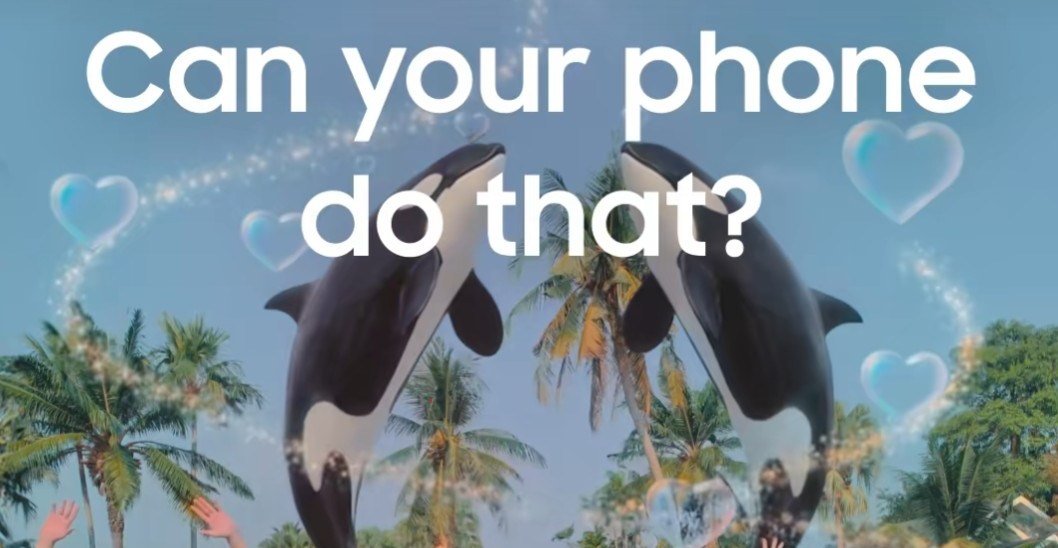
Take Samsung for example. After slogging through AI-generated videos on its social media channels, I started noticing ads teasing the Galaxy S26 Ultra’s privacy display feature on my TikTok. It appears that videos of the same promotional campaign were published on YouTube, with a brief description revealing that AI tools were used to create them. By comparison, TikTok ads made no indication of whether AI was used. Regular videos on Samsung’s TikTok accounts – which are not actively promoted as advertisements – also lack AI disclosure, despite the same videos being labeled as AI-generated on YouTube.
It’s important to note that both Samsung and TikTok are members of the Content Authenticity Initiative, a group that aims to make content authenticity and transparency “scalable and accessible” by promoting industry-wide adoption of C2PA. This means that TikTok and Samsung share similar ideals regarding labeling of AI content. If Samsung intentionally used AI to create its videos, it should have told TikTok when submitting the ad. If TikTok was informed, it should have ensured that its users were aware as per the platform’s own advertising policies.

Advertisers on TikTok are allowed to use content that is “significantly” edited or generated by AI only if they report it. According to the video platform’s commercial advertising policy, this can be achieved by implementing TikTok’s own AI labels, or by adding a disclaimer, caption, watermark, or sticker of the advertiser’s choice:
“When we say ‘significantly modified by AI’, we mean content that has been altered by AI beyond minor changes or enhancements. This includes using original images or videos as source material but substantially altering them with AI, such as:
•Content that includes images, videos or audios that are entirely AI-generated
•Showing the primary subject doing something they did not actually do, such as dancing.
•Using AI voice-cloning to make the primary subject say something they didn’t actually say.
Samsung did not respond to my requests for comment. TikTok told me about its AI labeling requirements for advertisers and its C2PA partnership, but declined to provide an on-the-record statement on why Samsung’s AI-generated ads got a pass. I am still unaware as to which step of this transparency process failed.
I noticed a new development earlier this week – a TikTok ad promoted by UK-based used car retailer Cazoo, which I previously encountered Without The disclosure now contains a message that reads “Advertiser labeled as AI-generated” next to the “Ad” identifier at the bottom. I already suspected that the ads in question were likely AI-generated because they all contained bizarre visual distortions that had no rational editing explanation, such as a dentist’s drill morphing into different shapes and jumping between hands.

I can’t tell if Samsung’s ads on TikTok have been given a similar update as it’s been several days since one was promoted in my feed. AI transparency across Samsung’s TikTok accounts is generally a mess – some have TikTok’s own AI label applied, others manually include a disclosure in the video fine print, and many AI-generated examples have no disclosure at all.
There is currently no reliable technological solution to reliably identify AI-generated content, or even human-generated content, at scale. I’ve spent a lot of time discussing the flaws of authentication standards like C2PA Content Credentials, SynthID, and other provenance-based systems that try to inform users how a piece of content was created – they need everyone on board to work effectively, and that’s not happening. This is a problem when people are struggling to know what is real and what is not in this current geopolitical scenario.
But this generally applies to online content, whereas advertising is a regulated industry that must operate according to a different set of rules.
Many of these rules were created to protect consumers from being misled or lied to by advertisers, such as the laws that prevent cosmetics companies from applying false eyelashes to models to sell their mascaras. TikTok beauty influencers like Mikayla Nogueira have discovered how these rules apply to them when promoting products, and their audiences react badly to dishonest shilling tactics.
This does not mean that generated videos are always misleading, but concerns over advertising transparency have led the EU, China, and South Korea to impose labeling requirements for AI in promotional materials. Even companies that have not pledged to support AI transparency initiatives may risk fines in the future if they do not act in unison.
If large online platforms like TikTok and advertisers like Samsung can’t be honest with each other about their use of AI in such a regulated environment, then anyone can advertise whatever they want. I’m glad that at least some ad-specific AI labels are starting to appear on TikTok after I flagged ads directly to the companies involved. But this is a simple two-way system that should already be firmly implemented and enforced Without I need people like me to check every ad in my feed.
<a href