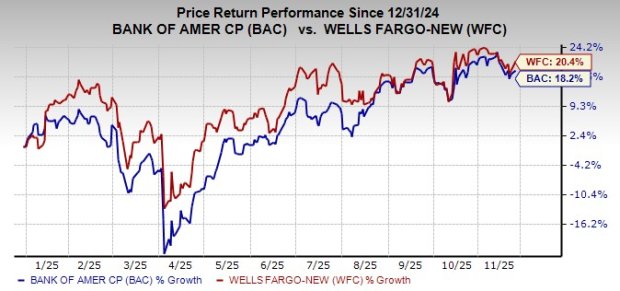
Falling interest rates are reshaping the outlook for major US lenders, with investors keeping a close eye on which banks will benefit most. Bank of America BAC and Wells Fargo WFCs, both of which are highly sensitive to rate movements, are now in the spotlight as markets price in the next phase of monetary easing.
Although both move with similar macroeconomic tides, WFC now enjoys strategic independence after its asset limit is lifted in June 2025, while BAC is using its greater scale to deepen efficiency and broaden its development initiatives. Let’s take a deeper look and assess how the rate cut will shape each bank’s growth prospects to determine which presents a better investment opportunity.
Bank of America, one of the country’s most rate-sensitive banks, is prioritizing organic, domestic growth through expanding its physical and digital presence. The company recently laid out an ambitious medium-term plan focused on sustainable growth, digital scale, cost discipline and capital efficiency.
Over the next three to five years, BAC aims to deliver earnings growth in excess of 12% and return on tangible common equity (ROTCE) between 16% to 18%, while maintaining the Common Equity Tier 1 ratio at 10.5%.
With the Federal Reserve launching the next rate cut cycle, Bank of America is set to benefit from fixed rate asset revaluations, higher loan and deposit balances and a gradual decline in funding costs. As rates come down, it will boost lending activity. Additionally, easing regulatory capital requirements will help channel additional capital into loan growth, particularly in the resilient commercial and consumer sectors. Therefore, the bank’s net interest income (NII) is projected to grow by 5-7% in 2026, after similar growth this year.
Additionally, as part of a broader strategy to strengthen customer relationships and enter new markets, BAC plans to expand its financial center network and open more than 150 centers by 2027. This, along with the increasing acceptance of digital devices, will support NII growth and expand cross-sell opportunities.
Additionally, BAC’s investment banking (IB) business is well positioned for expansion as deal-making activities have picked up pace again after an initial setback due to President Trump’s tariff policies. Many deals that were put on hold are resuming as there is more clarity about the direction of the economy, interest rates and tariff plans as capital remains available. Bank of America targets mid-single-digit CAGR in IB fees over the medium term.
Wells Fargo is moving to expand into several business areas now that the Fed has lifted the asset limits that had limited its growth since 2018. The company’s expansion strategy is closely aligned with expectations of more rate cuts, with an emphasis on deposit growth, targeted loan expansion and product investments as funding costs tend to decline.
The bank is positioning itself to benefit from the soft rate environment, which will increase lending activity, stabilize net interest margins (NIM) and help increase market share in fee-generating businesses.
Wells Fargo has indicated that interest rate cuts will help stabilize funding costs, making deposit growth a central pillar of its balance sheet strategy. Low rates generally increase demand for loans, and freed from its asset limits, the bank aims to aggressively grow both consumer and corporate loan assets.
Management expects 2025 NII to be broadly stable year-on-year, as low rates support a rebound in loan originations and ease deposit pricing pressures. WFC plans to leverage its expanded balance sheet to expand fee-rich franchises (IB, trading, wealth management, payments). This diversification is necessary in a rate-cut cycle, when the NIM and NII may face pressure.
Wells Fargo’s approach in a falling rate environment is to prioritize organic growth, compete more aggressively for deposits and make selective loans while remaining cautious during periods of increased economic uncertainty. Thus, the bank is expected to see improved profitability and margin flexibility with the easing of monetary conditions. This will help it invest in expanded commercial and consumer franchises and enhance its competitive position once regulatory hurdles are removed.

<a href=