
 getty images
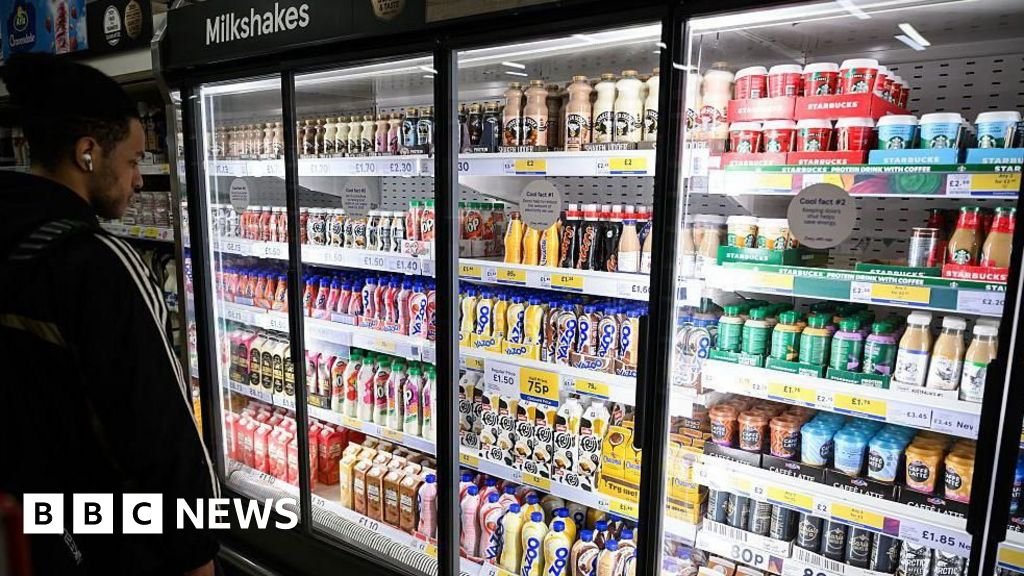
Milkshakes, coffee drinks and milk alternatives will be included in the government’s sugar tax plan for the first time in the UK in a new effort to help tackle obesity.
The sugar tax, formally known as the Soft Drinks Industry Levy (SDIL), is a tax on pre-packaged drinks sold in cans and cartons in supermarkets.
Health and Social Care Secretary Wes Streeting announced the extension of the tax in the House of Commons on Tuesday, ahead of the Budget.
How will this work?
The sugar tax on milk-based beverages will be extended from January 1, 2028.
The government says that the companies making these drinks will have to reduce the amount of sugar present in them or face paying tax.
This means that either they may taste different (less sweet) or they may cost a little more.
The tax was introduced by the Conservative government in April 2018 as a means of making diets healthier and tackling obesity by cutting sugar intake.
As he made the announcement, the Health Secretary said: “Obesity robs children of the best start to life, affects the poorest the hardest, leaving them with lifelong health problems and costing the NHS billions.”
Which drinks are included?
Sugar tax applies to pre-packaged soft drinks with added sugar.
This already applies to most sugary and fizzy soft drinks sold in cans, bottles and cans in supermarkets.
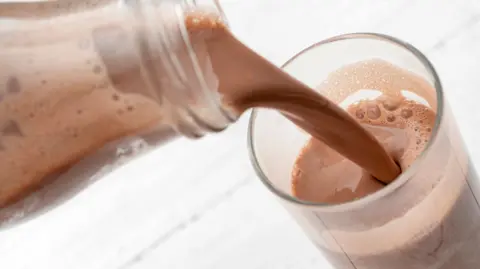
This will now also apply to pre-packaged milk-based drinks with added sugar, such as bottled milkshakes and coffee drinks.
It will now also include plant-based drinks like milk alternatives – soy, oat and rice milk with no added sugar.
Milk-based drinks are exempt from sugar tax because they contain calcium, which is encouraged in the diets of children and youth.
However, the high sugar content in some milk-based beverages meant the government removed that exemption.
The government will introduce ‘lactose allowance’ to take into account the natural sugar in the milk content of these beverages.
All milk alternative drinks, such as soy, almond or oat drinks, were previously exempt from sugar tax if they contained 120 mg calcium per 100 ml.
But if these beverages contain more added sugar than is derived from the main ingredient, they will now be taxed.
 getty images
Which drinks are not included?
The sugar tax does not apply to drinks made and served in cafes, restaurants and bars. Therefore, coffee, lattes and other milky drinks made in café premises will not be covered under this tax.
Soft drinks made only from natural sugars, such as plain cow’s milk and pure fruit juice, are also not part of the tax.
Unsweetened plant-based milks are also not included.
Alcohol-free beer or wine, infant formula, drinks sold in powdered form and cocktails or mocktails served in open containers are also not subject to sugar tax.
How much do companies pay?
Currently, drinks with at least 5 grams of sugar per 100ml are taxed at 19.4p per liter and drinks with 8 grams or more of sugar are taxed at 25.9p per litre.
But the government is reducing the maximum amount of sugar in beverages. Instead of 5 grams, now this limit will be 4.5 grams per 100 ml.
What has been the impact of the sugar tax?
The government says that to date, it has reduced the sugar content in affected soft drinks by 46%.
Nearly 90% of the market now has sugar below the level at which the tax applies.
But experts say there is still too much sugar in Britain’s diet.
Current UK advice states that free sugars should not exceed 5% of daily energy intake.
But sugar consumption in Britain is almost double. And obesity rates in children and adults show no sign of slowing down, with almost two-thirds of people in the UK being overweight or obese.
This has prompted the government to review the tax and extend it to milk-based beverages.
How much sugar do children eat?
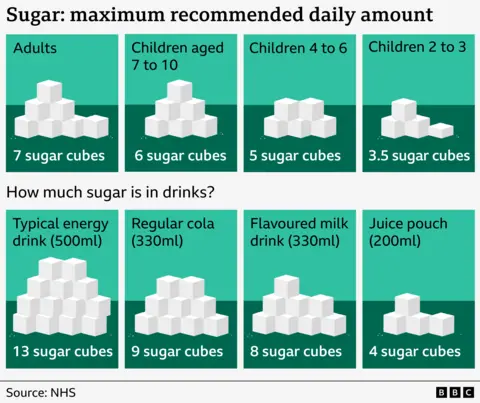
The average free sugar intake in children aged 1.5 to 3 years is 45 grams per day (about 11 sugar cubes).
According to the latest National Diet and Nutrition Survey, for children aged 4-10 years, it is 55 grams per day and for adolescents aged 11-18 years, it is 70 grams (17 sugar cubes) per day.
Less than a third of children under three meet the recommended limits for free sugar intake.
Fruit juices and smoothies account for 12% of the free sugars consumed by the youngest children, and 15% in the 4-10 year old age group.
NHS advice says adults should have no more than 30g of free sugars a day, (equivalent to 7 sugar cubes) – and children much less (no more than 3 cubes for 2-3 year olds). There are different recommended limits for children of different ages.
<a href