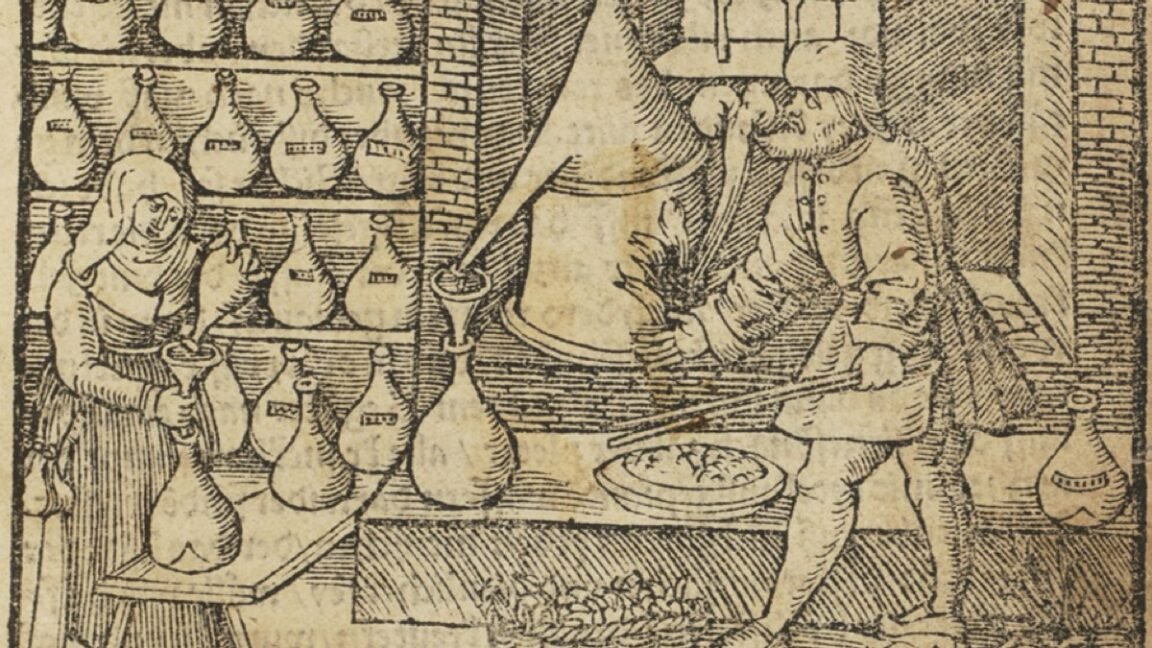
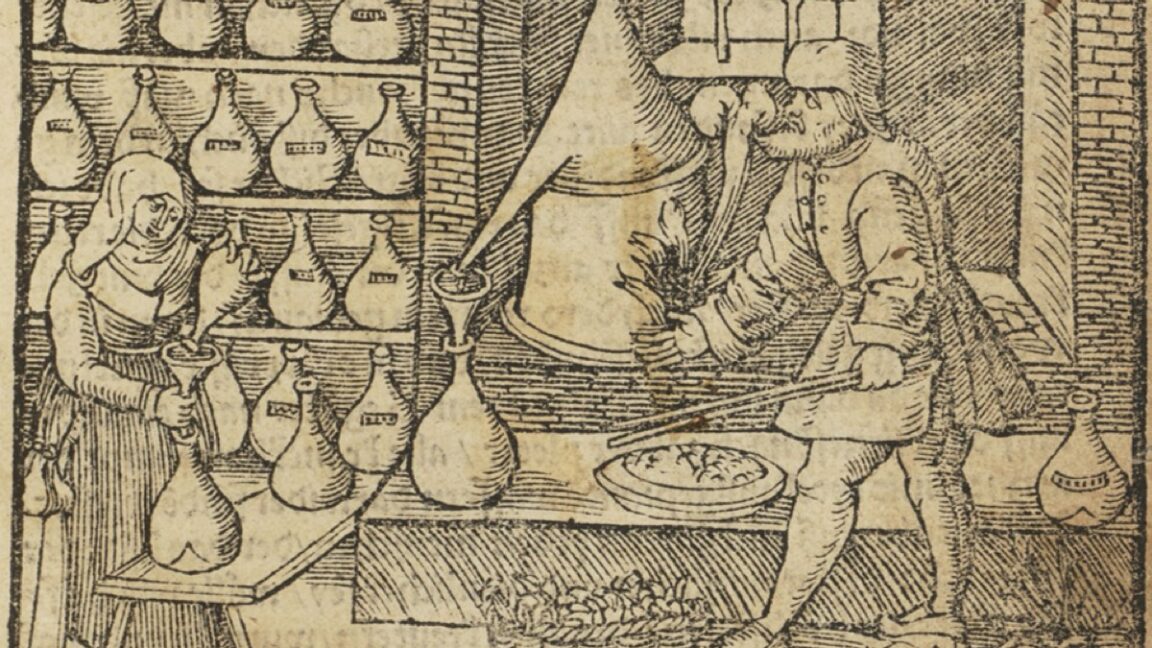
The proteomics results confirmed, among other things, the presence of several popular ingredients used in recipes, such as traces of beech, watercress, and rosemary that are found next to hair loss remedies—commonly attributed to “overheated brains”—along with cabbage and radish oils, chicory, lizards, and, um, human feces. (How badly do you want to grow out thinning hair?) The manuscripts also included recipes for blonde hair dyes. Analysis revealed that the marks on those pages belonged to plants with particularly attractive yellow flowers. “This is a common theme in cosmetic and medical discourse at the time,” Hans said, “The idea was to find parallels between the treatment and what you want to achieve in terms of treatment.”
According to Hans and others, one of the most remarkable results was the recovery of collagen peptides from hippopotamus teeth or bone, pointing to the global spread of more exotic materials in the 16th century. Hippo teeth were said to heal kidney stones and “relieve toothache”, and were even used to make dentures.
Hans et al. It was also found that many of the proteins they found had antimicrobial functions, such as dermcidin (derived from human sweat glands), which kills e coli and yeast infections such as thrush. The samples also provided information about how the bodies of Renaissance people responded to treatments. For example, immunoglobulins, lipocalin, and lysozyme fragments are indicators of an active immune response.
Hans is so pleased with these initial results that he hopes to launch a large-scale project to extend this interdisciplinary approach to other collections of medical manuals. He also hopes for further improvements in the dating system. “The ingredients for success are there,” Swan said. “It is not only that we have found new answers to old questions, but that we are now in a position to ask entirely new questions.”
American Historical Review, 2025. DOI: 10.1093/ahr/rhaf405 (About DOI).
<a href