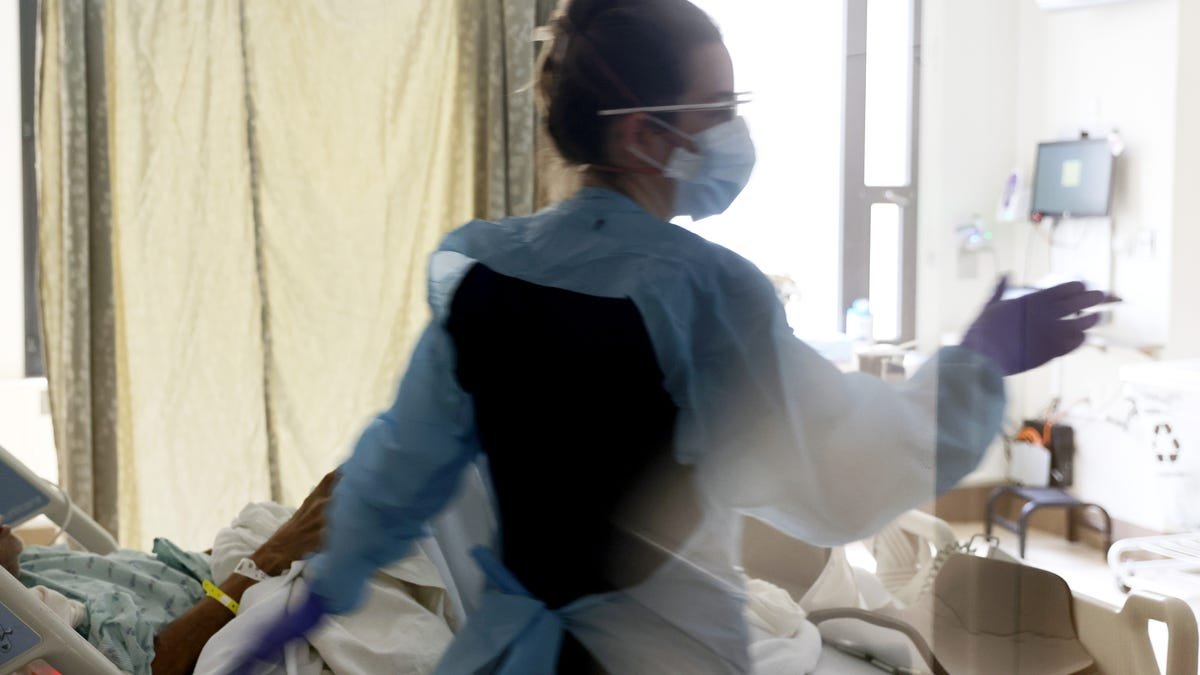

Nursing has been excluded from the federal professional degree list and this is having an impact on student loans. Advocates are pushing for change amid nurse shortage.
As President Donald Trump’s administration redefines what degrees are considered “professional,” many graduate students have questions and concerns about how to finance their education.
Who is considered a professional student? The list includes programs like pharmacy, dentistry, medicine, veterinary and law. The list may not be all-inclusive, but advocates and professional organizations warn that it leaves out many important programs, including nursing.
The Education Department stressed that it has not updated the federal definition of “professional degree” to exclude nursing — the definition has never included it, said Ellen Kest, an agency representative.
What is professional degree?
The confusion and controversy stems from a 1965 federal law, which defines “professional degree” as something that “signifies both the fulfillment of the academic requirements to begin practicing in a given profession and the level of professional skill beyond that normally required for a bachelor’s degree.”
The definition lists examples of professional degrees, including:
- Pharmacy (Pharm.D.)
- Dentistry (DDS or DMD)
- Veterinary Medicine (DVM)
- Chiropractic (DC or DCM)
- Law (LLB or JD)
- Medicine (MD)
- Optometry (OD)
- Osteopathic Medicine (DO)
- Podiatry (D.P.M., D.P., or Pod.D.)
- Theology (M.Div., or MHL)
While the definition states that the list is not exhaustive and that professional licensure is also generally required, previous Department of Education committee meetings have used the preliminary description to discuss student loan rules and other issues that include only the ten degrees.
Which degrees are not classified as professional?
Several graduate programs have been excluded from the “professional degree” list, including nursing, which has drawn sharp reaction from national organizations and groups advocating for a broader range of degrees to be represented under one umbrella.
In a letter to the Office of Postsecondary Education on Aug. 28, the American Council on Education pushed to change the definition and add more programs, including nursing, architecture, accounting, occupational therapy, physical therapy, special education, public health, social work and more.
The American Nurses Association has also expressed concern over the current definition, with association president Jennifer Mensick Kennedy saying in a letter that excluding nursing would “severely restrict access to critical funding for graduate nursing education, thereby undermining efforts to grow and retain the nursing workforce.”
“At a time when health care in our country is facing a historic nurse shortage and increasing demands, limiting nurses’ access to funding for graduate education threatens the foundation of patient care,” said Mencik Kennedy. “In many communities across the country, particularly rural and underserved areas, advanced practice registered nurses ensure access to essential, high-quality care that would otherwise be unavailable.”
What impact can this have on students?
Currently, this definition is being used in discussions surrounding student loan limits under the Trump Administration’s “Big Beautiful Bill”, which could significantly impact how much students are allowed to borrow. The bill eliminates the Grad Plus loan program, which has historically helped students pursue careers in medicine, law and other training-intensive careers, and places a cap on the Parent Plus program, limiting them to $20,000 per student per year, with a total limit of $65,000.
Undergraduate students pursuing a “professional degree” on a defined list are able to borrow up to $50,000 per year and up to $200,000 in total. But for students in graduate programs that are not considered “professional degrees,” the maximum loan limit is $20,500 per year. Graduate programs are limited to $100,000 total.
This means that students in programs that are not listed on the list or that are not defined as a “professional degree” may face a lower loan limit when pursuing those programs. The loan changes – and overall adjustments to higher education finance and funding – are expected to take effect on July 1, 2026.
This story has been updated with new information and video.
USA TODAY’s Zachary Sharmele, Saman Shafiq and Jeanine Santucci contributed reporting to this story.
<a href=