
The study published Wednesday in Nature found that a staggering number of estimates of the impact of sea level rise are based on gross underestimates of current sea levels. More than 90% of the 385 peer-reviewed scientific papers analyzed by the authors relied on estimated sea level based on gravity models called “geoids” rather than direct sea-level and land-elevation measurements. As a result, these assessments have underestimated the timing and severity of the impacts of sea-level rise.
After considering this broader methodological issue, the authors determined that a global sea level rise of 3.28 feet (1 meter) could submerge 37% more land area than before, affecting 77 million to 132 million people worldwide.
“What our study highlights is, in a way, a methodological blind spot that exists between traditionally separated scientific disciplines,” co-author Philip Minderhoudt, associate professor of coastal geology at Wageningen University in the Netherlands, said at a press conference Tuesday. He studied with geographer Catharina Seeger of the University of Padua in Italy and visiting researcher in Wageningen.
modeling vs measurement
To find this blind spot, it helps to understand how different methods of sea-level estimation differ from each other.
Geoids are not based on direct, real-time sea-level measurements. These models are mathematical representations of Earth that predict average sea level based on two factors: gravity and the planet’s rotation. They essentially represent the ocean surface in the absence of tides, winds and currents.
But actual sea level is constantly affected by these forces, not to mention other factors like temperature and salinity. Only direct measurements – primarily through tide gauges and satellite observations – can capture this complexity. While geoids can provide a theoretical baseline, using them as a starting point for sea-level rise projections and coastal hazard assessments inevitably leads to inaccuracies, as this new study shows.
David Holland, a professor of mathematics and atmosphere-ocean science at New York University who was not involved in the study, told Gizmodo, “I thought it was terrible that people did this and were unaware of what the authors reported.” “I think the authors make an excellent point and a great contribution.”
a different future
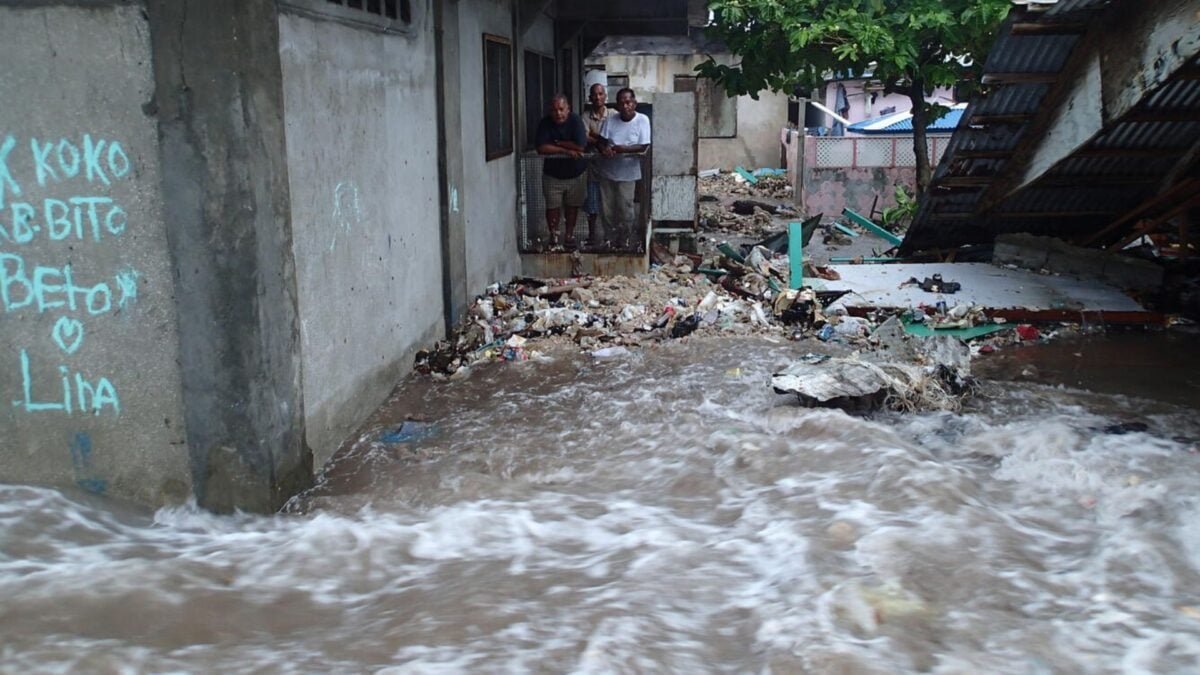
Most of the studies analyzed by the authors underestimated coastal sea levels by 9.4 to 10.6 inches (24 to 27 centimeters), depending on the geoid used. In areas where models are least accurate – often parts of the Global South – actual sea level may be 18 to 24.9 feet (5.5 to 7.6 m) higher than estimated. The largest discrepancies were in Southeast Asia and the Pacific, where many island nations are already experiencing catastrophic sea-level rise.
But Rutgers University climate scientist and professor Bob Kopp, who was not involved in the study, told Gizmodo in an email that while Seager and Minderhoud make an important technical point, it’s easy to overstate its broader significance.
For example, the study challenges the Intergovernmental Panel on Climate Change’s 2022 estimate that about 11% of the global population – about 896 million people – live in low-altitude coastal areas, arguing that the actual proportion is between 12.3% and 13.7%, or about 970 million to 1.07 billion people.
“While such summary global metrics are certainly important, such statements are important only to indicate that coastal risk matters to a lot of people,” Kopp said. They said uncertainties associated with human behavior – such as climate migration and coastal adaptation measures – are likely to have a greater impact on future coastal risk than technical differences in sea-level baselines.
Still, fixing this methodological problem would improve the accuracy of local coastal threat assessments and international reports like the IPCC, Holland said. Minderhoud and Seeger said ensuring that such reports represent the realities of sea level rise in the world’s most vulnerable regions is important, as it promotes global climate action and helps communities garner international support for adaptation efforts and, in the worst cases, migration.
bridging the gap
The authors therefore call for a paradigm shift in coastal risk research. They urge researchers to reevaluate their assessments to ensure that they are based on appropriately integrated sea-level and land-elevation data, not just geoid models.
Proper data integration is important here. While 9% of the 385 studies attempted to combine actual sea-level and land elevation data with geoid models, most handled it incorrectly, leading to conversion errors and inaccurate measurements. Only one of the studies by Seager and Minderhoud evaluated their analysis with complete data documentation and proper integration.
The authors hope that their study will help the scientific community improve its methodology by providing open-source data and ready-to-use tools that facilitate accurate alignment of land and sea-level measurements. They even converted several state-of-the-art digital elevation models to coastal sea-level height, providing researchers with a starting point to rework past assessments and make better assessments in the future.
As far as policy makers are concerned, Minderhoud and Seeger encourage them to scrutinize the information that forms the basis of their decision making and ensure that it is based on locally valid data.
By charting a path toward more accurate coastal risk research, the authors aim to help scientists and policymakers better protect communities from the impacts of rising sea level rise. Their work can reshape planning and adaptation efforts, helping to ensure that vulnerable areas receive the resources they need before it is too late.
<a href