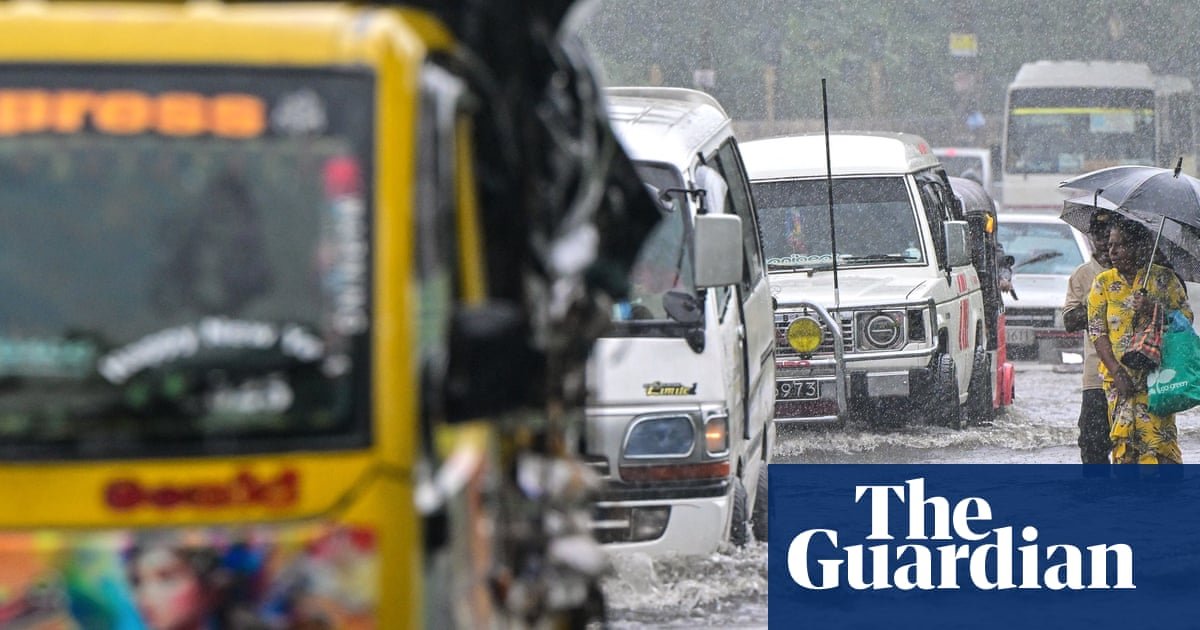
wWhen the rain started, Layani Rasika Niroshani was not worried. The 36-year-old mother of two was used to the heavy monsoon rains that hit Badulla, Sri Lanka’s hilly central region, every year. But as it intensified without stopping, the family began to panic.
Some people went to a relative’s house, but his brother and his wife decided to stay back to collect valuables. As soon as they were inside, a landslide hit the family’s home.
“By some miracle, my brother managed to drag him out of the house through the broken window,” Niroshani said. “They couldn’t take a single thing out. We were all very scared.”
The house was destroyed by mud and debris, taking with it all their family property; One of the hundreds of thousands of homes destroyed by Cyclone Ditvaha, the worst natural disaster to hit Sri Lanka in decades. As of late Monday night, the death toll across the island was confirmed at 366. In Badulla alone, 71 people were confirmed dead and another 53 were still missing.
“Our house was buried under the ground,” Niroshani said. He and fellow villagers had spent the previous two days digging through the soil, trying to save any of their belongings, but had only recovered a few kitchen utensils and some clothing.
“My family is in shock. We have to rebuild anew. Sometimes it is worse than living,” he said.
The scale of the damage caused by Cyclone Ditvaha is still unclear, but in a speech on Sunday night, Sri Lankan President Anura Kumara Dissanayake described it as “the largest and most challenging natural disaster in our history”. Villages across the island were destroyed and many homes, schools and businesses, including in the capital Colombo, were still under water on Monday. Helicopters were dispatched to the worst-hit areas to try to deliver food and other essential supplies to stranded people.
According to the country’s Disaster Management Centre, more than 11 lakh people have been affected by the impact of the cyclone. As the country’s emergency and rescue services were overwhelmed, the military was deployed to help with rescue efforts.
Kantharuban Prashanth, 32, a school teacher, said he was helping shelter more than 125 families at a school in Badulla who were displaced by the floods since Thursday.
“They are very vulnerable and have needed help for about four days,” he said. “What we got was dry ration that we cook here at the school. They all have only one toilet. But these families cannot return to their homes because it is not safe. There are cracks in their houses, it is too risky to go back there. We need help.”
The damage inflicted on Sri Lanka was particularly devastating for the island of 22 million people, which is still recovering from an economic collapse in 2022 that bankrupted the country and restricted access to even basic foods and medicines. Sri Lanka is also heavily dependent on Western tourism as an important source of income and the industry appears to have suffered heavy losses from the impact of the cyclone.
Authorities have warned that the death toll could still rise, with more than 360 people still missing and rescue teams still unable to reach some areas. More rain is also forecast this week, which could make the flooding worse.
Sirialatha Adhikari, 74, who lives in Biyagama in western Sri Lanka, said she lost everything in the cyclone. “We didn’t have time to take anything out of the house. Everything happened so fast. Our entire house was under water, we didn’t think it would flood so quickly,” he said.
In Ratnapura, a town in the southern district, which was one of the worst-hit areas, small rescue boats waded through flood waters, helping people trapped on rooftops and trees. Many people complained that they were not given any warning to evacuate despite the danger of rivers rising due to heavy rains caused by the cyclone.
JA Nilanthi, 45, said his family watched the Kalu river rise dangerously in Ratnapura on Thursday until it burst its banks. They said they received no warning from authorities or orders to relocate even as the water reached dangerous levels.
He said, “We did not sleep the whole night because it was raining continuously. No one asked us to vacate. At around 6 in the morning, when families in the village started packing their belongings and leaving their homes, we also left.”
The only thing his family was able to get out of the house before the flood was the refrigerator. For the next two days they all remained hidden on the rooftop of an empty house. “We were on the roof of this house for two days and there was flood water on both sides of the house. We were trapped there. We had nothing to eat, not even a drop of water,” he said. “I’ve never been so scared in my entire life.”
On Sunday the water started receding and Nilanthi’s family went back to see what was left of their house. When they arrived they were frightened. “We went home, there was nothing left. Our sofa, cupboard, plates and even our clothes – all were covered in thick mud,” said Nilanthi. “Life ahead is difficult but I am grateful that we managed to reach safety in time.”
<a href