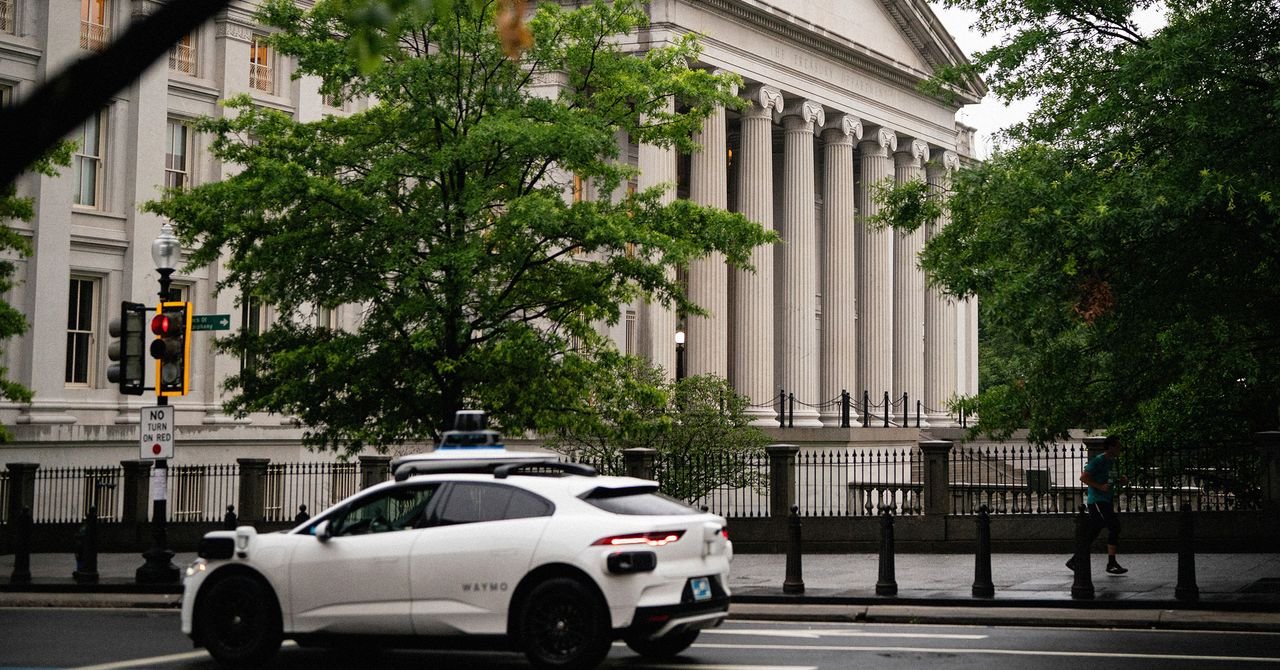
For more than a year, Waymo has been pressuring city officials to pass new rules allowing its robotaxis to operate in the District. As of now, self-driving cars can be tested in the city with humans behind the wheel, but cannot operate in driver-free mode. The Alphabet subsidiary—and its lobbyists—have asked local lawmakers, including Mayor Muriel Bowser and City Council members, to create new rules to allow the technology to become truly driverless on their public streets. The company has previously said it will begin offering driverless rides in DC this year.
But Waymo’s efforts to influence officials have stalled, so the company is now asking residents to apply some pressure. “We are almost ready to provide public Waymo rides to everyone in DC,” it said in an email sent to those who signed up for Waymo’s DC service. “However, despite significant support, the district leadership has yet to provide us with the necessary clearance to launch.”
The email directs recipients to contact DC officials via a form letter, which says in part: “Over the past year, I have watched Waymo vehicles operate in our local areas, and I am thrilled by the potential benefits this service can provide, including increased accessibility and a decline in traffic-related incidents.” The communication urged DC residents to “use your words” by editing the letter, as personalized messages “have a greater impact.” Waymo says only DC residents or people with a DC address can participate.
In a written statement, Waymo spokesman Ethan Teicher says, “We will remain ready to serve Washingtonians this year, and urge the Mayor, District Transportation Department and City Council to take action.” The company says that in the first 90 minutes after it was sent, 1,500 people contacted district leaders through its email.
Generally, self-driving vehicle developers have launched service only in places where regulations clearly spell out how the technology can hit the roads. Other US cities with Waymo service, including California, Florida and Texas, already had these rules in place before the company entered the market. But as Waymo’s ambitions have grown bigger, it has begun targeting big blue-state cities where autonomous vehicle technology doesn’t yet have a “driver’s license.” Earlier this month, the company said it would begin testing in Boston, where city lawmakers pushed for an ordinance last year that would ban self-driving taxis from operating without a person behind the wheel. Waymo has said it needs Massachusetts lawmakers to “legalize fully autonomous vehicles” before it can launch service in Boston.
Ultimately, self-driving-vehicle developers hope that the US Congress will pass a law allowing widespread testing and operation of their technology across the US. On Tuesday, a House committee introduced a bill that would direct the federal government to create safety standards for autonomous vehicles, and prevent states from passing their own laws prohibiting the sale or use of the technology, or requiring companies to submit information on accidents.
Waymo’s new D.C. pressure campaign echoes campaigns launched nearly a decade ago by transportation disruptors including ride-hailing giant Uber and bike- and scooter-share company Bird. Like self-driving tech developers, those companies wanted to launch their new services in places where regulations were not in line with their business ambitions. Ultimately, Uber and Lyft were generally successful in getting legislation passed in US statehouses, allowing their services to operate on public roads – and preventing cities from enacting their own laws.
Today, Waymo operates in six U.S. metro areas—Atlanta, Austin, Los Angeles, Miami, Phoenix and the San Francisco Bay Area—and plans to launch in 10 more this year. Three other companies, including Nuro and Amazon-owned Zoox, have permits to test self-driving technology in Washington, DC.
<a href