This represents an inflation-adjusted increase of 5.9% compared to 2023. Nevertheless, the demand for weapons had increased due to rising geopolitical tensions and, above all, the war in Ukraine. This trend intensified even further in 2024.
So is Russia’s war in Ukraine good for business elsewhere? “Certainly for the defense sector,” SIPRI’s Nan Tian, one of the report’s authors, told DW. “The revenue of these arms companies has increased significantly in the past two years,” Tian said. This means developing new military equipment, restoring supplies, and replacing destroyed equipment.
German companies with particularly high growth rates
Of the 100 companies listed, 39 are based in the US, which is by far the leading country. These 39 companies account for less than half of global arms sales revenue. However, their growth rate of 3.8% is still relatively modest. The situation is different for 26 European companies (except Russia). Overall, they have seen a 13% increase in revenue.
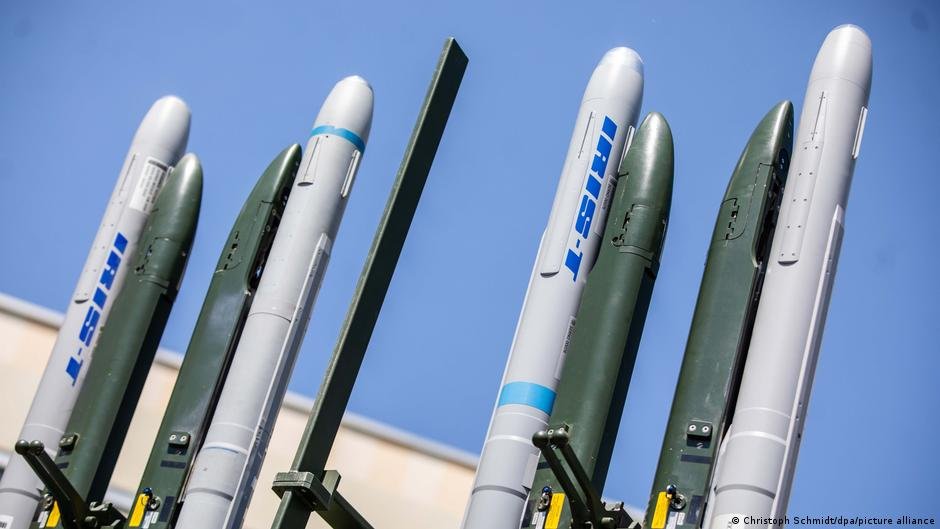
German companies have been particularly successful, with growth of up to 36%. “It’s almost all connected to Russia’s invasion of Ukraine,” Nan Tian said. “There has been an increase in demand from the German armed forces. Whether it’s Rhinemetal or Diehl, building tanks, armored personnel carriers, ammunition, of course, for the German armed forces to replenish what they have sent to Ukraine as military aid, but also to expand the number of tanks, infantry fighting vehicles, etc.”
Russia’s war economy is thriving despite sanctions
Russia is listed separately in the SIPRI rankings. And it is not surprising that Russian arms manufacturers have seen significant growth. While Russia’s export revenues declined due to international sanctions, a sharp increase in domestic demand offset the losses.
But Russia is a special case, said SIPRI’s Nan Tian. “The country has completely changed its priorities. Production for the last three years has now become more in line with the war economy.” All resources have been devoted to the war, Tian said. According to the SIPRI report, Russia will increase the production of 152 mm artillery shells by 420% between 2022 and 2024: from 250,000 to 1.3 million.
Due to international sanctions, the Russian arms industry lacks parts from abroad, especially electronics for aircraft. However, the notion that the Russian economy would collapse as a result has proven false, Nan Tian said. “The situation in the country is much worse now than if it had not invaded (Ukraine), because of course there would not be sanctions, but the country has proven to be quite resilient to these various sanctions and economic issues.”
Nan Tian believes that the transformation of the Russian economy has now advanced so far that, if lasting peace is achieved in Ukraine, it will be difficult for Russia to return to a non-war economy.
Chinese arms revenue declines due to corruption
With 23 listed arms companies, Asia ranks third after the US and Europe. But Asia is the only region where companies’ revenues were lower than in 2023. It was mainly Chinese companies whose revenues declined significantly – by 10%. According to the SIPRI report, such a decline was not recorded in any other country.
“This has nothing to do with the peace of the regions,” Nan Tian said. “In particular, the shortage in Asia and China is due to a lot of corruption allegations against Chinese arms companies,” he said, adding that this had led to the cancellation or postponement of large arms orders.
In contrast, companies in the Middle East recorded a larger growth of 14%. Never before has the region been represented by so many companies in the annual SIPRI statistics: nine in total. Three are based in Israel, which has a particular demand for drones and air defense systems.
The region also includes Türkiye, which has once again seen revenue growth. However, Bekar, maker of the Bekartar combat and reconnaissance drone, failed to match its export figures to Ukraine from 2024.
Top companies based in the US
According to SIPRI, the world’s five largest arms companies are Lockheed Martin (which makes the F35 fighter jet), RTX (formerly Raytheon Technologies, which makes aircraft engines and drones), Northrop Grumman (which makes long-range missiles), BAE Systems and General Dynamics (which makes nuclear submarines and guided missiles). All are based in the US, except the British company BAE Systems.
This is the first time since 2017 that a company outside the US has been included in the five largest arms manufacturers. By comparison, the military division of the European Airbus consortium is ranked 13th among the 100 most important companies, while the German company Rhinemetal is ranked 20th.
In 2024, four of these 100 companies were based in Germany: Rhinemetal, ThyssenKrupp, Hensoldt and Diehl. Together, they generated revenues of $14.9 billion. The war in Ukraine led to a large number of orders, especially from the manufacturer Diehl for their land-based defense systems.
The order for 155 mm artillery shells for the German armed forces, the Bundeswehr, is the largest ammunition order in the company’s history. Rhinemetall was able to earn 47% more from tanks, armored vehicles and ammunition.
KNDS, the German-French alliance of tank manufacturers Kruse-Maffei, Wegmann and Nexter, is ranked 42nd. This joint venture has also developed. At 40%, the number of orders grew significantly more than revenue, at 14%. Here too, the war in Ukraine and the threat from Russia have ensured that orders are filled.
This article was originally written in German.
While you’re here: Every Tuesday, DW editors provide insight into what’s happening in German politics and society. You can sign up for the weekly email newsletter, Berlin Briefing, here.
<a href