Sudan’s military and paramilitary Rapid Support Forces are eyeing more territory as international stakeholders push for a ceasefire.

Published on 30 November 2025
The humanitarian situation in Sudan remains dire as the country’s military – the Sudanese Armed Forces (SAF) – is locked in a devastating conflict with the paramilitary, the Rapid Support Forces (RSF).
The generals leading both sides, both accused of war crimes and crimes against humanity in the resource-rich northeast African nation, show no real signs of bowing to international calls for a ceasefire.
Here are this month’s major battlefield, humanitarian and political developments.
Battle and military control
- The RSF has been killing civilians and consolidating its control over western Darfur state after capturing al-Fashar, the last remaining army stronghold in the region, in late October.
- The SAF controls most of the eastern and central parts of the country, including the capital Khartoum and parts of Kordofan. But the RSF and some of its allied militias are mobilizing troops and equipment to capture more areas in central Kordofan.
- The RSF has set its sights on the strategic cities of Babanusa and al-Obeid, which provide a significant military advantage as they provide a route to Khartoum and also provide an economic edge as they are rich in agricultural, livestock and petroleum resources.
- Army troops celebrated the takeover of Kazakil and Um Dam Haj Ahmed in North Kordofan in mid-November, and have captured territory in central Sudan as international stakeholders press for a ceasefire that could potentially stabilize the war.
humanitarian crisis
- Witnesses and international aid agencies working on the ground in Darfur recalled widespread horrific examples of atrocities committed by RSF following the bloody takeover of el-Fashar. Evidence shows that RSF fighters have engaged in mass killings, rape of women and girls, and the holding of hostages for ransom.
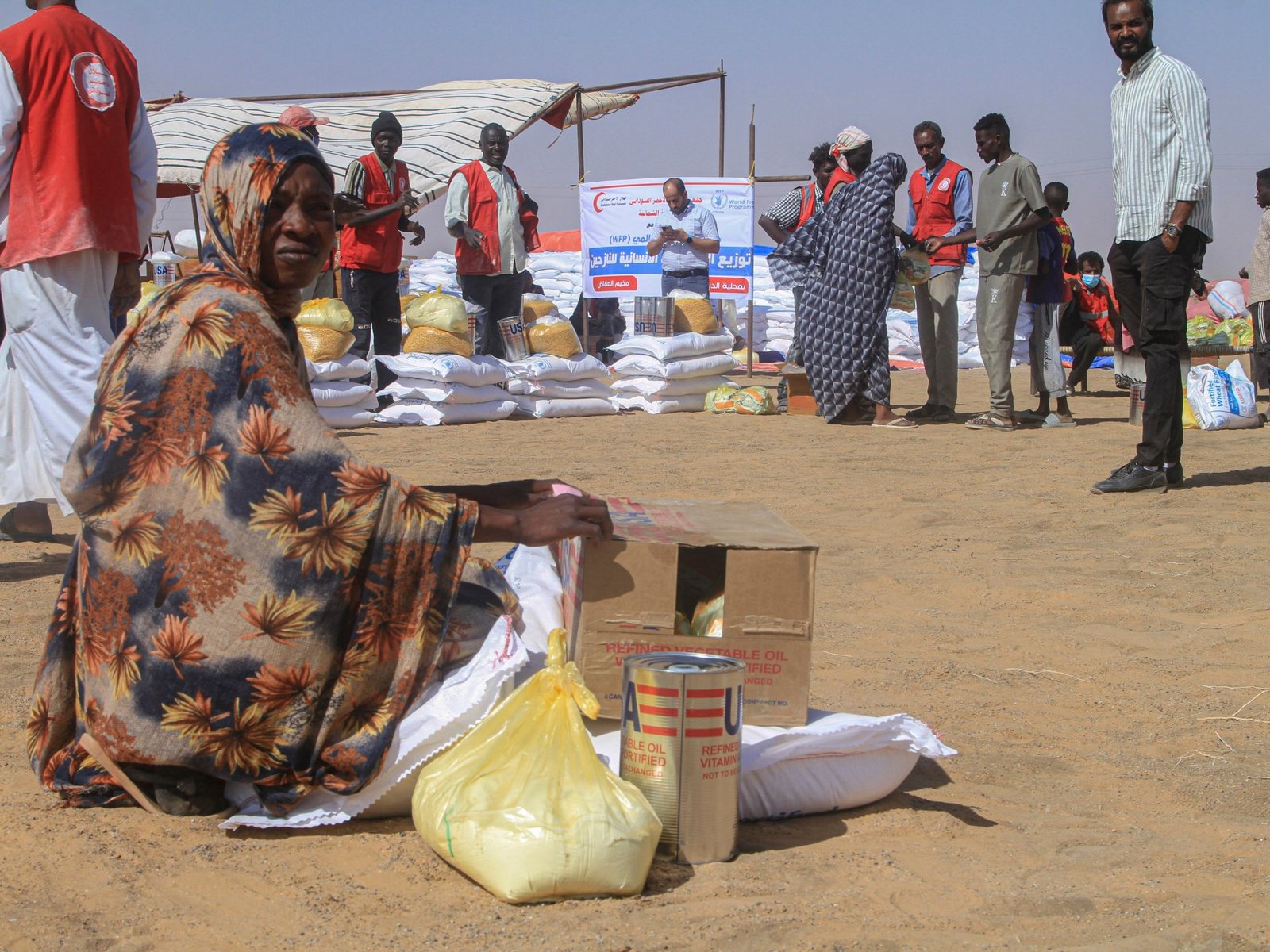
- Thousands of people are missing after fleeing al-Fashar in surrounding areas such as Tawila. Thousands of Sudanese civilians have been forced to flee to neighboring Chad, where the humanitarian situation is no better, and UN agencies are working to aid people amid declining finances.
- Satellite images revealed that the RSF systematically burned large numbers of bodies and buried them in mass graves in several areas of al-Fashar to conceal what a Sudanese NGO called a “genocide”.
- The Integrated Food Security Phase Classification, or IPC, confirmed in early November that famine had been detected not only in Al-Fashar, but also in Kadugli, located in South Kordofan. The U.N.-backed Global Hunger Monitor said 20 other areas in Darfur and Kordofan are also at serious risk of reaching famine because most aid is blocked.
- Amy Pope, director-general of the UN’s International Organization for Migration, said Sudan has the world’s largest displacement crisis and should not be ignored despite affecting mostly children and women. About 14 million people have been internally displaced or forced to flee to poorer neighboring countries.

Diplomacy and political development
- The so-called Quad, which includes the United States, Saudi Arabia, Egypt and the United Arab Emirates, has put forward a ceasefire proposal that envisages a future transition to civilian rule in Sudan. Fighting continues on the ground, while the RSF claims to have accepted the offer and the SAF refuses to do so.
- The RSF announced on 6 November that it had accepted the mediators’ proposal, and its commanding general, Mohammed Hamdan Dagalo, widely known as Hemedti, released a video message on 26 November claiming that his paramilitary force was clearly committed to a unilateral three-month “humanitarian ceasefire”. But RSF attacks did not stop in November.
- The RSF commander’s announcement came a day after army chief Abdel Fattah al-Burhan told senior commanders in an address released by his office that he categorically rejects the Quad proposal. Al-Burhan said the proposal drastically weakens the armed forces, disbands security agencies and keeps the RSF in its position.
- The army commander also hit out at the UAE, saying the Quad lacked credibility as “the entire world has seen the UAE’s support for rebels against the Sudanese state”. Abu Dhabi, the largest importer of gold from Sudan, has been refusing to provide arms and funding to the RSF.
- US President Donald Trump pledged “cooperation and coordination” to end Sudan’s war following an appeal by Saudi Crown Prince Mohammed bin Salman during a White House visit. Massad Boulos, Trump’s senior adviser on Arab and African affairs, held a joint press conference in Abu Dhabi with Anwar Gargash, diplomatic adviser to the UAE President, to push the ceasefire proposal.
<a href