Christine Jeavons and Callum Thomson,bbc verification

 getty images
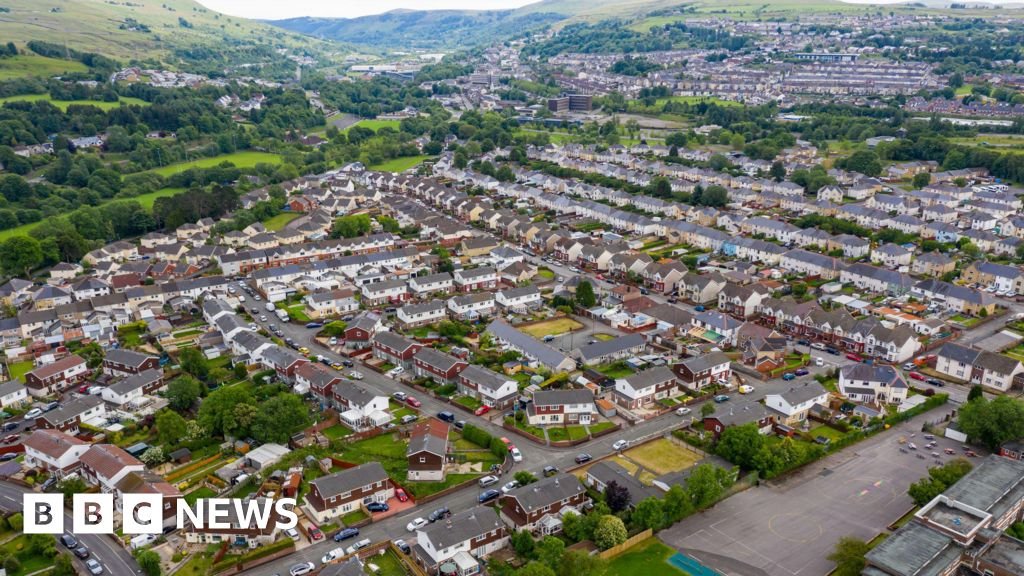
A neighborhood in the town of Rhyl, Denbighshire has been named as Wales’s most deprived area for the second time since 2019, according to new figures.
The Welsh Index of Multiple Deprivation (WIMD), published every few years by the Welsh Government, is the official measure of relative deprivation for neighborhoods in Wales.
It takes into account a number of factors including personal income, housing and health.
The data revealed that Blaenau Gwent was the local authority with the highest concentration of extremely deprived neighbourhoods.
Monmouthshire was the only council that did not have any neighborhood rated as highly deprived, with one neighborhood of Chepstow found to be the least deprived in Wales.
The 2025 WIMD ranked 1,917 neighborhoods in Wales, each with an average population of 1,600 people.
It looked at living conditions using eight different indicators including income, employment, health, education, access to services, housing, community safety and physical environment.
The results do not show whether a region has gotten better or worse from the previous version, but rather how the regions have changed relative to each other.
There are areas of deprivation throughout Wales and it is not the case that everyone in a highly deprived neighborhood will be struggling, nor that everyone in a less deprived area will be well off.
How is deprivation measured?
The 2025 WIMD ranked approximately 2,000 small areas across Wales and divided them into 10 equal groups, called deciles, where the first decile was the 191 most deprived neighbourhoods, and so on.
We are using terms such as “highly deprived” and “most deprived” to refer to the group of neighborhoods in the first decile. There are areas of deprivation across Wales and not everyone in a neighborhood will experience deprivation equally.
The area around Rhyl High Street has been ranked as the most deprived area in Wales for the second time, but that doesn’t mean nothing has changed since 2019.
When people in Rhyl spoke to BBC Wales on Monday, ahead of the release of the new data, they had differing views on how the situation was in the area.
“People are struggling,” said Valerie Long, 62, who has lived in the city for four years.
But he said he has seen some investment.
“There are other things for kids, like the new park across the street.”

“It’s gone down a lot,” said Jay Street, 26, who has lived in Rhyl his whole life.
Mr Street still lives with his parents and cannot afford the properties he has seen online.
Although he likes living with his parents, he said he “sees no light at the end of the tunnel” when it comes to affording his home.
After using the services himself, Mr Street became a volunteer for Brighter Futures, a local charity which provides services designed to improve people’s health and well-being.
“Places like this have saved a lot of people, including me.”
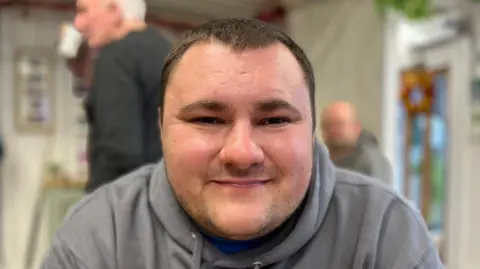
The charity’s community garden is particularly popular, according to Penny Pierce-Whitby, who runs it.
“For people who live in this area and don’t necessarily have access to green spaces, this is a perfect place to come and sit on a sunny afternoon,” he said.
“Green spaces are incredibly important for people’s mental health and wellbeing.
“It’s not always about the money, it’s about encouraging people to get out.”
Denbighshire Council said that although some neighborhoods of Rhyl were very deprived, they “do not represent Rhyl as a whole”.
A spokesperson said that Rhyl has seen “substantial public investment” over the past decade, including a £100m flood defense upgrade which has “transformed the seafront” with a new promenade and large children’s play area.
The council said other developments are also taking place, including the modernization of attractions such as the Rhyl Pavilion theater and hundreds of new affordable homes.
“The regeneration of Rhyl is underway, but this long-term approach takes time,” the council said.
The Welsh Government said it was “committed to tackling poverty and improving outcomes for people”.
A spokesperson said, “The challenge of breaking the cycle of poverty is not one we can solve overnight”, adding that the government is using “all levers available to tackle poverty”, including investing £7 billion between 2022 and 2026 to support families and “programs to help disadvantaged groups integrate into the workforce”.
Blaenau Gwent Council has been asked to comment.
Additional reporting by Megan Davis and Brendan Williams
<a href