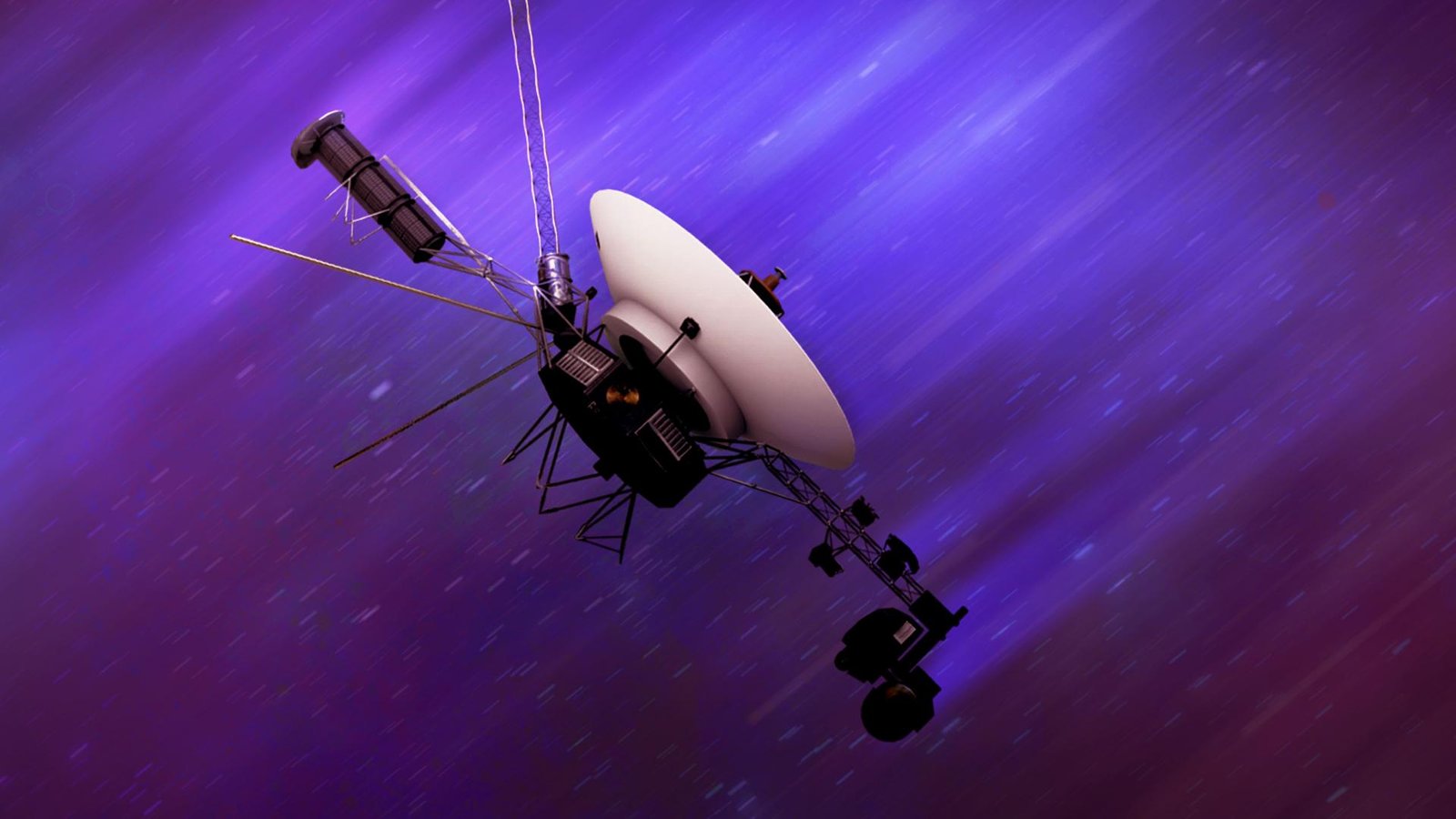
Launched in 1977 to explore Jupiter and Saturn, Voyager 1 entered interstellar space in 2012, becoming the most distant human-made object ever. Traveling at a speed of about 11 miles per second (17.7 km/s), it adds about 3.5 astronomical units (the distance from the Earth to the Sun) every year. Despite decades in the harsh environment of space, Voyager 1 continues to send data thanks to its radioisotope thermoelectric generator, which will last until the 2030s.
Communication with Voyager 1 is slow. It now takes about a day for orders to arrive, another day for confirmation. Compare this to the Moon (1.3 seconds), Mars (up to 4 minutes), and Pluto (about 7 hours). The probe distance allows each instruction to be practiced in deep space operations to a patient. To reach our nearest star, Proxima Centauri, would take more than four years, even at the speed of light – showing how short a light-day is in cosmic terms.

Voyager 1’s journey exceeds a record in terms of distance. From its planetary flight to the prestigious ,The ‘Pale Blue Dot’ image, it reminds us of the sheer scale of the Solar System and the incredible endurance of the spacecraft, which is designed to continue exploring without ever returning.
<a href