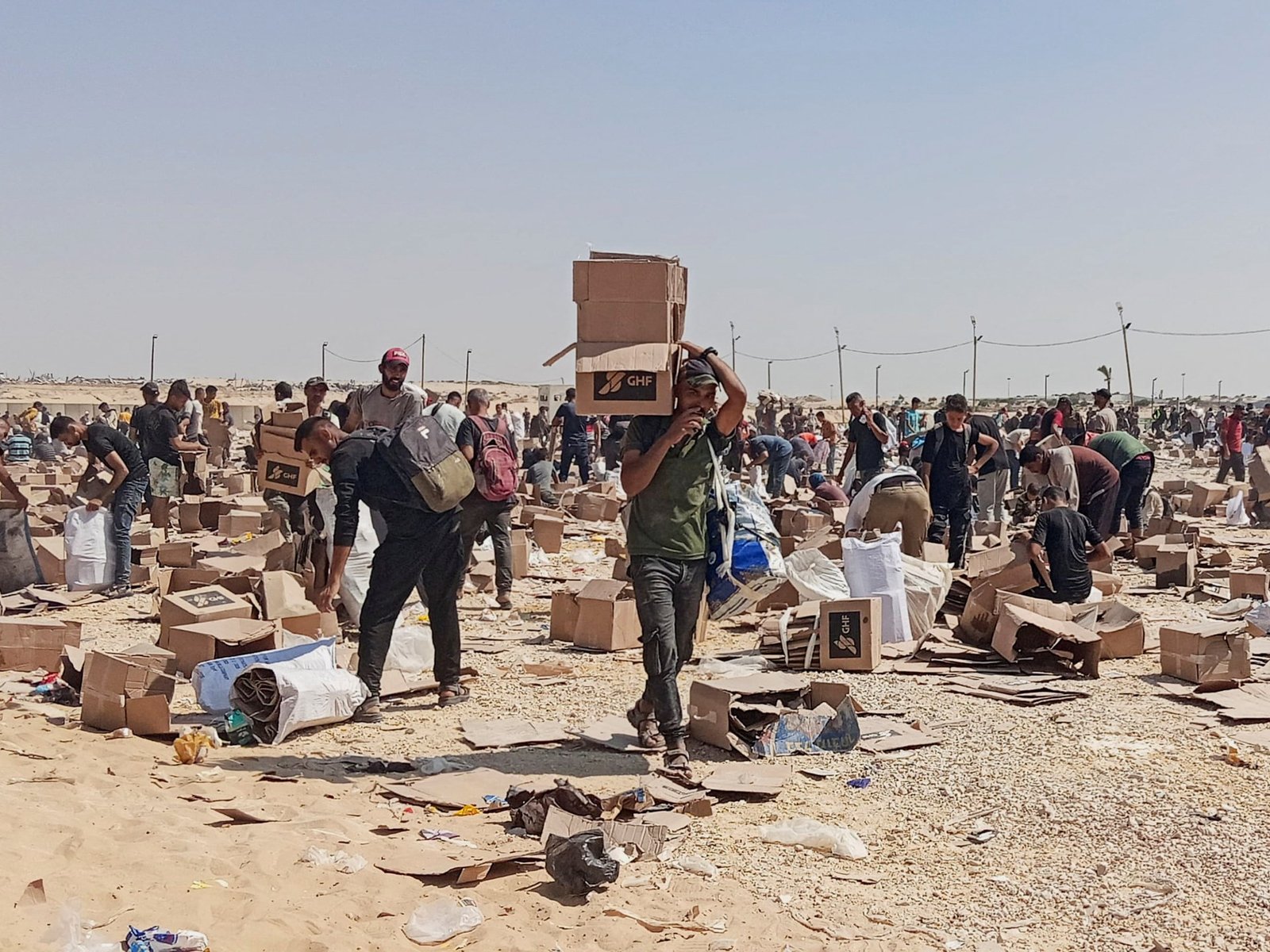
Under increasing international pressure to allow aid into the besieged Gaza Strip earlier this year, Israel and the US supported the GHF as an independent agency to provide aid. Israel completely blocked aid to the Strip since March this year, claiming that Hamas was stealing aid provided by UNRWA, the United Nations agency for Palestinian refugees. Israel provided no evidence for this and also blocked UNRWA workers from entering the Strip since February.
Recommended Stories
list of 3 itemsend of list
While the UNRWA network had operated about 400 sites across the Strip before that, the GHF, protected by armed American private security contractors, established only four “mega-sites” to distribute food and other aid to Gaza’s population of about two million Palestinians – three in southern Gaza and one near Gaza City.
Additionally, since the organization began operations in Gaza in May, Israeli forces and some US contractors have been regularly firing on Palestinians coming to receive aid. Chaos led to large crowds gathering around the sites and some people suffocated or died in the stampede.
While GHF executive director John Acree said in a statement on Monday that the organization ran “the only aid operation that reliably and safely provides free food directly to the Palestinian people in Gaza”, according to UN figures, more than 2,000 aid-seekers were crushed or killed by gunfire.
The GHF “mission” to Gaza this year unfolded as follows:
26 May – The GHF issued a statement announcing it would begin direct aid distribution inside the damaged enclave, hours after its executive director, Jake Wood, resigned citing concerns about the agency’s independence. The United Nations and other aid agencies refused to work with the GHF, warning that requiring Palestinians to gather at a few centralized aid points would put people at risk and undermine other aid efforts.
27th May – GHF begins operations in Gaza. Israeli forces opened fire on thousands of Palestinians attempting to get food in the Rafah area of southern Gaza, killing at least 10 and wounding dozens. Those seeking aid are forced to climb over fences and walk through packed crowds to reach life-saving supplies. UN spokesman Stephane Dujarric says it is “heartbreaking” to see thousands of Palestinians attacked at an aid site as the chaos underlines the dire situation of hunger in Gaza. Gaza’s government media office called the incident “deliberate genocide and a full-blown war crime.”
29 may – Israeli forces opened fire on an aid center in southern Gaza, killing 10 and wounding dozens. Shortly afterward, several explosions were reported near another aid center on the Netzarim corridor, which divides northern Gaza from the rest of the Strip. It is unclear what caused the explosions and there are no reports of any injuries.
30th May – Israeli forces fired on civilians waiting to collect food at a GHF distribution point on Salah al-Din Street in central Gaza, wounding at least 20 people.
1 June – Israeli tanks killed at least 32 Palestinians waiting to receive food at two aid distribution sites in Gaza, while wounding more than 200 others.
June 3 – UN Secretary-General Antonio Guterres says the killing and wounding of Palestinian aid seekers is “unacceptable” and calls for an independent investigation after Israeli forces opened fire near an aid distribution site in Rafah. Gaza’s Health Ministry says at least 27 Palestinians have been killed and 90 injured in the incident.
June 8th – At least 13 Palestinians were killed, and more than 150 were wounded when Israeli soldiers and US security contractors fired on crowds waiting for food at two aid distribution sites in Gaza, one east of Rafah and the other near the Wadi Gaza Bridge. Gaza’s government media office has accused Israel of turning distribution sites into “human slaughterhouses”.
16th July – At least 21 Palestinians were killed at a GHF aid distribution center in southern Gaza. Eyewitnesses say Israeli forces fired into the crowd, causing a stampede. At least 15 people died of suffocation, while others were shot. Mohammed Abedin, a twenty-four-year-old survivor of the incident, told Al Jazeera that he was “shot like animals”.
22 July – The UN says the number of Palestinians killed while trying to get food from GHF distribution points in Gaza has topped 1,000.

1st August – Anthony Aguilar, a former GHF contractor, tells Al Jazeera about the deadly and unprofessional practices he witnessed at aid delivery sites in Gaza. This involves using heavy artillery to fire at unarmed populations in what the organization has described as “warning shots”. “They call it a warning shot, I call it a war crime,” he said.
2 August – At least 38 Palestinians seeking aid at GHF-run distribution sites were killed, despite Israel announcing on 27 July that it would begin enforcing a “strategic pause” in fighting in some areas to provide Palestinians greater access to humanitarian aid.
5th August – Twenty-eight UN experts called for the destruction of the GHF, calling it a “deeply disturbing example” of the exploitation of aid for military purposes.
9 August – Amid global outrage, Israel has allowed some aid to be airdropped into Gaza by countries including Germany, Belgium and Jordan, but a 15-year-old Palestinian boy was crushed to death by falling pallets during an airstrike near the so-called Netzarim corridor in central Gaza.
4 september – The Office of the UN High Commissioner for Human Rights (OHCHR) says it has recorded more than 2,146 deaths around GHF-run sites and along the routes of aid convoys.
12 October – The GHF has confirmed that it has suspended operations following the announcement of the US-brokered ceasefire between Israel and Hamas, which came into force on 10 October.
10 November – A documentary, Breaking Ranks: Inside Israel’s War, is broadcast on UK network ITV. It includes testimony from Israeli soldiers stationed in Gaza, some describing how GHF guards “will open fire even if they see no concrete threat”.
24 November – The GHF announced that it was ending its “mission” in Gaza after the ceasefire. It claims to have distributed more than 3 million food boxes, equivalent to 187 million meals.
<a href