A State Department spokesperson confirmed to Al Jazeera that it supports the ASC “approach”, saying it was considered the most effective way to achieve the goal of “getting people into safe accommodation as quickly as possible”.
Recommended Stories
4 item listend of list
The ASC plan has emerged in recent weeks as part of broader discussions that would see Gaza divided into a “green zone” controlled by Israel and a “red zone” controlled by the Palestinian group Hamas.
There is little clarity on how the plan will work, and details are still in flux, but as The New York Times and other outlets report, the broad outline is that reconstruction in Gaza will occur only in areas controlled by Israel, not in areas where Hamas still operates.
This means that the areas where most of Gaza’s estimated 2.2 million residents still live, including Gaza City and central areas like Deir al-Balah, will see no reconstruction, despite the deplorable conditions in which Palestinians live.
A State Department spokesperson said, “Addressing the urgent need for safe housing in Gaza is (our) central concern.”
“US efforts are directed toward reconstruction in those parts of Gaza where the majority of the population currently lives,” the spokesperson said, although it was unclear whether this meant that reconstruction would also take place in non-Israeli-controlled areas under the ASC plan or whether the US expected the majority of Gaza’s population to move to Israeli-controlled areas.
Some reports have suggested that ASCs would include complexes housing 20,000 or 25,000 people in container-sized units, such as those currently used in disaster relief. It is currently unclear how these complexes could be expanded to accommodate all Palestinians in Gaza.
“If they (the US and Israel) can establish a proper situation, people can go there, but that is not possible,” Hussein, a Palestinian from Gaza City, said of the US plans. “What are they going to install, with what infrastructure? It will require water, electricity. It will take years.”
Who will pay?
More than 69,700 Palestinians have been killed in Israel’s genocidal war in Gaza. Now, more than a month after the ceasefire officially began in Gaza, there are still questions over what the next phase of the agreement will entail and when full-scale reconstruction will begin.
Meanwhile, Israel continues to carry out periodic attacks since the ceasefire began on October 10, killing at least 347 people.
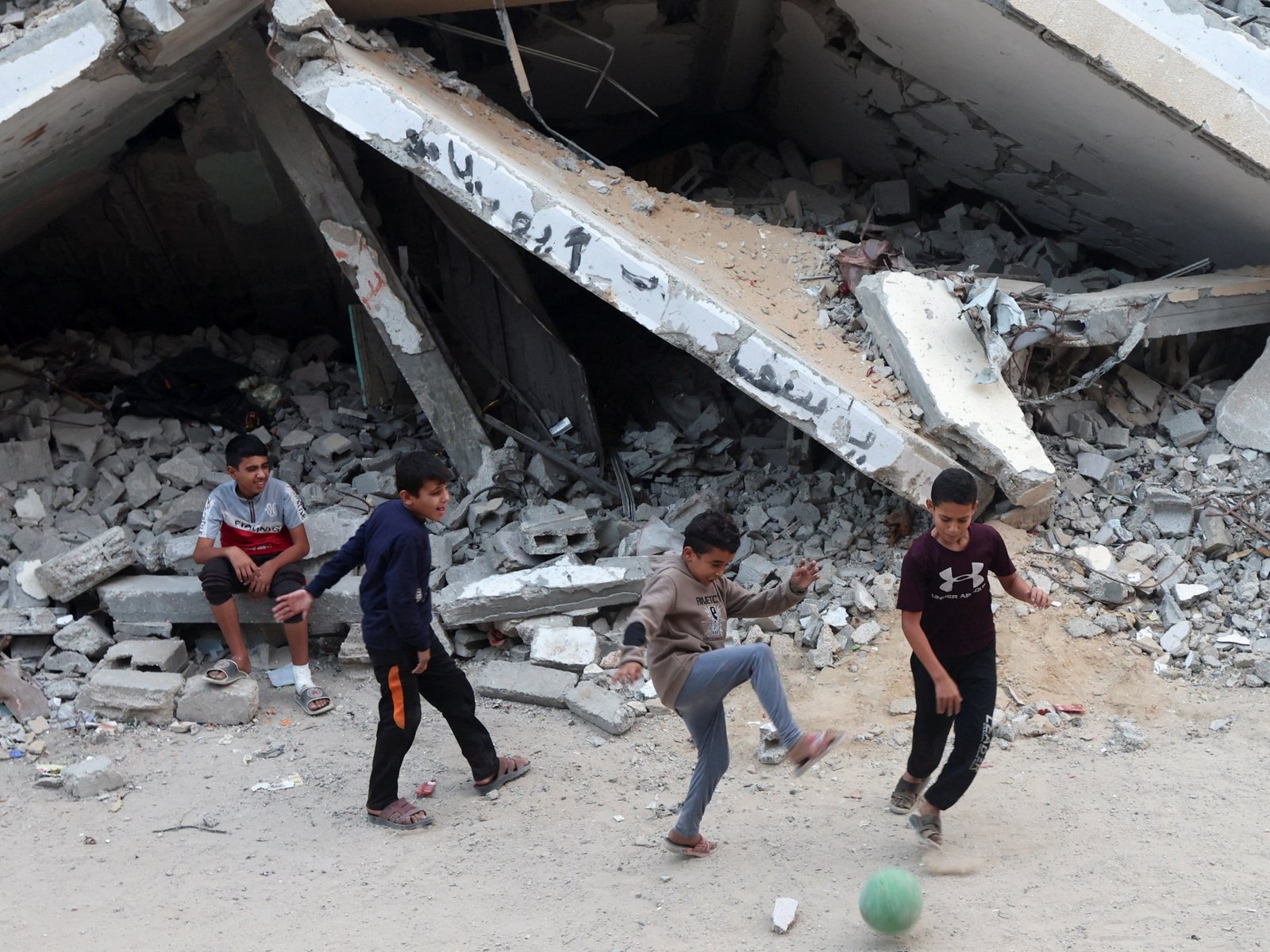
For those who are still alive, life is incredibly difficult. At least 1.9 million people are displaced in Gaza. Many of them have had to flee several times. 92 percent of Gaza’s housing stock has been damaged or reduced to rubble, leaving thousands of people living in tents, a situation particularly precarious as winter approaches.
The destruction of Gaza’s buildings has resulted from Israeli airstrikes and shelling, as well as a systematic campaign to deliberately demolish vast sections of the territory.
Officials quoted in the New York Times said the first ASC campus is still several months away from completion. Israeli troops were expected to begin clearing the area around the ruins of Rafah in the south this week. But that work could be delayed if tunnels, unexploded ordnance or human remains are discovered.
Two people involved in the project estimated that the cost of the initial complex alone could reach millions of dollars. Overall, Gaza’s reconstruction is expected to cost at least $70 billion and take several decades. It is not clear where the money for reconstruction will come from.
Who will pay for the proposed ASC is equally unclear. The administration of US President Donald Trump has reportedly refused to fund their construction, while Israeli politicians have not yet confirmed their final position.
A U.S. State Department spokesperson had no comment on the funding, and Israeli Prime Minister Benjamin Netanyahu’s office did not respond to a request for comment.

Engineering a New Gaza
While few Palestinians currently live in the Israeli-controlled area of Gaza, US hopes rest on the idea that development, security and possibly access to medical care and welfare will be enough to attract people from other areas of Gaza.
But complicating US ambitions is that access to the “green zone” for Palestinians has been heavily restricted, a situation that is likely to continue.
According to The New York Times, Israeli security services could run background checks on Palestinians seeking asylum in the new compounds, giving Israel a veto over who is allowed in.
The outlet said European diplomats have expressed concern that the final criteria could exclude large numbers of Palestinians, including civil servants such as police and medical staff who have served under Hamas’s 18-year administration of the enclave, as well as their family members.
And aid agencies said the idea of providing aid only to people in some areas at the expense of others goes against humanitarian principles.
“We deliver aid where the people are,” said Tamara Alrifai, director of external relations for UNRWA, the UN Palestinian refugee agency. “We don’t provide services where we want people to be. It goes against the whole philosophy of aid and development.”
“It’s about taking services to where people are, not about creating an artificial village and imposing services on them that you think people need,” he said.

Partition, partition and shrunken space
Arab and European officials, as well as agencies such as Refugee International, have expressed concerns that dividing Gaza into red and green zones could pave the way for permanent division. This idea has also drawn comparisons to the occupation of Baghdad and Kabul, where green areas became effective Western enclaves.
However, the suggestion of dividing Gaza is not entirely new. Speaking in April, Netanyahu spoke of a plan to “divide” Gaza by building a new Israel-controlled security corridor between Rafah and Khan Yunis, suggesting that Israel was preparing to separate the two cities.
As recently as September, far-right Israeli Finance Minister Bezalel Smotrich described Gaza as a “real estate bonus”, telling an audience that he was already in talks with the Americans on how to divide the enclave after the war.
Smotrich and other Israeli settler leaders have consistently called on Israel to create illegal settlements for Jewish Israelis in Gaza and essentially force the Palestinian population into ethnic cleansing.

“How can you divide it?” Chatham House’s Yossi Mekelberg asked rhetorically. “You can’t squeeze 2 million people into an even smaller space than they’re already in.”
“Imposing an Israeli or American solution on Gaza is not going to work,” Mekelberg said. “If you want to even try to achieve something lasting, you have to start with an understanding of Gaza’s history, culture and trauma.” “Palestinians need to be part of any agreement, otherwise it will never be stable.”
In Gaza, news of US and Israeli plans for the future of Palestinians is doing nothing to reassure the battered and displaced population after two years of Israeli attacks.
Hussain said, “Nobody talked to us. Nobody thought about what the people here needed.” “What about people’s houses and land? Do they just leave them to live in a container?”
<a href