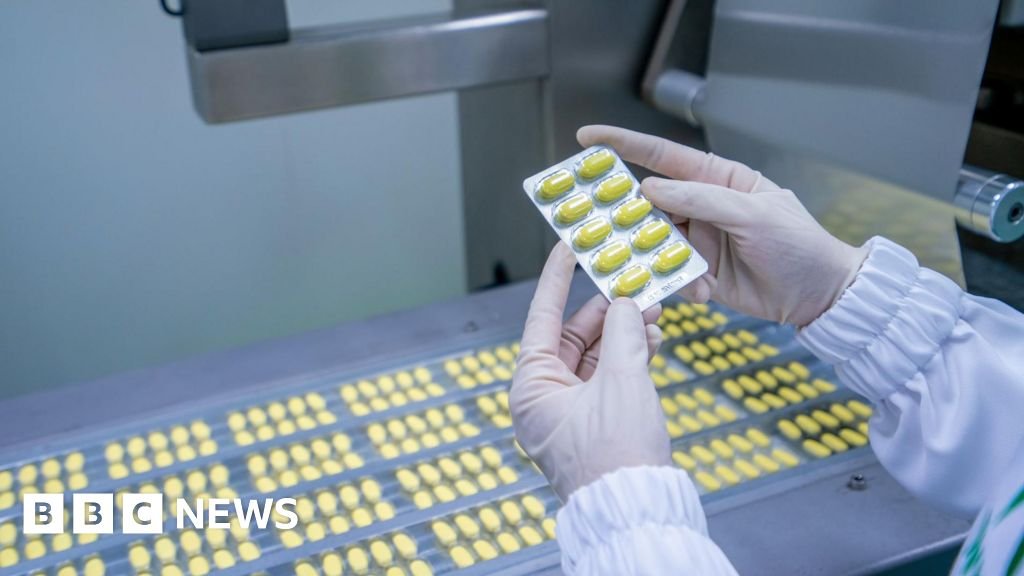
The UK and US have agreed a deal to keep tariffs on UK pharmaceutical imports into the US at zero.
Under the agreement Britain will pay more for medicines through the NHS, in return for a guarantee that import taxes on pharmaceuticals will be zero for three years.
The deal comes after US President Donald Trump threatened to increase tariffs on branded drug imports to 100%.
Pharmaceuticals are one of the UK’s largest exports to the US, which is by far the biggest market for major UK drugmakers including GSK and AstraZeneca.
At the beginning of the year US President Donald Trump announced a huge increase in taxes on goods imported into the country, which he argued would create jobs and boost American manufacturing.
In June, Trump signed a deal with the UK to remove some trade barriers between the countries and reduce tariffs on most goods exported to the US to 10%. But pharmaceuticals remained a big unknown.
Trump has argued that American consumers effectively subsidize drugs for other developed countries by paying premium prices for those drugs.
US Health Secretary Robert Kennedy Jr. said that Americans should not have to pay “the world’s highest drug costs for the very drugs they are meant to help”.
“This agreement with the United Kingdom strengthens the global environment for innovative medicines and brings long-awaited balance to US-UK pharmaceutical trade,” he said in a statement.
In the 12 months to the end of September, the UK exported medicines worth £11.1 billion to the US, accounting for 17.4% of all goods exports in that period, according to the Department of Trade and Commerce.
Business and Trade Secretary Peter Kyle said the deal “guarantees that UK pharmaceutical exports – worth at least £5 billion per year – will enter the US tariff free, protecting jobs, boosting investment and paving the way for the UK to become a global hub for life sciences.”
The deal would see Britain raise by 25% the price threshold at which it considers new treatments too expensive.
The UK will also increase the total amount the NHS spends on medicines, with the aim of increasing that spending from 0.3% of GDP to 0.6% of GDP over the next 10 years.
To ensure the health system does not spend more than its allocated budget, the amount pharmaceutical companies must pay back to the NHS will be capped at 15% – last year, pharmaceutical companies had to pay more than 20%.
In return, UK pharmaceutical exports will be protected from tariff increases for the next three years.
A long-running dispute between the industry and the UK government over spending levels and approval rates was intensified by the Trump administration’s insistence that US customers were paying several times more for the drugs than those in the UK and Europe.
Several big pharma investments in the UK have been paused or canceled over the past 18 months, while GSK and AstraZeneca both recently announced billions of dollars of investment in the US.
Health Secretary Wes Streeting said in August that he was not prepared to let drug companies “cheat” Britain after talks broke down between the government and pharmaceutical companies over drug prices.
But Science Minister Sir Patrick Vallance later told the BBC that he accepted the NHS needed to spend more on medicines because spending on medicines had fallen as a percentage of its budget over the past 10 years.
In mid-September, British pharmaceutical giant GSK pledged to invest $30 billion (£22 billion) in research and manufacturing in the US over the next five years.
A week before GSK’s US investment announcement, US pharmaceutical company Merck – known as MSD in Europe – revealed it was canceling a planned £1bn expansion of its UK operations.
Shortly afterwards, AstraZeneca also announced it was halting a planned £200m investment in the Cambridge research facility. In July, AstraZeneca said it would invest $50 billion in drug manufacturing and research and development in the US.
<a href