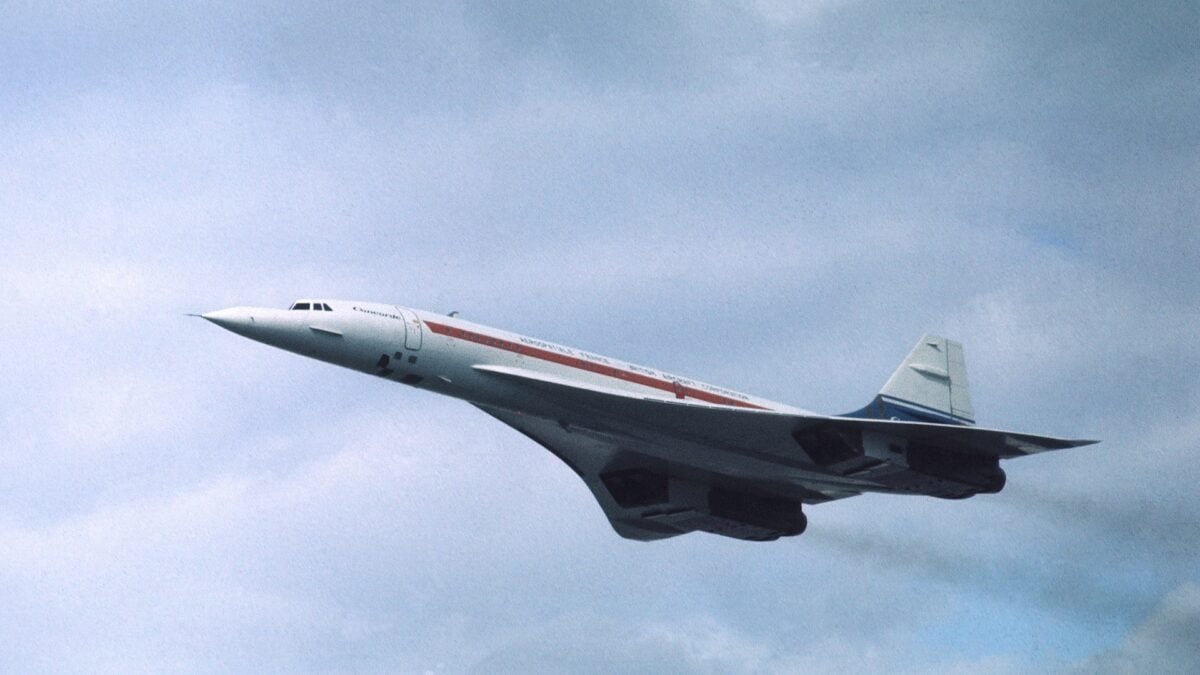

United’s president, Richard J. Ferriss got some things right, like the idea that the US government would deregulate the airline industry. But they also got a lot wrong, including the idea that there will be only three major airline carriers and that supersonic jets will become common by 2020.
Ferris’s predictions appeared in an article for the Chicago Tribune that was syndicated to newspapers across the country. The article began with a fairly bold statement in which Ferris asserted that “If American aviation had developed as rapidly as the computer industry, only nine years would have passed between the Wright brothers’ flight and manned satellites.”
Commercial air travel in the 1970s was regulated by the government, restricting everything from the routes that could be opened to the prices that could be charged. Ferris predicted in 1976 that the airline industry would be deregulated by 2026, but he did not have to wait that long. The Airline Regulation Act was passed in 1978.
What will happen from regulation? According to Ferris, first class would have been eliminated, which was arguably a more luxurious experience in the 1960s and 70s. You had things like high-end lounges or meals that included lobster. United’s first class meal isn’t quite the same in 2026. He also predicted that discount fares would be eliminated.
Ferris predicted that United would carry an average of 1 million passengers per day. United flies about half as many on an average day.
And then there were the planes. According to the article, Ferris envisioned a fleet that would include several supersonic jets and double-decker aircraft:
By 2026, Ferris estimates his carrier will be equipped with 800 aircraft, including 500-seat supersonic jets for international flights and 1,700-seat super wide-body, double-deck aircraft for long-haul service.
The latter would be so huge that they would require 20 landing gear units to support 1.5 million pounds gross weight. But for short-haul service in dense markets, 800-seat, double-deck air buses will dominate the field.
It’s not hard to understand why Ferriss believed supersonic jets were the future of commercial air travel. Concorde’s first flight was in 1969 and it was introduced in January 1976, just months before Ferris’s predictions appeared in print.
Ferris predicted that a flight from Chicago to New York would cost $430. You can get a flight on Frontier for less than $100 today. If you fly United, a round-trip ticket will cost you about $200. He predicted that the fare for a flight from Chicago to San Francisco would be $820. This will actually set you back about $300. He estimated that a flight from New York to Honolulu would cost $1,600. And it’s actually about $600 in 2026.
But Ferris imagined that prices would be much higher due to continued inflation. And he said the prices of other items would also be very expensive, with a “first-class hotel room” costing about $225 per day, compared with $36 in 1976. Ferris expected the average salary and benefits offered to his employees to total $217,000, compared to $18,000 in 1976. In fact, according to salary transparency websites, it’s about half that, with figures ranging from $90,000 to around $90,000. $110,000.
From Ferris’s perspective in 1976, pilots of small aircraft in the United system would need to be paid about $480,000 in 2026. This is certainly true for some of the most senior pilots, although starting salaries are closer to $100,000.
Airfare prices have declined since 1976 and not just because the inflation rate was much lower than anticipated from 1980 to today. Deregulation improved competition and more airlines came onto the scene. There are four major carriers that control about 70% of the US market – American, Delta, United and Southwest – but there are also budget airlines where a deal can often be found.
Today, United’s CEO is Scott Kirby, a Trump man who attended the inaugural dinner after his company donated $1 million to the authoritarian president. And even though he’s on board with Trump’s agenda, Kirby still gets heat from Trump’s far-right base for past statements about DEI.
At the end of the day, Ferriss was very optimistic about the trajectory of technological progress when he was making his predictions in 1976. Just because you can create something that works doesn’t mean it will be our inevitable future. Concorde began carrying passengers in 1976 and would be only one of two supersonic aircraft to enter service.
Concorde was fast, flying from Paris to New York in about 3.5 hours, its fastest flight across the Atlantic was made in 1996 from New York to London in 2 hours and 59 minutes. This is much faster than today, when a nonstop flight would take about 7 hours. But no flight time can compare to that imagined by futurists in the late 20th century. He predicted that the flight from New York to London would take just one hour.
High costs and safety concerns following a high-profile crash in 2000 that killed all 109 people on board and four on the ground would continue to plague Concorde until it flew for the last time in 2003. There are no supersonic flights carrying passengers today and it seems unlikely that we will see one happen in the near future.
We’ve seen this in countless futuristic visions of the 20th century. We’ve invented flying cars, but they’re not something the average American can buy today. We invented jetpacks, but no one is using them to get to work. And we have invented supersonic passenger jets, even flying them commercially for decades. But it is difficult to predict the future.
Inventing something does not mean it will gain widespread acceptance for many different reasons. And if Ferris were still around we’d love to ask him about his old prediction. Unfortunately he died in 2022. That’s another thing about the future, ultimately we all get out of it individually.
<a href