Structural corruption and the rise of “channels to unelected power” are reshaping British politics, according to a stark report from the Equality Trust.
The report claims that unelected influence has increased over the past two decades, driven by the growing political clout of the ultra-rich and the institutions that enable it.
“Our new power concentration index shows that wealth concentration aligns with power,” said Priya Sawhney-Nicholls, co-executive director of the trust. “Our index grows almost exactly in line with the growth in the top 1% share of wealth. This correlation is strong and statistically significant.”
The study – Money, Media and Lords: How the Ultra-Rich are Shaping Britain – argues that unelected power has grown rapidly in Britain, with increasing amounts of money being spent on political access and influence.
“These trends escalate with wealth concentration at the top and are becoming increasingly embedded in the country’s political and media systems,” Sawhney-Nicholas said.
The report shows how the appointment system to the House of Lords, the scale of political donations and the concentration of media ownership act as “channels for unelected power”.
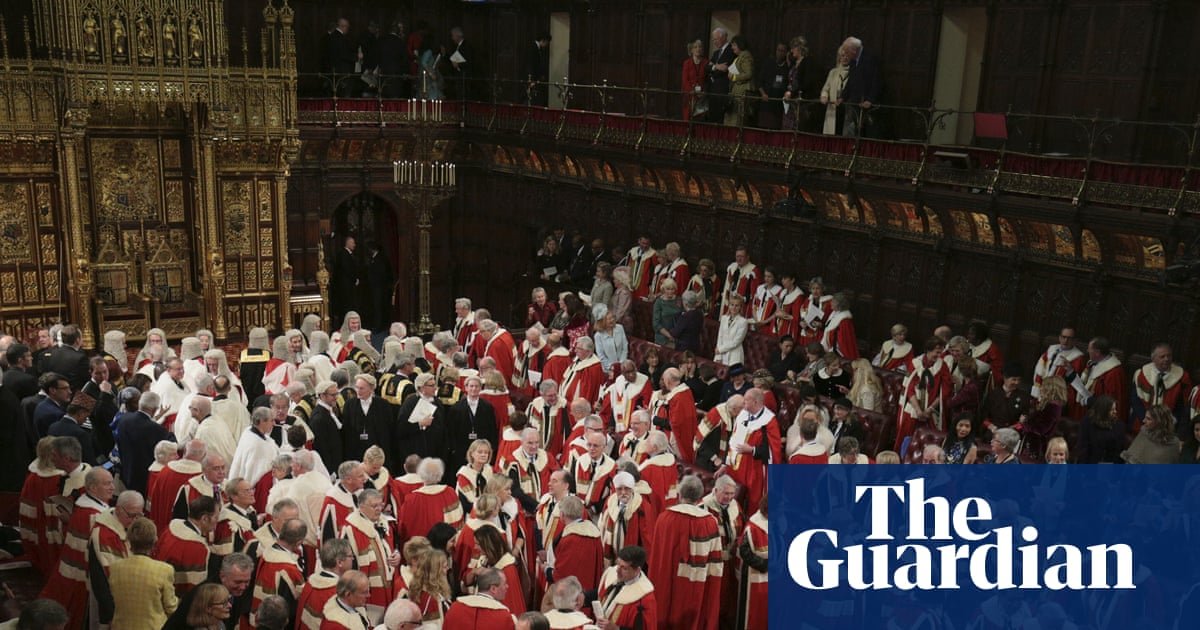
The report notes that the unelected membership of the Lords has increased from 676 to 803 over the past 20 years – with political donations of more than £250,000 increasing from £7.6m to more than £47m over the same period.
It comes a week after seven members of the House of Lords acted in a way that critics described as “grossly unconstitutional” by blocking a bill passed by the House of Commons after years of public debate.
The Guardian’s own analysis also found that one in 10 peers were paid for political advice in the 2019 to 2024 parliament.
The Trust’s report also shows how media ownership has become dramatically more concentrated, with the share controlled by Britain’s three largest news groups rising from 71% to almost 90%.
“This is structural corruption,” Sawhney-Nicholls argued. “It’s a legal, slow-moving operation where institutions adapt to serve concentrated wealth.”
The UK government is preparing media amendments to allow foreign states to own up to 15% stakes in British newspapers and magazines.
This has caused concern among critics who are already concerned that Google accounts for 93% of UK search engine usage, while Meta and Google together account for three-fifths of all UK advertising spend.
The Trust recommends restricting private donations of more than £5,000, placing limits on political appointments and patronage, encouraging ownership diversity and increasing investment and funding in independent local media, reducing the dominance of a few large actors.
The report builds on concerns recently raised by the Media Reform Coalition, which stated that the UK media system is “in a perilous state due to the ongoing decline in media pluralism and the decreasing diversity of news sources”.
Its research found that just three companies – DMG Media, News UK and Reach – control 90% of the circulation of UK national newspapers, a 20% increase in market concentration since 2014.
UK local newspapers are dominated by a handful of corporate chain publishers, with just 2 companies – Newsquest and National World – controlling 51% of the UK’s 882 local newspapers and online local news websites.
The report concluded, “The opaque and unaccountable influence that some Big Tech platforms exert over UK media poses serious challenges to independent journalism and our digital rights.”
Professor Robert Reich, co-founder of Inequality Media, warned that “ultra-rich media owners are tightening their grip on democracy”.
“Billionaire media owners like Musk, Bezos, Ellison and Murdoch are businessmen first and foremost,” he said. “Their highest goal is not to inform the public but to make money.
Reich said, “In an era when wealth is concentrated in the hands of a few individuals who have bought the major media, there is a growing danger that the public will not get the truth it needs to function in this democracy.”
<a href