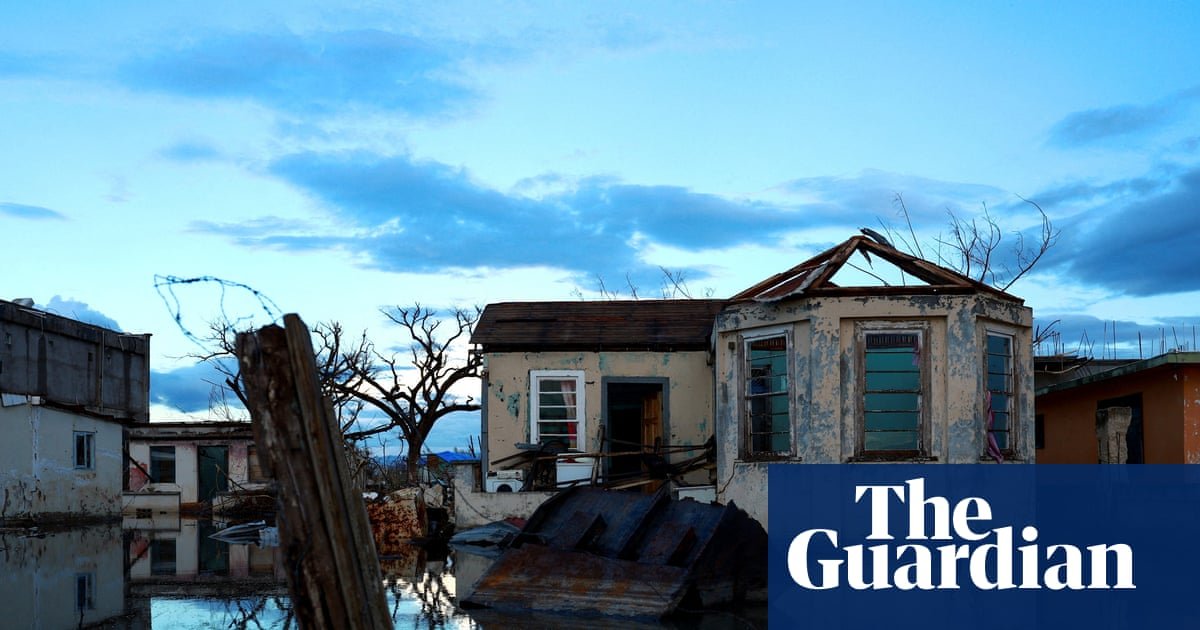
British MPs have joined campaigners calling for more help and humanitarian visas for Jamaicans to enter Britain after Hurricane Melissa devastated parts of the country, plunging hundreds of thousands of people into a humanitarian crisis.
Britain has pledged £7.5m of emergency funding to Jamaica and other islands hit by the storm, but many argue the country has a moral obligation to do more for the former Caribbean colonies.
Dawn Butler, Labor MP for Brent East and chair of the UK all-party parliamentary group on Jamaica, posted on X a letter she had written to the Home Secretary, requesting temporary humanitarian visas and fee waivers for vulnerable relatives of UK citizens affected by the storm.
Butler said that in his constituency, which has one of the largest Jamaican populations in Britain, an emergency meeting called for the relaxation of visa restrictions for children and the elderly affected by the storm, who can stay with relatives in Britain.
“The UK has a long and enduring relationship with Jamaica and I am confident that with compassion and collaboration, we can play an important role in supporting those most in need during this difficult period,” the letter said.
Hackney North and Stoke Newington MP Diane Abbott supported Butler’s call and said Jamaica needs long-term assistance.
“I think when the hurricane first hit, the immediate concern here was to get the tourists back. And once the tourists came back, it kind of fell out of the public eye. And there was also a sense that this was basically a short-term project.
“People need to understand the seriousness of the situation. And (reconstruction) of Black River and (other affected) districts will take a long time and a lot of resources,” he said.
Windrush activist Euanne Herbert-Small said Britain should provide humanitarian protection similar to that given to Ukrainians affected by the war, which has allowed Ukrainian citizens and their immediate family members to come to Britain under the Home for Ukraine sponsorship scheme.
“Jamaica is a Commonwealth country. The king is the head of state. Ukraine does not have the same historical and current ties. And so it is a huge responsibility to support Jamaica, which has strong historical ties with this country and has enriched this country over the years. We did it for Ukraine. We can certainly do the same for Jamaica,” said Herbert-Small, who has started a petition demanding humanitarian visas for Jamaicans affected by Melissa.
Rosalia Hamilton, chief executive of the non-profit Lasco Chin Foundation, which assists hurricane-affected communities in Jamaica, echoed Herbert-Small’s sentiments as she described the staggering need for support on the ground.
“The King is our head of state and there is an expectation on the part of ordinary Jamaicans that … it should mean that in times of crisis, there is at least some kind of special consideration or something that will arise from the fact that he is still the head of state,” he said.
He said the UK’s comparatively small contribution “further undermines the idea that we need King Charles as head of state and that we should still maintain it.”
According to recent reports, approximately one million of Jamaica’s approximately 2.8 million people were affected by the storm, and approximately 150,000 homes were damaged or destroyed. Prime Minister Andrew Holness has estimated losses at around US$8 billion (£6 billion).
After newsletter promotion
Jamaica’s Minister of Labor and Social Security, Pernell Charles, said the government was trying to reach thousands of people in need. It was also assessing the damage done to homes as well as long-term needs, including psychological support.
“Our social workers are constantly on the ground, and we’re opening up our hotlines to make sure that if we get that information, we get it addressed as quickly as possible,” he said.
The country is also battling a deadly outbreak of leptospirosis, with 91 suspected cases and 11 confirmed deaths. Jamaica’s Health Minister, Dr. Christopher Tufton, said: “We had to declare an outbreak because of the increase in the number of cases compared to normal times.” He said hospitals are equipped to detect and treat the disease.
In Britain, the Green Party also called for greater support for Jamaica, linking climate justice to the legacy of slavery. The party’s foreign affairs spokesman said Britain had “a huge historical responsibility in relation to the legacy of slavery”.
Ellie Chowns said: “As a country, we need to move faster to meet our obligations under our international climate targets, but also recognize the broader moral responsibility we bear for the impacts of hundreds of years of fossil fuel burning and the warming that has occurred to date.
“Along with the legacy of slavery, it cannot be easily ignored as part of the context of Hurricane Melissa and similar disasters affecting the Caribbean.”
The Global Afro-Descendant Climate Justice Collaborative has argued that Melissa’s devastation in Cuba, Haiti, and Jamaica is a clear example of how African-descendant people are disproportionately affected by centuries of environmental degradation.
It states: “Global warming began with industrial revolutions made possible by resources made available by imperialism, colonialism, and slavery.”
<a href