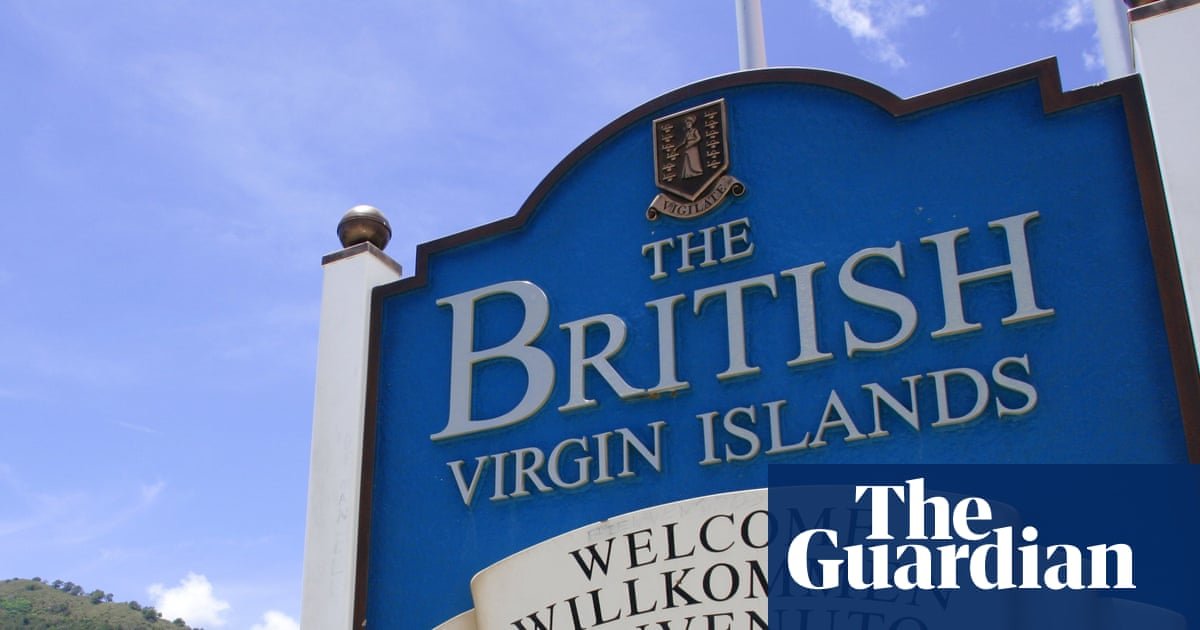
The UK government has been accused of yielding to pressure from the British Virgin Islands to allow access to registers of company share ownership to be restricted only to those with a legitimate interest.
The ban, which will be discussed at a meeting starting on Tuesday between Foreign Office ministers and leaders of the British Overseas Territories (BOTs) in London, is in defiance of legislation passed by the UK government as long ago as 2008 which would have made the register available to all.
Public registers of beneficial share ownership have long been seen as the best means of uncovering corruption and tax evasion in offshore jurisdictions.
An all-party group of MPs has urged ministers to recognize that meetings at a joint ministerial council in London this week represent the UK’s “last chance” to clamp down on shameful corruption in its own backyard, before the Foreign Office hosts a high-profile international anti-corruption conference next year.
The conference was announced by former Foreign Secretary David Lammy.
A letter coordinated by Phil Brickell, chair of the all-party parliamentary group on anti-corruption and responsible taxation, urged ministers to ensure that long-promised transparency measures are implemented in some jurisdictions, including the BVI and the Cayman Islands.
It warns that the Joint Ministerial Council “represents the last chance to get the house of (B)OT in order before next year’s much-anticipated Global Illicit Finance Summit, a key event for the Government’s vision of making the UK the ‘anti-corruption capital of the world’.”
Brickell said, “This has been going on for too long. Promises have been broken again and again and Britain’s reputation as a clean and fair place to do business has been tarnished.”
“Those overseas territories that continue to block and thwart the will of Parliament are failing the rest of the British family, including those jurisdictions that have already acted in good faith and opened their books.”
The government’s anti-corruption champion Margaret Hodge visited the BVI in September and said she hoped the Joint Ministerial Council would be the occasion where agreement on the registers would be reached. Lady Hodge was instrumental in passing the original laws requiring all BTOs to make registers publicly available.
At the last Council meeting in 2024, all BOTs that had not already done so agreed to design and implement open corporate registers by June 2025. The UK originally set a December 2023 deadline for the preparation of public registers, giving them more than five years since the original legislation was passed.
In defining those with a legitimate interest, the BVI includes anyone seeking to investigate, prevent or detect money laundering, terrorist financing or proliferation financing, but it also states that the Registrar may deny access if it considers that it is in the public interest of the BVI to do so. If a request is being made then the concerned company will have to be informed.
It is believed that there are 12 companies registered in the BVI for every BVI citizen. The Financial Action Task Force (FATF) grey-listed the BVI in June 2025, citing a lack of transparency around beneficial ownership.
Transparency International said the BVI rules mean that “users with a legitimate interest will only see a sub-set of the data, not what is being submitted to the register. This means users will potentially see the names of nominee shareholders or trustees holding the company on behalf of a hidden beneficiary.”
<a href