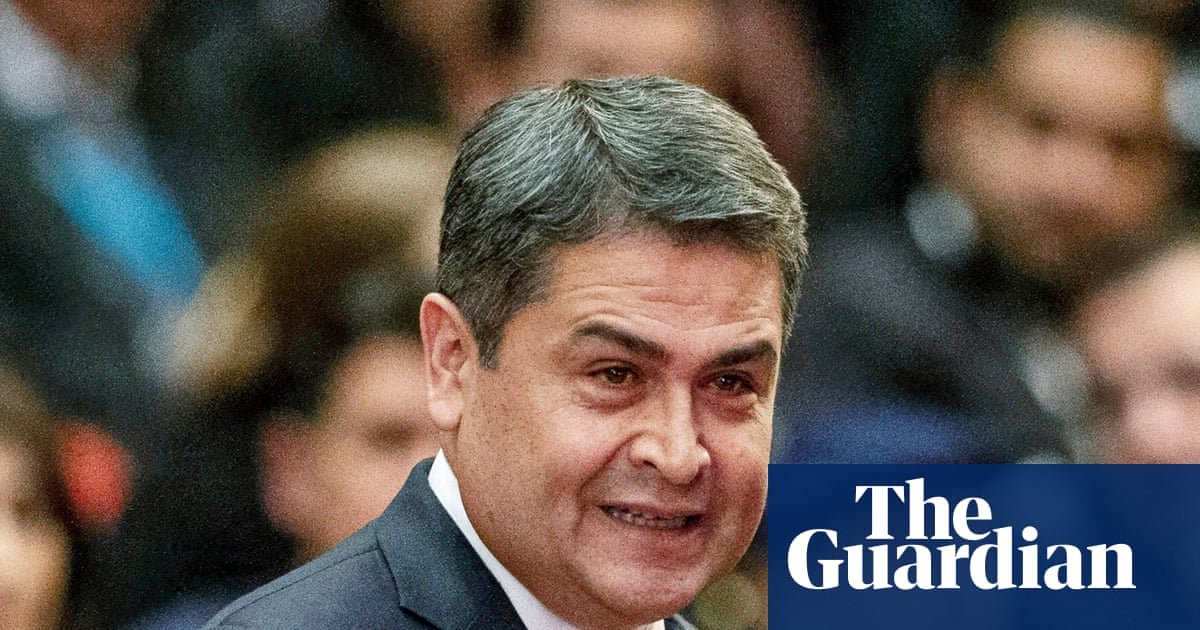
Donald Trump has said he will pardon former Honduran President Juan Orlando Hernandez, who is serving a 45-year prison sentence in the US on drug trafficking and weapons charges.
“I will grant a full pardon to former President Juan Orlando Hernandez, who, according to many people I greatly respect, treated very harshly and unfairly,” Trump said in a post on Truth Social on Friday.
In March last year, Hernandez was convicted in US courts of taking millions of dollars in bribes to protect US-bound cocaine shipments belonging to smugglers he had once publicly declared his desire to fight. Speaking during closing arguments in the trial, Assistant US Attorney Jacob Gutwillig said that Hernandez had “paved the cocaine superhighway for the United States”.
Hernandez was sentenced last June and called his conviction unfair. He served two terms as leader of the Central American nation of about 10 million people, and was considered a top US ally in Central America, particularly by the Trump administration.
Trump’s announcement to pardon Hernandez comes as Republican leaders are portraying themselves as tough on drug problems.
Trump’s administration designated several drug cartels as “foreign terrorist organizations” and used claims of a “war on drugs” to justify deadly air strikes on ships in the Caribbean and Pacific. These attacks have led the United Nations and other humanitarian organizations to condemn these actions as extrajudicial executions.
The post was part of a broader message from Trump endorsing Tito Asfura for president of Honduras in the upcoming elections, with Trump saying the US would support the country if he wins. But if Asfura loses the election this Sunday, Trump posted that “the United States will not throw good money after bad, because a wrong leader can only bring disastrous consequences to a country, no matter what country it is.”
Asfura’s party enjoyed a close partnership with Washington under Hernandez, who ruled from 2014 to 2022 and was arrested soon after leaving office.
Honduras has been ruled since 2021 by Xiomara Castro, who has cultivated close ties with Cuba and Venezuela, two countries mired in deep economic and human rights crises whose governments the Trump administration views as dictatorships and has repeatedly criticized.
Castro has leaned toward leftist stances, but has maintained a pragmatic and even cooperative attitude in dealing with the Trump administration, and has met with U.S. Homeland Security Secretary Kristi Noem. The president has also backed off his threats to end Honduras’ extradition treaty and military cooperation with the US. Under Castro, Honduras also deported its citizens to the US and served as a bridge for exiled Venezuelans who were later taken up by Venezuelans in Honduras.
Hondurans head to the polls on Sunday in a closely contested race, with polls showing Asfura, the former mayor of the capital Tegucigalpa, in a near tie with former Defense Minister Rixi Moncada of the ruling leftist Libre party and television host Salvador Nasralla of the centrist Liberal Party.
Whichever candidate wins a simple majority on Sunday will rule Honduras between 2026 and 2030. Some political analysts fear that more than one candidate may claim victory.
The Organization of American States and Washington have expressed concern over Honduras’s electoral process and said they are closely monitoring the election.
<a href