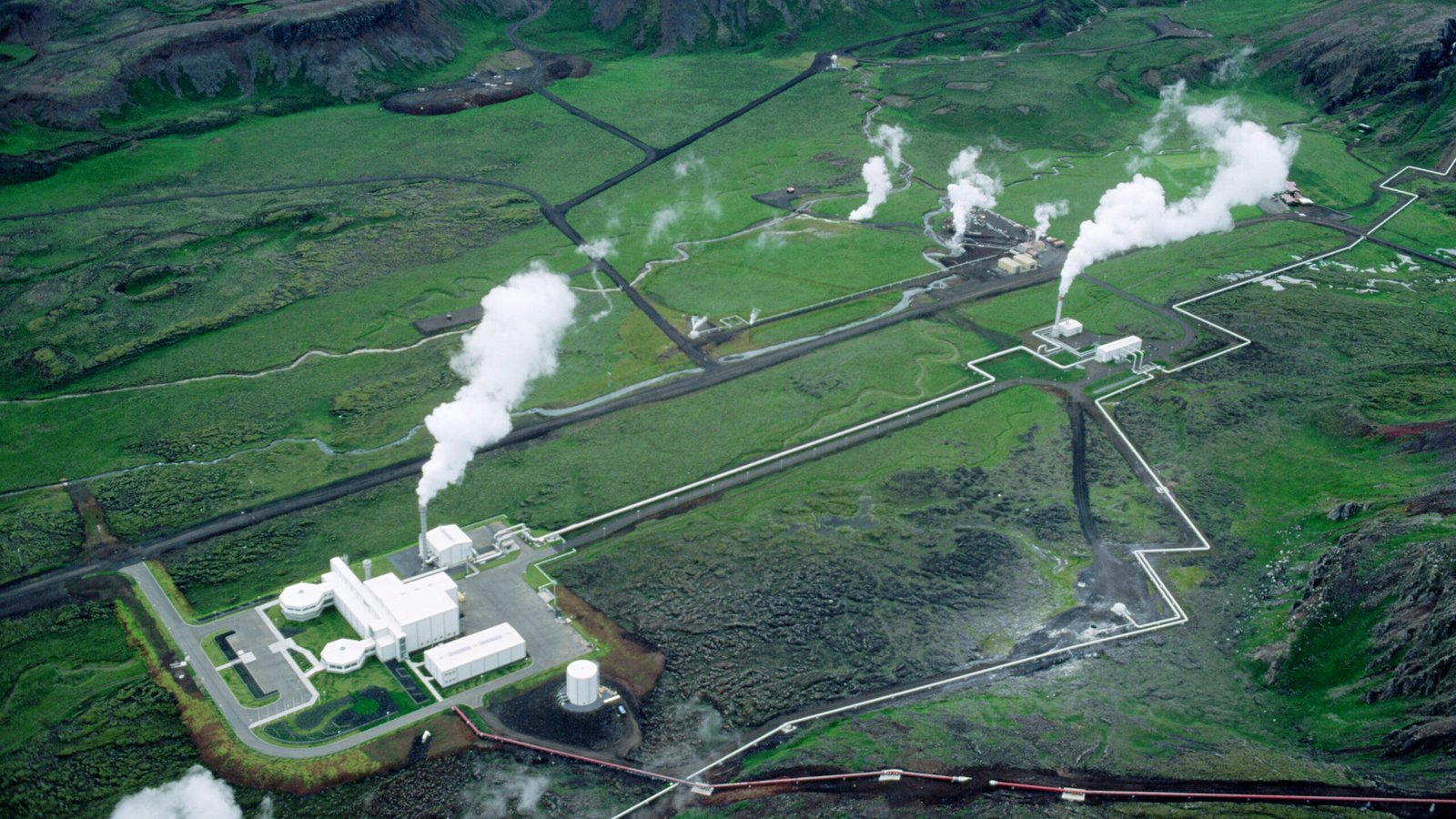
Progress on the project is another indicator that, despite opposition to wind and solar power, the Trump administration and Republicans in Congress appear to support geothermal energy.
President Donald Trump issued an executive order declaring an energy emergency on his first day in office expressing support for a limited mix of energy resources, including fossil fuels, nuclear power, biofuels, hydropower, and geothermal energy.
The One Big Beautiful Bill Act, passed by Republicans and signed by Trump in July, immediately eliminates tax credits for wind, solar and electric vehicles. However, the bill largely retains the geothermal heating and cooling tax credits allowed under the Inflation Reduction Act of 2022.
The restructuring of the U.S. Department of Energy announced last month eliminated the Office of Energy Efficiency and Renewable Energy, but kept the Office of Geothermal Energy as part of the newly created Hydrocarbon and Geothermal Energy Office.
“The fact that geothermal is on this administration’s agenda is quite impressive,” said Nikki Bruno, vice president of thermal solutions and operations services at Eversource Energy. “It means they believe in it. It’s a bipartisan technology.”
Plans for the expansion project call for nearly doubling Framingham’s geothermal network capacity at about half the cost of the initial buildout. Part of the estimated cost savings will come from using existing equipment rather than duplicating it.
“You’ve already installed all the pumping and control infrastructure, so you don’t need to build a new pump house,” said Eric Bosworth, a geothermal expert who runs the consultancy Thermal Energy Insights. Bosworth oversaw the construction of an early geothermal network in Framingham while working for Eversource.
The efficiency of the network is expected to increase as fewer boreholes will be required for its expansion. Magawi said this improvement is due to the different heating and cooling needs of different buildings, which balance each other out as the network grows.
Bruno said the project is still awaiting approval from state regulators, with Eversource aiming to begin construction by the end of 2026.
“What we are seeing is the birth of a new utility,” Magavi said. Geothermal networks “can help us address energy security, affordability, and many other challenges.”
This article originally appeared on Inside Climate News, a nonprofit, nonpartisan news organization covering climate, energy and the environment. Sign up for their newsletter here.
<a href