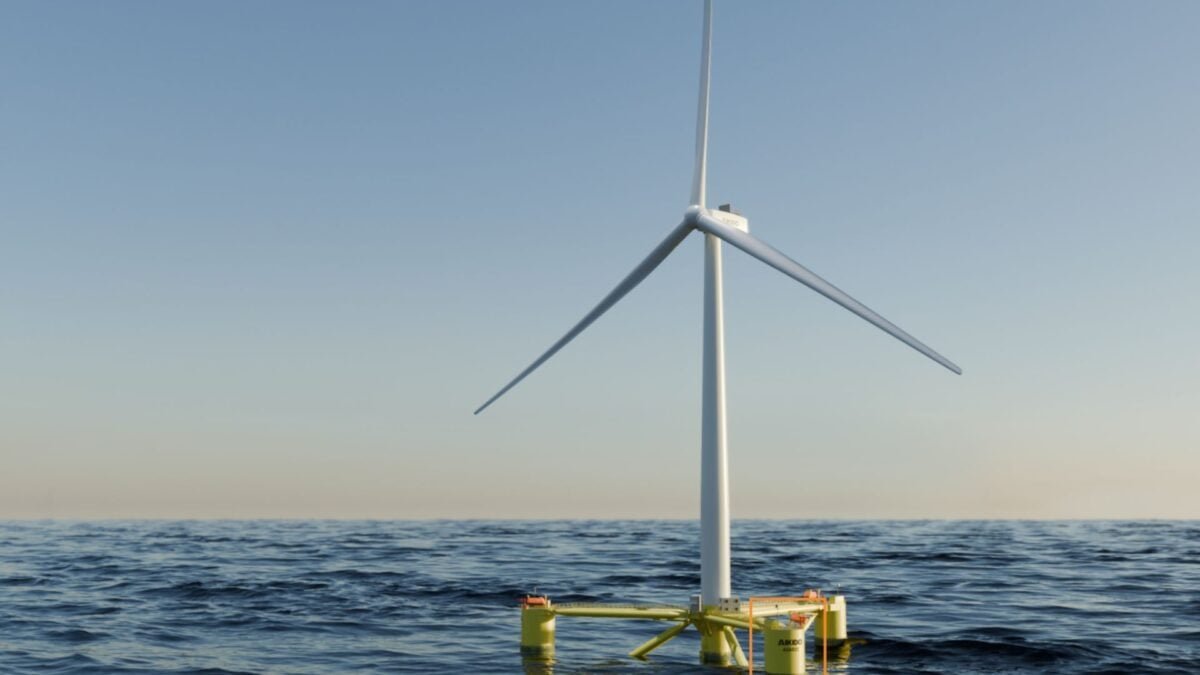

One such company is Aikido Technologies, a California-based floating wind energy developer. On Tuesday, the startup unveiled plans to place data centers inside the underwater tanks that power its turbine platforms. Aikido says the system will host 15 to 18 MW of turbines and 10 to 12 MW of AI compute with integrated battery storage. It plans to test a 100-kilowatt prototype off the coast of Norway by the end of the year, IEEE Spectrum reports.
“Before we go off-world, we must go offshore,” Sam Kanner, CEO of Aikido Technologies, said in a statement. “Aikido is well-positioned to integrate proven, offshore components with specialized data hall manufacturing techniques to build GW-scale AI factories faster, cleaner, cheaper and more efficiently than traditional technologies.”
Building sustainability into AI
Combining data centers with renewable energy infrastructure like this is a smart way to tackle AI’s energy problem. Traditional data centers consume large amounts of fossil-fuel generated electricity. In 2024, US data centers will consume 183 terawatt hours of electricity, or 4% of the country’s total electricity consumption that year. If they continue to expand at the current rate, this figure could more than double by 2030.
Aikido aims to reduce AI’s carbon footprint and power grid stress by co-locating data centers with renewable energy generation. Its system would consist of a large platform supporting the turbine in the center, with three legs extending outward from the base of the tower. According to IEEE Spectrum, there will be a ballast at the end of each leg that reaches a depth of 66 feet (20 m). The ballasts will hold the tanks filled mostly with fresh water to keep the platform afloat, but each tank will also house a 3 to 4 MW data hall overhead.
This design is convenient not only for power but also for cooling. Using the ocean as an “infinite heat sink”, Aikido’s system will use a passive primary cooling system that transfers heat from the data centers through the steel walls of the ballast tanks and into the surrounding seawater. The company claims that the thermal impact on the sea will be limited to “a few metres” around the structure.
The plan is to eventually build offshore wind farms capable of supporting calculations from 30 MW to more than 1 gigawatt, meeting the rapidly growing demand for high-density AI infrastructure while reducing the industry’s energy consumption and environmental impact.
Best solution? not enough
Aikido is not the only company developing subsea data centers, but it appears to be the only company looking to directly scale electricity to offshore wind infrastructure. However, it is worth noting that Westfalenwind-Group in Germany has entered the operational development phase of its Windcourse project, which is deploying onshore turbines with integrated data centers in towers.
While Aikido’s offshore approach has some advantages, it is not without drawbacks. One challenge is the current state of the floating offshore wind sector, which faces significant developmental delays, rising costs and high interest rates as government subsidies run out. Kanner told Data Center Dynamics that Aikido hopes to reboot the struggling sector by revamping the business model.
But there are also technical challenges. Daniel King, a research fellow at the Foundation for American Innovation, told IEEE Spectrum Aikido may face engineering challenges due to the salinity of the marine environment and the debris that can damage infrastructure. There may also be additional regulatory barriers aimed at protecting marine life from heat discharge, he said.
Prototype testing will provide more information about how feasible the Aikido approach actually is. For now, at least, it’s encouraging to see another renewable energy company exploring new ways to support the rapid growth of AI.
<a href