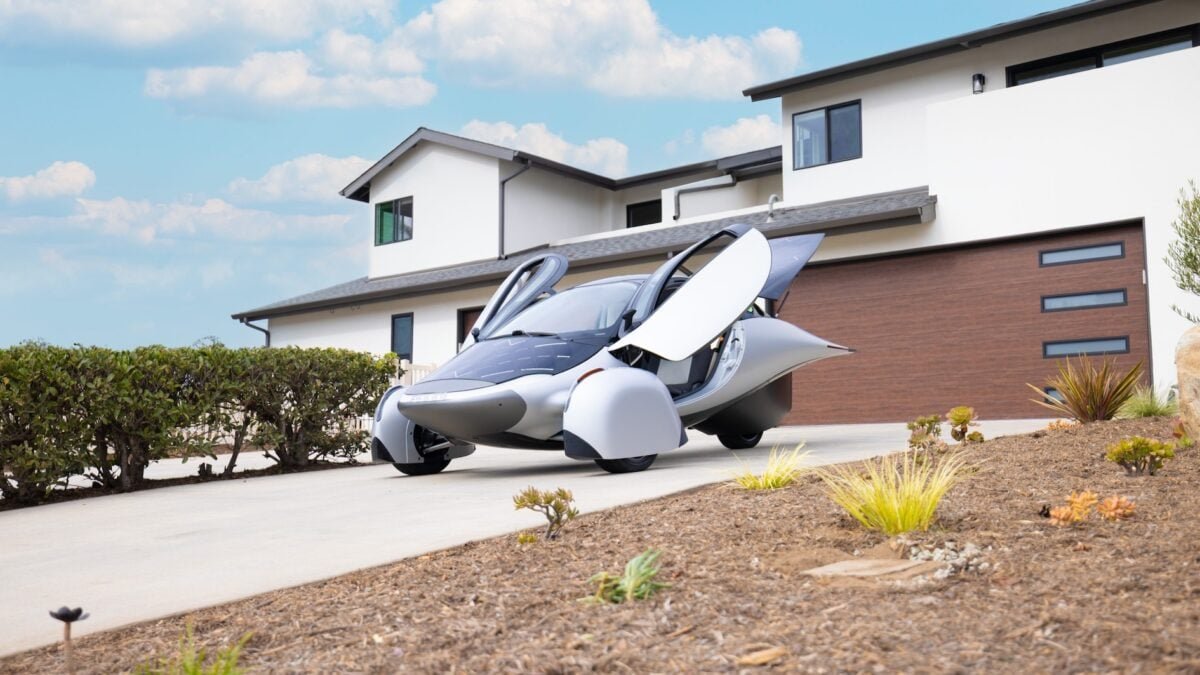
Aptera announced Tuesday that it has completed rolling out the first vehicle from its validation assembly line. The car will now be used for testing as the company works towards regulatory certification.
“The completion of the first vehicle off our low-volume assembly line is a significant milestone for the entire company,” Aptera co-CEO Steve Fambro said in a press release. “These first vehicles will be used to complete the key tests and optimizations required to sell our first vehicles to customers.”
Aptera is a California-based solar EV startup. It was originally founded in 2006, but went through several false starts, including liquidation in 2011. It was re-established by its original founders in 2019 and has since seemed to be finding its feet.

Now, the company is developing an EV with a futuristic two-seat, three-wheeler, aerodynamic design equipped with solar panels. The vehicle is engineered with special attention to fuel efficiency using extremely lightweight materials, so most of the energy it uses is spent propelling it rather than carrying extra weight or fighting air drag.
Interested customers can already reserve purchase for the solar EV. A variety of options are listed on the company’s reservation page, with estimated driving ranges between 250 and 1,000 miles on a single charge. Solar panels covering the car could also add 40 miles of driving per day.
The company claims to have received 50,000 reservations, with a total potential revenue of over $2 billion.
The news is a welcome sign of innovation in US EVs, as mainstream manufacturers are lagging behind China in the global EV race.
In the last update in January, the company had announced that it had completed raising $9 million in equity from institutional investors. In the same update, Aptera said it is working on building six cars on its validation assembly line, with four more cars planned for the future.
The line includes 14 stations where technicians assemble the vehicles, allowing the company to test its manufacturing process and refine the way it makes the cars. The vehicles produced on the line will also be used for a number of tests including thermal verification, brake performance and non-destructive testing.
“These vehicles take a huge step forward from anything we’ve built before. For the first time, we’re seeing what the production line of the future could look like,” co-CEO Chris Anthony said in a statement. video update In those days. “This work is about validating the vehicle, validating the assembly process, earning our certifications and taking what we learn straight into the production phase.”
Anthony said the company aims to have Aptera vehicles on the road by the end of this year.
<a href