
Epilepsy isn’t something we typically associate with specific geographic areas, but new research suggests that’s a misconception — at least in the United States.
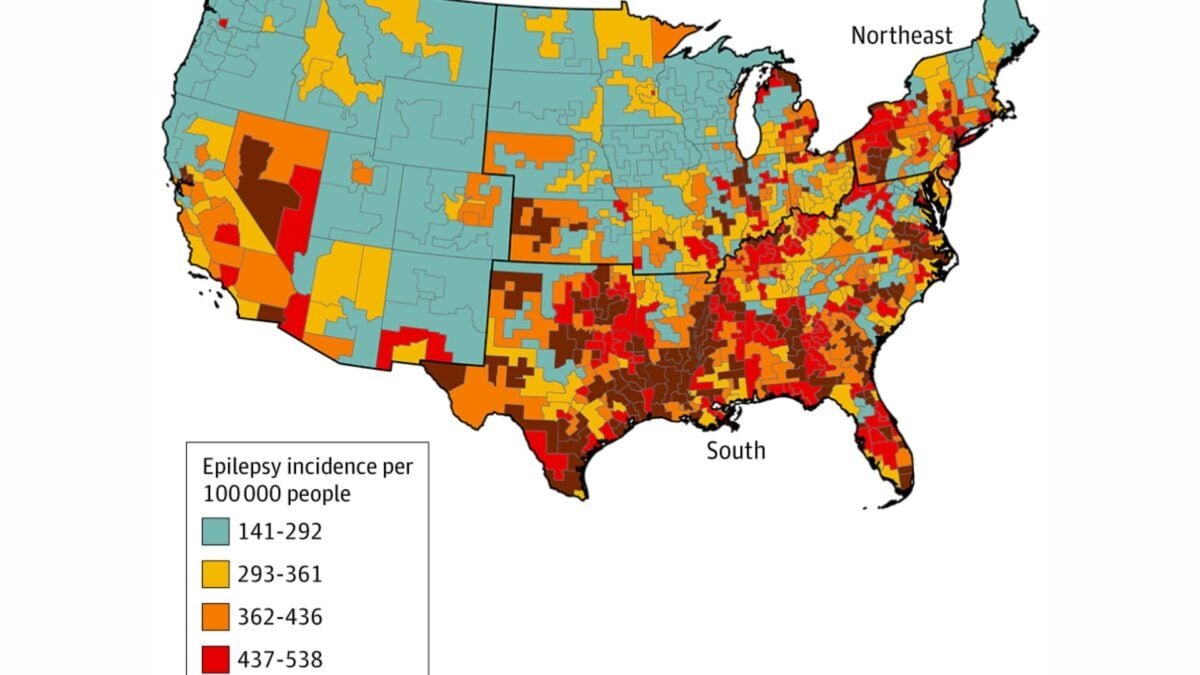
New research shows that epilepsy rates are much higher in some parts of the US than in others. Researchers examined Medicare data for Americans over 65 across the country. They found that older adults were significantly more likely to be diagnosed with a new case of epilepsy if they lived in the Southeastern United States. The researchers say the findings suggest the region may have unique risk factors that contribute to the neurological condition, such as hot weather or large health care disparities.
“Locally variable social and environmental conditions may contribute to the incidence of epilepsy in older adults and may help guide targeted prevention efforts,” the authors write in their paper published this month in JAMA Neurology.
epilepsy belt
Epilepsy is a disorder caused by increased abnormal electrical activity in the brain, leading to repeated seizures. There are many different causes and forms of epilepsy, but it is known that certain groups of people are more likely to develop it, including older adults.
While previous research has shown that the prevalence of diagnosed epilepsy can vary between different regions of the world and the US, the scientists behind the new study say theirs is the first to look at how often epilepsy affects older Americans on a national level.
The researchers are from Houston Methodist Research Institute in Texas and Case Western Reserve University in Ohio. They analyzed Medicare claims data from 2016 to 2019, focusing on newly diagnosed epilepsy cases in 2019. All told, about 20,000 cases were diagnosed that year. And epilepsy incidence rates varied significantly between regions of the U.S.
The highest rates were found in Southeastern states like Louisiana, Mississippi and Texas. The researchers also identified various factors that seemed to be related to epilepsy in states along this “epilepsy belt”—as the researchers have dubbed it. For example, rates of inadequate sleep were higher in Louisiana, Alabama, and Georgia; Southern states also had more days of extreme heat (heat index above 95 degrees) during the year; And uninsured rates were higher in states like Texas and Florida (young people without insurance are less likely to see a doctor, which can delay timely diagnosis).
While some of these factors are clearly thought to increase the risk of epilepsy, such as poor sleep, others have received less attention as potential causes.
“This is the first study to document such a strong association between extreme heat and incident epilepsy in older adults across the U.S., highlighting the importance of climate change in emergency preparedness, especially given the graying of the population,” study researcher Ciaran Kouroukian, professor in the Department of Population and Quantitative Health Sciences at Case Western Reserve University School of Medicine, said in a statement.
In particular, this same region of the US is also known to have high rates of stroke, leading researchers to call it the “Stroke Belt”. Since stroke is another major risk factor for epilepsy, that too is probably playing a role in giving rise to new cases.
areas of improvement
It is estimated that approximately 3 million American adults suffer from epilepsy. And while in most cases this condition cannot currently be cured, it can be treated effectively with medications, surgery, and management of potential triggers.
The researchers hope that their findings can help improve epilepsy prevention and mitigation efforts through various public health interventions in areas of the country where people are most at risk.
“These may include improving sleep health, increasing resiliency to heat, and reducing transportation and insurance-related barriers to care,” they wrote.