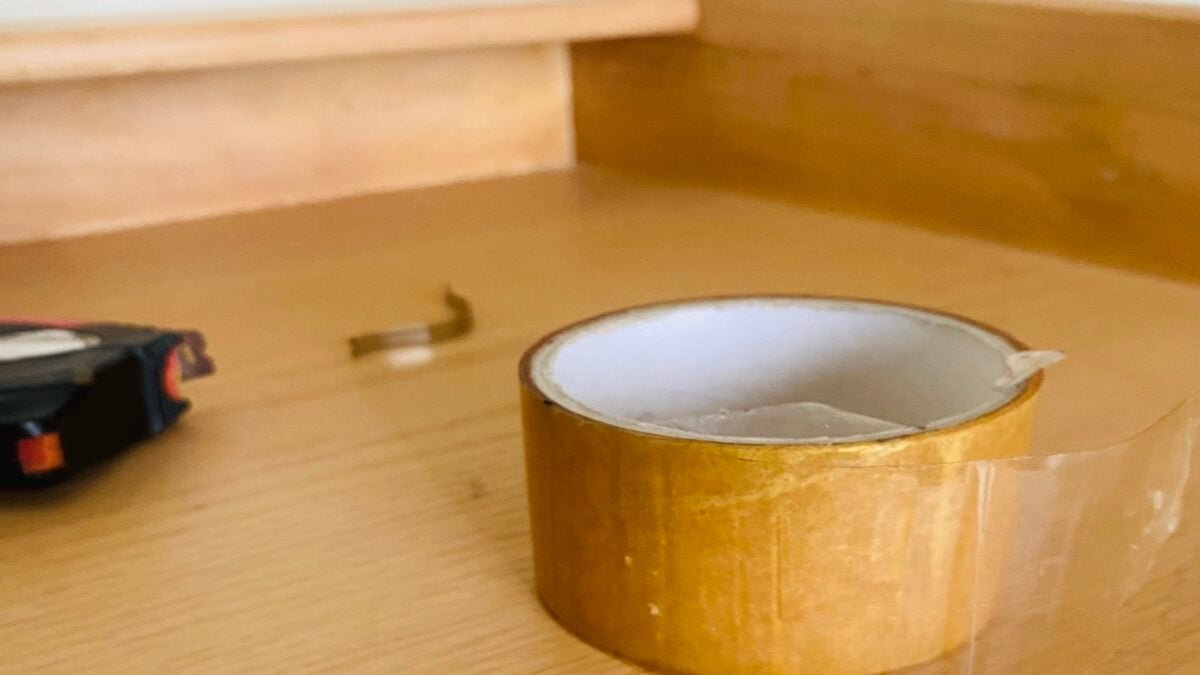

An international team of physicists used high-speed cameras and sensitive microphones to capture ordinary Scotch tape as it separates from its roll, and identified a train of shock waves responsible for that crackling sound. The results are detailed in a study published in Physical Review.
unique case of scotch tape
Although seemingly basic, Scotch tape has long been on the minds of physicists. Minnesota engineer Richard G. Drew invented transparent waterproof tape in 1930 using a mixture of oil, rubber and resins on a cellophane backing.
In 1939, scientists discovered that peeling Scotch tape in the dark produced a visible blue glow due to the build-up of electrical charge and the sudden bursting of the adhesive. This phenomenon is known as triboluminescence, which is why diamonds glow when cut.
Later in 1953, a team of Russian scientists reported that peeling Scotch tape in a vacuum had enough energy to generate X-rays. As the adhesive peels off, the separation of opposite electrical charges causes electrons to jump from the sticky tape to its back side at high speed.
Then came the sound that Scotch tape makes when it is peeled from its roll. Scientists started trying to unravel the mystery of the crackling sound a decade ago.
In 2010, a recent study co-author Sigurdur Thorodson of King Abdullah University in Saudi Arabia used ultra-fast imaging to capture a sequence of transverse cracks traveling at supersonic speed to a separate part of the tape. A follow-up study in 2024 confirmed that the crackling sound was directly linked to transverse cracks, although the mechanism behind it remained unknown.
roll the tape
For the new study, the team of scientists recorded the fractures using two ultra-high-speed cameras, as well as capturing sound with two synchronized microphones.
The results ultimately filled the gaps in previous studies. As the adhesive peels off, it does not come off evenly, but rather bursts into narrow bands that travel sideways across the tape. These transverse fractures travel at speeds between 560 and 1,340 miles per hour (250 to 600 meters per second), which is about twice the speed of sound.
The fractures leave a partial vacuum between the tape and its solid backing, but because they travel so quickly, there is not enough time for air to immediately fill the empty space. According to the study, the void continues to move along the fracture until it reaches the end of the tape and falls into the stagnant air outside. When the fracture tip reaches the edge of the tape, the collapsing void triggers a sound pulse. And then we hear that infamous scream.
Keep this in mind the next time a strip of tape distracts you – you’re not just hearing adhesives at work, but also the subtle sonic boom that screams over a simple roll of tape.
<a href