Why the auteur is the most influential director in Hollywood
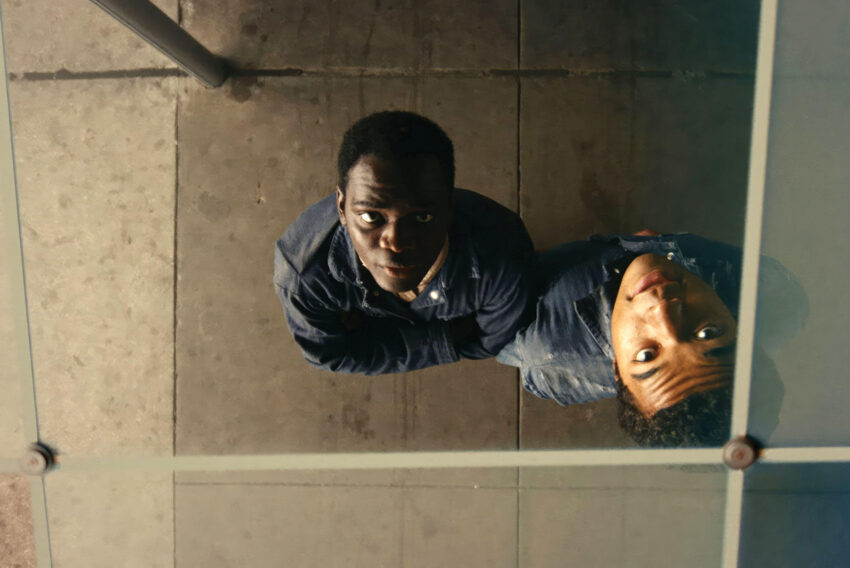
Ross is a fiercely independent artist. His first film, the lyrical 2018 documentary Hale County This Morning, This Evening, was also nominated for an Oscar. Afterward, he refused Hollywood’s overtures for years. So why did he take a meeting with the producers who reached out to him about making a studio-financed, big-budget adaptation of Nickel Boys? Ross’s explanation was simple: because one of them had produced Terrence Malick’s 2011 film, The Tree of Life.
Ross’s reverence for Malick is plain in his films, which, like Malick’s, rely on extended montages of the everyday and do away with the conventional rules of cinematic storytelling, hovering instead between distant, melancholy reverie and hyperfocused, lived-in specificity. And he is not the only recent filmmaker who has fallen under Malick’s spell. Indeed, Malick’s sensibility, visual style, and working methods have had a profound influence on some of today’s best and most interesting directors.
The same is true of the director Clint Bentley’s newest film, Train Dreams, an adaptation of Denis Johnson’s 2011 novella about the unremarkable life of a logger and railroad worker in the early years of the twentieth century. Weaving episodes from its character’s life into an elegiac collage that incorporates domestic bliss, harrowing tragedy, and melancholic resignation, Train Dreams—which premiered at the Sundance Film Festival in January and was quickly acquired by Netflix—unfolds across 102 minutes, yet seems to contain a whole world. Its protagonist, played by a reserved Joel Edgerton, is a simple man who occasionally questions his place in the universe but never understands it, save for a brief moment near the end when he takes a ride in an airplane—something he’s never done before—and, in one shining (and recognizably Malickian) instant, sees the shape of his life and feels something like transcendence.
Many of Malick’s films have been critically acclaimed, and two have received Oscar nominations for Best Picture (albeit without much chance of winning). But none could be called box-office hits, and some have been savaged by critics. Indeed, thanks to his fondness for oblique storytelling, poetic voice-over, and overt spiritual themes, Malick’s oeuvre has become one of the more contentious in cinema. Each new release inspires debate over whether the film at hand is a deep, philosophical masterpiece or boring, pretentious drivel. Young directors looking for heroes tend not to gravitate toward divisive religious artists whose movies don’t make money or win awards. So what accounts for Malick’s impact on twenty-first-century American film?
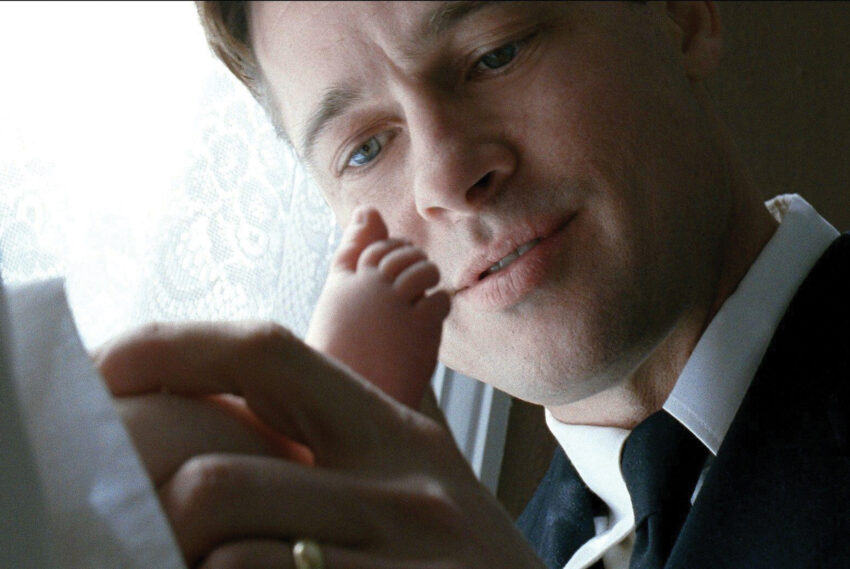
This kind of earnestness stood out in an age of relentless irony and snark. It served as a corrective to the glossy productions of Hollywood in its imperial phase, that period of the late 1990s and early 2000s, when budgets ballooned and American cinema, armed with state-of-the-art CGI and desperate to service a growing international market, became increasingly driven by fantasy spectacle and special effects. Malick’s films were a rebuke to even the hip grittiness of independent films of the era. He had an eye for light and an ear for music, he immersed viewers in color and texture, and he used his classical scores to underscore the glory of what he saw. Handcrafted, personal, achingly sincere, and at times proudly “flawed,” his pictures stood out against both the mainstream and the underground.
By the end, we are overwhelmed with emotion for this unremarkable life lived in near anonymity.
Malick’s effect on George Washington is undeniable—rare was the review that didn’t mention the connection—and it is also clear in Green’s second feature, All the Real Girls (2003), an atmospheric and largely uneventful romance defined by the passions of the two shy lovers at its center. Noel (Zooey Deschanel) and Paul (Paul Schneider), like Malick’s characters in Badlands and Days of Heaven, are not extroverted or articulate. But Green’s film thrums with a visual splendor that reflects the characters’ longing, turning another depressed Southern town into a vibrant emotional landscape.
Zhao’s films also highlight the great beauty of the otherwise unremarkable. Her masterpiece, 2017’s The Rider, follows a wounded rodeo cowboy (played by Brady Jandreau, a real-life rodeo star who sustained a career-ending head injury) from a Lakota Sioux reservation in South Dakota as he struggles with his inability to ride again. The film is made up of small moments, highlighting brief interactions and quotidian actions, but Zhao’s shooting and cutting, much like Malick’s, elevate these scenes toward the transcendent, finding a sacredness in the existence of a character who has lost his sense of purpose.
The same could be said of Bentley’s Train Dreams, which follows a man with very little direction in the world: he’s an orphan, raised in poverty, who finds work as a logger and spends his years felling trees and building railroads. Though he sees racism and murder around him, he can do nothing about it. He finds happiness by starting a family but then loses that family to a raging wildfire. The film’s rhythms are not those of a typical drama; for all the squalls of guilt and grief, the movie moves with a steady cadence that suggests that the mysteries, tragedies, and glories of life are all part of the same thing. This seems like it would result in a cold, opaque film, yet by the end, we are overwhelmed with emotion for this unremarkable life lived in near anonymity, a life that is more like our own than we might want to admit.
You can also see Malick’s philosophical influence in three films directed by Laura Dunn (all of which he produced): The Unforeseen (2007), about the dire social and environmental consequences of a mining company’s development of a vast patch of Austin real estate, Look & See: A Portrait of Wendell Berry (2016), about the life of the titular Kentucky farmer, writer, and activist, and All Illusions Must Be Broken (2024), about the American cultural anthropologist Ernest Becker’s ideas around the human denial of mortality and self-knowledge. In each, Dunn portrays a society that is fraying at the seams owing to its increasing disconnection from the natural world and the organic patterns of life. Her films avoid the density of political and philosophical jargon. Instead, they create meaning through images of ordinary people: children playing, adults working in the fields, reconnecting viewers with a different state of being. The films’ form embodies her overall thesis that, despite our endless efforts to deny it, we humans are not separate from nature but inextricably part of it.
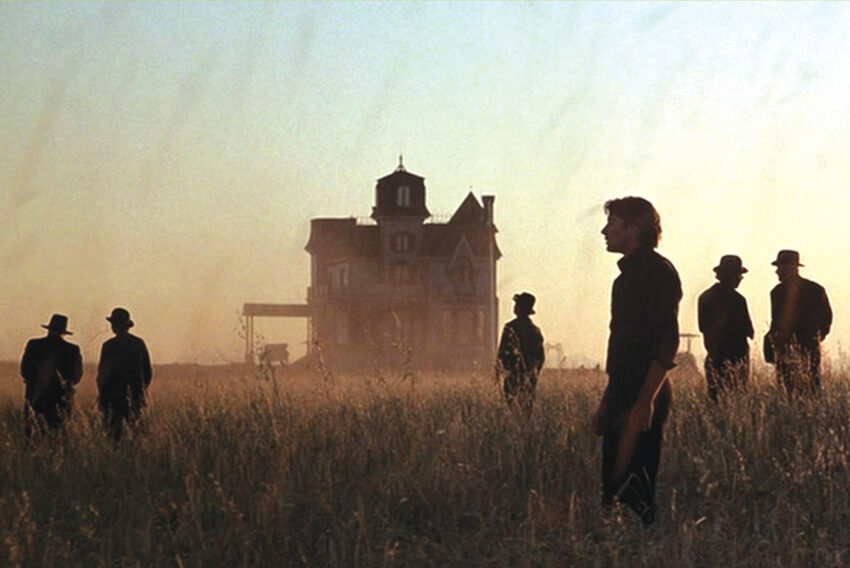
malick’s humanism is refracted through his visual style—the aspect of his films that’s most obviously influential. He loves to shoot with natural light whenever possible: “Vermeer yourself ” is a common direction he gives to actors, indicating that they should lean into the available light during a take. His fondness for shooting at the “magic hour,” that time when the sun is setting and the sky emits a distinctive dark glow, is legendary. He also talks about “quail hunting”: capturing unscripted moments when the light happens to be perfect and you find something unexpected and real. Then there are “rabbit holes”: quick scenes and exchanges shot when the light isn’t perfect. Natural metaphors, found moments, a dogged pursuit of real light—the way Malick approaches the act of shooting enacts his philosophical view of the world.
The lilting, fairy-tale surfaces of that film speak to a search for beauty that the characters cannot find.
By contrast, it’s jarring—if fascinating—when a film’s visual approach borrows from Malick but doesn’t match the sensibility at work. That’s the case with The Assassination of Jesse James by the Coward Robert Ford (2007), a remarkably beautiful Western directed by Andrew Dominik, who worked as an uncredited cameraman on The New World. The film has a twilight grandeur and a fascination with the natural world that suggests Dominik learned quite a bit working for Malick. But despite the unmistakable surface similarities, Dominik’s dark moral vision bears little resemblance to Malick’s. The outlaws of the James gang live in a universe of endless, savage scrutiny, fearful of both the law and their own viral, panopticist distrust, with each member set against the others. The lilting, fairy-tale surfaces of that film speak to a search for beauty that the characters cannot find; Dominik longs for Malick’s vision of grace but sees no evidence of it. Or maybe he just doesn’t really want to find it.
Malick does not rely on the nineteenth-century theatrical conventions that most moviemakers remain bound to, with their focus on acts and protagonists and inciting incidents and A and B storylines. His films also avoid the novelistic, flowing instead like a series of thoughts, or memories, or maybe rivers. His is an intuitive and almost abstract filmmaking process that deprioritizes the presentational and the narrative. Malick focuses on collecting images, ideas, offhand moments, and sounds that can then be used during editing, applied almost like brushstrokes in a painting.
He also welcomes spontaneous suggestions on set and encourages experimentation. There are three editors credited on The Thin Red Line, four on The New World, and five on The Tree of Life; for the latter, the director reportedly invited students from the University of Southern California and the University of Texas at Austin to come in and try their hand at cutting footage. “Kids don’t censor themselves—their brains are in a different place,” the editor Billy Weber, one of Malick’s longtime collaborators, told me at the time. “So we had students give it a shot. And we’d have interns come in at night and cut scenes.” This is, to be clear, nothing like the way most other movies are put together. All too often, a film production is like a train that can’t be stopped or set on a different course once it leaves the station. But Malick has found ways to guide the train gently off the tracks—and in new, unexpected, undiscovered directions. It’s easy to see why other directors might be drawn to his less regimented approach.
Along the way, the director found himself fascinated with the off-the-cuff observations made by another one of his leads, fifteen-year-old Linda Manz, and recorded her describing scenes from the movie in her own words; he eventually shaped that into one of the most indelible voice-over narrations in cinema history, an offbeat series of childlike reflections that provide a poetic counterpoint to the elemental storyline. Everything about Malick’s evolving approach speaks to a heightened sense of possibility, and to a desire to reinvigorate the frustrating rhythm of film production with openness, spontaneity, and discovery.
What’s remarkable about this approach is that despite his seemingly scattershot and impulsive methods, Malick’s films possess an aesthetic unity. Ross suggests something similar when talking about his own work. In an interview around the release of Nickel Boys, he described to me the collage-like quality of his film: “It’s jumping time, and jumping textures, and jumping images, and points of view, and focal lengths, and sounds, but also it’s coherent.”
influence can be a straitjacket. In 2014, A. J. Edwards, who had worked as an editor on two of Malick’s films, released The Better Angels, a black-and-white meditation on Abraham Lincoln’s years as a young man living in rural Indiana. It’s a bold movie in many ways, almost confrontationally nonnarrative and context-free; aside from a brief coda set immediately after his assassination, we see almost nothing of Lincoln as a grown man or president. And yet there’s a curious emptiness at its heart. Filled with handheld reveries bathed in heavenly light, it replicates the yearning style of Malick’s work without the instances of genuine humanity that undergird his cinematic tapestries; though the characters in The Better Angels are based on real historical personages, they never come across as real people.
A similar emptiness afflicts David Lowery’s crime melodrama Ain’t Them Bodies Saints (2013), which has ravishing cinematography, ethereal music, and an elliptical narrative, all of which clearly owe something to Malick’s work. It follows the return of a fugitive to the woman he once loved and the child he has never met, and the tortured romance that ensues. Lowery explained at the time that he was not interested in another story about a crime but instead wanted to explore its emotional aftermath. But for all its loveliness, the film’s glancing storytelling has the opposite effect of Malick’s openness to the world; it dulls the senses, makes the characters and their feelings seem smaller and less significant. (Lowery’s more recent films owe little to Malick and are the better for it.)
Think of it this way: What use is Malick’s liberated style of working if a filmmaker merely replicates it? The most successful Malickian films borrow from his work but find ways to transcend it and to convey new ideas. Take RaMell Ross. In his first film, he used fleeting, beautiful glimpses into mundane moments to convey, in just seventy-six short minutes, the arc of his subjects’ lives. In Nickel Boys, he expanded the fragmented lyricism of his earlier film by crossing it with a first-person camera: the story is told almost entirely through shots that appropriate the perspectives of the two characters. The result is a work that is immersive and experiential, otherworldly and mythic. It’s also entirely his.
malick has always been frustrated with the typical methods of making movies. In fact, he seems to become restless even with his own methods. If he’s helped liberate other filmmakers, he has also continuously sought to liberate himself. That may be why what has remained constant throughout his work has been change. Even if certain aspects of his films—his love of natural light, his attention to found moments, his use of voice-over—have recurred, his subject matter, and his style, have never been fixed. The films that made his reputation in the 1970s—Badlands and Days of Heaven—are very different from the epics he made after his return to filmmaking, which are even less conventional in terms of narrative. The earlier pictures, compact and diamond-sharp, dance around their ideas, and their young protagonists don’t always grasp the gravity of their stories. Holly, the narrator of Badlands, is just as likely to talk about a movie star or a photograph as she is to talk about the fact that her boyfriend is a serial killer; Linda, the narrator of Days of Heaven, generally talks about everything and anything aside from the fact that her brother and his lover are cruelly betraying a dying man. This is very different from the prayerlike directness we find in the voice-overs for The Thin Red Line, The New World, and The Tree of Life. Many-voiced and at times even rambling, those later period films are pointedly diffuse: each scene, each thought feels like it could expand into a whole other movie; all the characters seem so resolutely alive.
Malick then pivoted again, following his trio of epics with a trilogy of low-budget works—To the Wonder (2012), Knight of Cups (2015), and Song to Song (2017)—which seemed at times to be not-so-veiled dramatizations of events from the director’s own life. These works were Malick’s first films to be set in something like the present. They are messier, more frenzied. The characters in these later pictures are rootless, always searching. And the filmmaking in them is centered more on movement than meditations on nature.
In his vision, our endless seeking makes us human and therefore holy.
Instructing the film’s team of editors, Malick gave them copies of Margaret Anne Doody’s introduction to a Penguin Classics edition of Samuel Richardson’s 1740 epistolary novel, Pamela, and pointed them to a line about how the author loved “the formless, the radiant zigzag becoming.” The phrase “radiant zigzag becoming” became their own unofficial title for the film, the editors told me; it spoke to the project’s energetic sense of movement. It also reflected the fact that Malick’s characters were always in the process of self-actualizing without ever fully doing so.
Malick had Bardem go into real people’s lives—into trailer-park homes, a county jail, a homeless shelter—and had Richards document those people speaking to the actor’s clearly fictional priest. Only a small portion of the footage would be used in the finished feature, so Richards and Bardem developed a plan to make a separate film out of the material. In Thy Kingdom Come, Bardem says little; most of the picture consists of these people—drug addicts, inmates, a homeless couple, a former Ku Klux Klan member, a woman grieving a dead baby, and more—describing their experiences and their thoughts. There is no narrative, nor even much of an emotional through line. Aside from a couple of brief exchanges, there is barely any mention of God. And yet spirituality is ever present. These people know the priest isn’t real, but they open up to him as if he were; they do not, in any way, seem to be acting.
“Is this a true story?” Bardem asks in the opening narration. “Yes, I would say so. Is the priest a real priest? No. But it’s as if they were waiting for him.” The onrush of faces and lives that then ensues suggests the anticipation goes both ways: it’s as if the film were waiting for them. These people might not have found grace, but the camera eye—Richards’s but also Malick’s—finds grace in them. Thus, this riff on Malick reveals something essential about Malick’s work. In his vision, our endless seeking makes us human and therefore holy. The search for God is not a search for meaning; the meaning lies in the search itself. Through the films he’s made and the ways he’s made them, Malick has turned cinema into the vessel for that search.
<a href