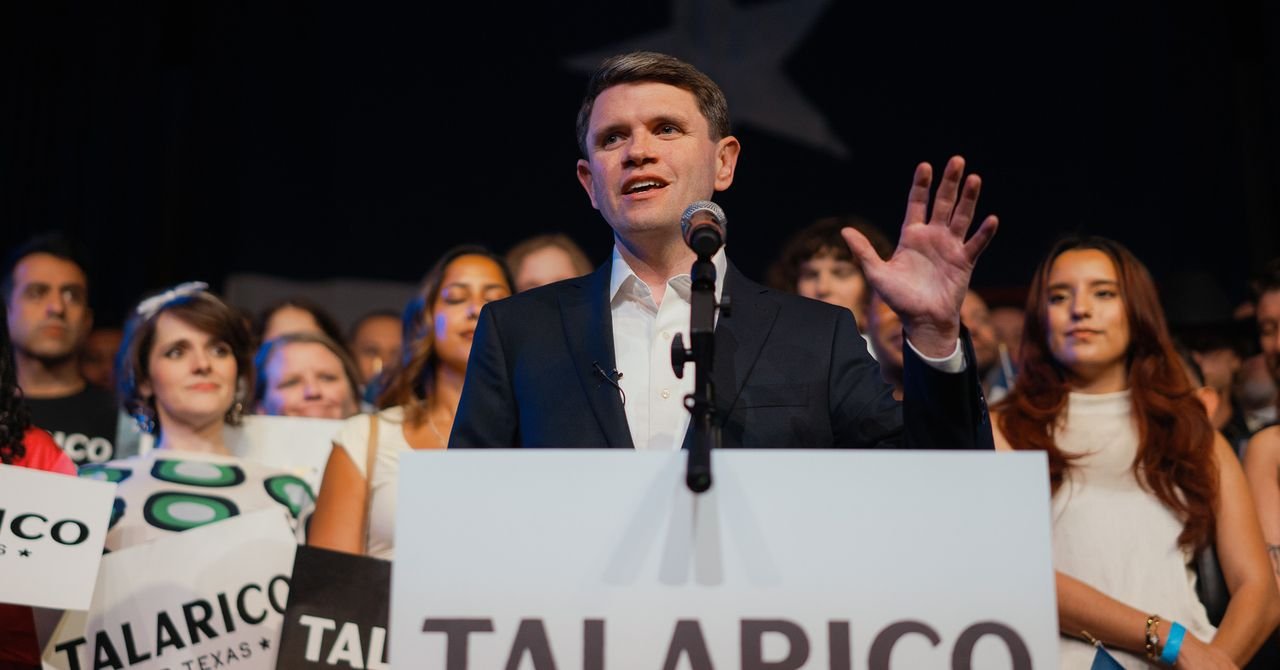
While both candidates boast immense followers on social media — Tallarico with 1.6 million followers and Crockett with 2.6 million followers on TikTok — it wasn’t just the candidates who drove the conversation. It was the creators around him who offered a preview of the digital battles to come in the midterms and, ultimately, the 2028 presidential race.
The Tallarico and Crockett campaigns ran markedly different digital strategies. Crockett has built her congressional brand on confrontation, which went massively viral last year after telling Marjorie Taylor Greene to have a “bleach-blonde, poorly-built, butch body” and telling Elon Musk to “fuck off.” Tallarico’s digital presence sounds like a populist sermon delivered on his own social media accounts. He delivered these sermons on unconventional platforms like the Joe Rogan Experience, rewarding him with countless viral clips.
But for the most part, the incendiary aspects of digital-focused campaigns came from outside the candidates. In January, the hosts of the pop-culture and comedy podcast “Las Culturistas” sparked a storm of criticism after discouraging listeners from supporting Crockett in an episode of the show. Matt Rogers, one of the hosts, said at the time, “Don’t waste your money by sending Jasmine Crockett, don’t do it.” The show faced immediate backlash from its viewers and Crockett supporters, forcing him to apologize.
It was the first in a series of online feuds that peaked in February, when a Dallas-based producer named Morgan Thompson claimed that Tallarico called former House representative Colin Allred a “mediocre black man.” The video, shared with her nearly 200,000 TikTok followers, went viral, spreading from pro-Crockett communities online and into the mainstream press. Responding to the allegation, the Tallarico campaign called the comments a “misrepresentation” of the candidate’s off-the-record conversation with Thompson, in which he called Allred’s campaign style “mediocre”, not the man himself.
“I would never attack him [Allred] Based on race,” Tallarico said at the time. ”As a black man in America, Congressman Allred has had to work twice as hard to get here. I understand how my criticism of the Congressman’s campaign may be interpreted given the painful legacy of racism in this country, and I care deeply about the impact my words have on others.
The episode highlighted an important question among strategists preparing for the 2026 midterm elections and the next presidential race: What role should creators play in campaigns? And how do you manage them? While working with creators has become common in both Republican and Democratic campaigns, the relationships are often loosely defined and difficult to control.
“There are a lot of factors that campaign staffers themselves have to deal with and think about,” says Kyle Tharp, who writes the Chaotic Era newsletter that focuses on digital politics. “Do I put them in the press risers at the rally, or do I give them advance VIP access? Do I give them a few minutes with the candidate? Am I going to probe their questions? Or do I just let them wrangle and hope for the best?”
President Donald Trump’s 2024 re-election campaign relied heavily on creators and podcasters to reach young, predominantly male voters. But many of those same creators have turned against Trump in the past year. In the lead up to the 2024 election, Trump appeared on “Flagrant”, a popular podcast hosted by comedian Andrew Schultz. But Schultz’s support for Trump soon turned to anger. Last summer, Shultz took issue with the administration’s failure to release files related to the Justice Department’s investigation of convicted sex offender Jeffrey Epstein. Since then, Schultz has repeatedly leveraged his platform to criticize the administration.
<a href