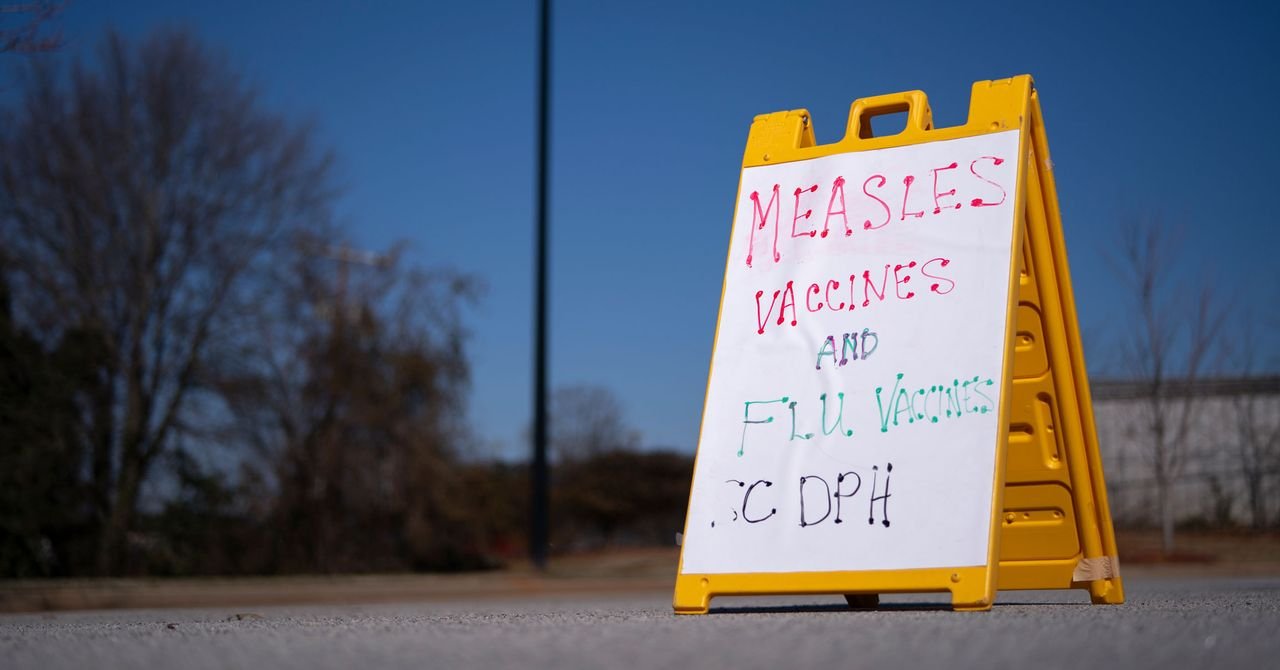
For several weeks now, the state has been witnessing a declining trend in new infections, with around 10 cases being reported per week. At its peak in mid-January, the state was reporting about 200 new cases per week.
The South Carolina outbreak is the largest measles outbreak in the U.S. in more than 30 years, according to data from the Centers for Disease Control and Prevention. The CDC has confirmed 1,281 cases of measles nationwide as of March 5 this year. This is more than half of the cases reported in 2025, which totaled 2,283.
Measles was declared eliminated in the US in 2000, a status achieved when there is no transmission within the country for more than a year. Despite declining cases in South Carolina, the US is now at risk of losing measles elimination status. According to the CDC, there have been 12 outbreaks in the US this year, including in Arizona, Texas and Utah.
South Carolina’s state epidemiologist Linda Bell is encouraged by the decline in new cases in her state, though she notes that with schools on spring break in March and April, there is the potential for greater exposure as families travel and visit tourist attractions.
“We are concerned and we must be mindful of the fact that we could see a surge again from the low number of cases that we are seeing now,” he said at a March 4 press briefing. “We fully expect the downward trend to continue, but we have to be cautious about the risk that we could see another surge.”
The outbreak began in October with only a few cases and has been concentrated in Spartanburg County. Low vaccination rates in schools helped spread the virus, with cases rising in January due to social gatherings around the winter holidays. According to Bell, churches have also been a major source of exposure.
Symptoms of measles, which include high fever, cough, runny nose, and watery eyes, usually do not appear until one to two weeks after exposure. The typical measles rash takes several days to develop, causing delays in diagnosing the infection. Measles can cause serious complications such as pneumonia and brain swelling, both of which have been documented in South Carolina. More than 93 percent of cases in South Carolina have occurred in people who were not vaccinated. Most infections have occurred in children under 18 years of age.
Bell said earlier modeling of the outbreak showed that South Carolina’s outbreak could last six months or longer. Now, it may end sooner than anticipated.
The outbreak has led to an uptick in measles, mumps and rubella (MMR) vaccine vaccinations in Spartanburg County and across the state. Measles vaccinations in Spartanburg County increased by 133 percent compared to February 2025, resulting in nearly 900 additional doses given, according to the South Carolina Department of Public Health. An additional 7,000 doses of measles vaccination were administered across the state in February, a 70 percent increase from the same period last year.
<a href