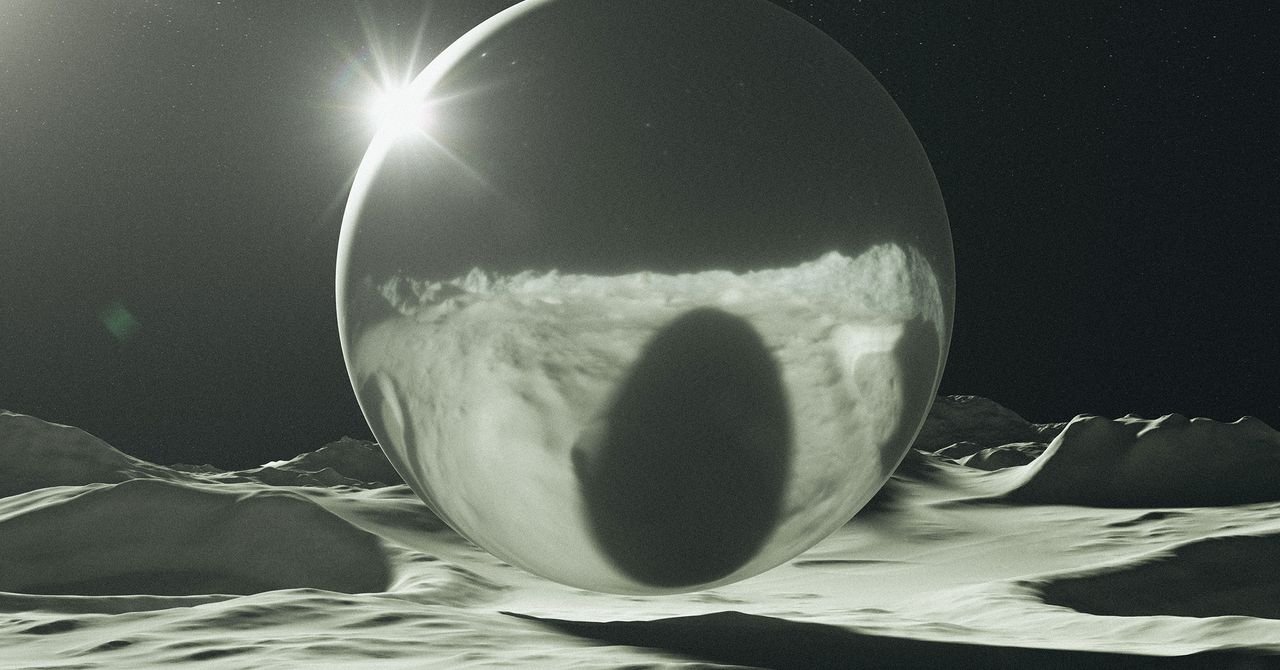
The discovery of the first interstellar objects in the Solar System within the last decade has led to speculation that they may be alien artifacts or spacecraft, although the scientific consensus remains that all three of these visitors have natural explanations.
That said, scientists have been speculating about the possibility of encountering alien artifacts since the beginning of the Space Age.
“In the history of technological signatures, there is a possibility that there could be artifacts in the Solar System,” says Adam Frank, a professor of astrophysics at the University of Rochester.
“We’ve been thinking about this for decades. We’ve been waiting for this to happen,” he adds. “But being a responsible scientist means adhering to the highest standards of evidence and not whining.”
This raises some intriguing questions: What is the best way to search for alien artifacts? And what should we do if we actually identify someone? Given that these technological signatures can run the gamut from tiny alloy pieces to massive spacecraft – or perhaps, some material unimaginable to Earthlings – it’s hard to know what to expect.
To meet this challenge, researchers are currently working on a number of techniques to search for signs of alien remains in our solar system, including those in orbit around Earth.
For example, Beatriz Villarroel, assistant professor of astronomy at the Nordic Institute for Theoretical Physics, has focused on a largely untapped observational resource: historical images of the sky taken before the human space age.
By studying archival photographic observations captured by telescopes before the launch of Sputnik in 1957, Villarroel has produced a portrait of the sky before it was speckled by our satellites. As head of the Vanishing and Appearing Sources during the Century of Observations Project (VASCO), she initially looked for any evidence that stars, or other natural objects, might be disappearing on these archival plates.
Villarroel instead found unexplained “transients” that looked like artificial satellites in orbit around Earth, long before Sputnik’s launch, which he and his colleagues reported in 2021.
She says, “That’s when I realized this is really a fantastic collection, not for searching for vanishing stars, but for looking for artifacts.”
Last year, Villarroel and his colleagues published three more studies about the discovery of alien artifacts near Earth in the Monthly Notices and Scientific Reports of the Royal Astronomical Society, a publication of the Astronomical Society of the Pacific, which have generated spirited debate among scientists. Researchers have suggested a range of alternative explanations for the transient changes, which may include instrumental errors, meteors, or debris from nuclear tests.
The mystery could potentially be solved with a dedicated mission to search for the artifacts in geosynchronous orbit, an environment about 22,000 miles above Earth. However, Villarroel doubts that such a mission will be greenlighted by any federal space agency in the near future, due to the controversial nature of the topic.
She adds, “There is so much taboo out there that unless you do this kind of investigation, no one will take such results seriously.”
Frank says he agrees that it is counterproductive to stigmatize the search for artifacts from other worlds, and the search for alien life more broadly. But he considers research on foreign artifacts to be a healthy and natural part of scientific inquiry.
<a href