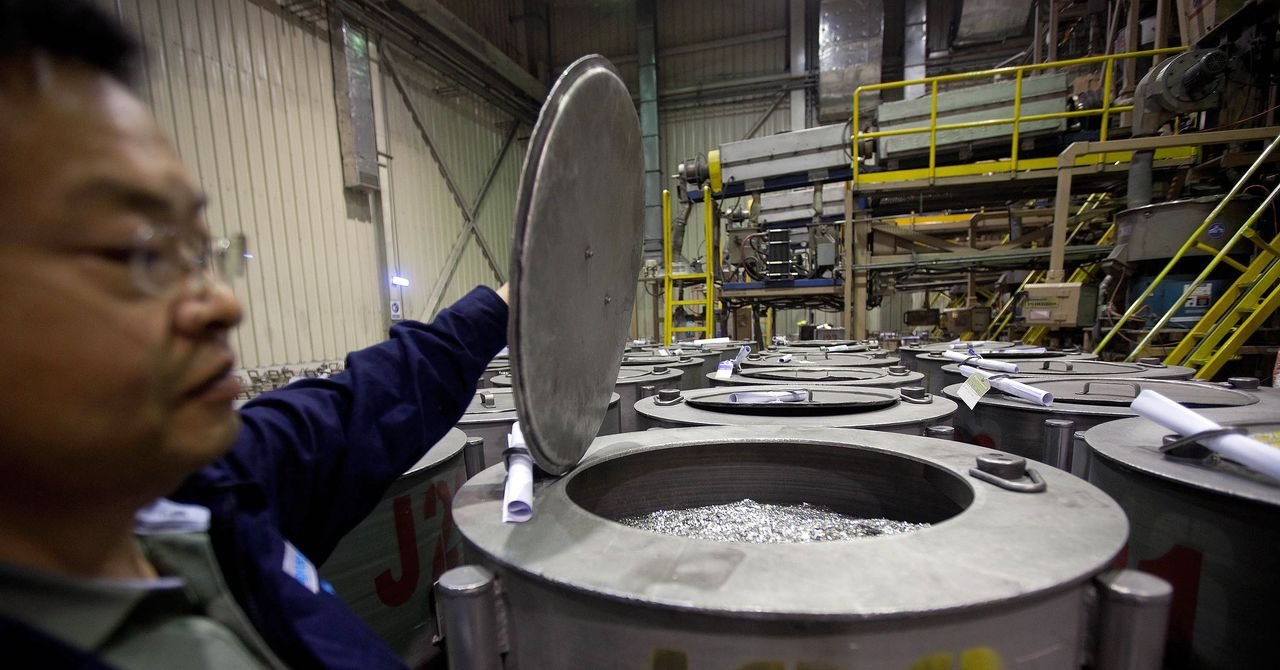
Although a late October meeting in South Korea between Chinese President Xi Jinping and his US counterpart Donald Trump raised hopes for peace, Chinese export restrictions imposed last April remain largely in place. In exchange for a similar suspension of the White House’s latest restrictions on technology supply chains, Beijing granted a one-year reprieve on the mandatory government licensing system for shipments of products containing rare earths and related materials (including products made abroad with at least 0.1 percent Chinese resources).
An important element in a market under pressure
But other measures introduced before the latest increase remain in place. The result is a tightening of international supply chains that threatens to slow advanced technology production, drive up costs and challenge entire industrial sectors. Yttrium plays a vital role in the functioning of contemporary technologies. Without yttrium, the production of aircraft engines, high-efficiency turbines, advanced energy systems and semiconductors would immediately slow.
The value of yttrium lies in its ability to provide thermal and mechanical strength to materials subjected to extreme temperatures. For example, jet engine blades must withstand high heat and intense vibration for long periods of time; Yttrium is what allows them to maintain structural integrity and efficiency. The same is true for industrial chip manufacturing, where yttrium-based coatings protect machinery from chemical wear and ensure precision in plasma etching. Its indispensable nature has made it a key element of modern technology and military.
China’s role
The problem is that, like many other resources, China controls almost the entire global yttrium supply chain. It not only produces most of it, but also has the know-how and infrastructure to refine and separate it from other rare earth minerals, a complex and technologically advanced process. According to US data, the United States imports 100 percent of its yttrium needs, with 93 percent coming directly from China. Such excessive dependence creates enormous geopolitical vulnerabilities.
When Beijing decided to impose export restrictions in response to US tariffs, the entire international supply structure began to falter. Companies reported delays, difficulties in obtaining licenses, and uncertainty about delivery times. In the rare earth trade, lack of predictability is often more damaging than low quantities: an industry accustomed to on-time delivery can be in trouble with a delay of even a few weeks.
The effects were immediate. In Europe, yttrium oxide prices have soared, up 4,400 percent since the beginning of the year. Aerospace companies, which rely heavily on this material, have expressed concern and demanded immediate measures from the US government to expand domestic production. The semiconductor industry is no less concerned: some companies have described the situation as a “serious” threat, predicting impacts on costs, efficiency and production timelines. Gas-fired power plants, which use yttrium in the protective coatings of turbines, are also paying more attention to Chinese developments, although they say they have not yet experienced any disruption.
<a href