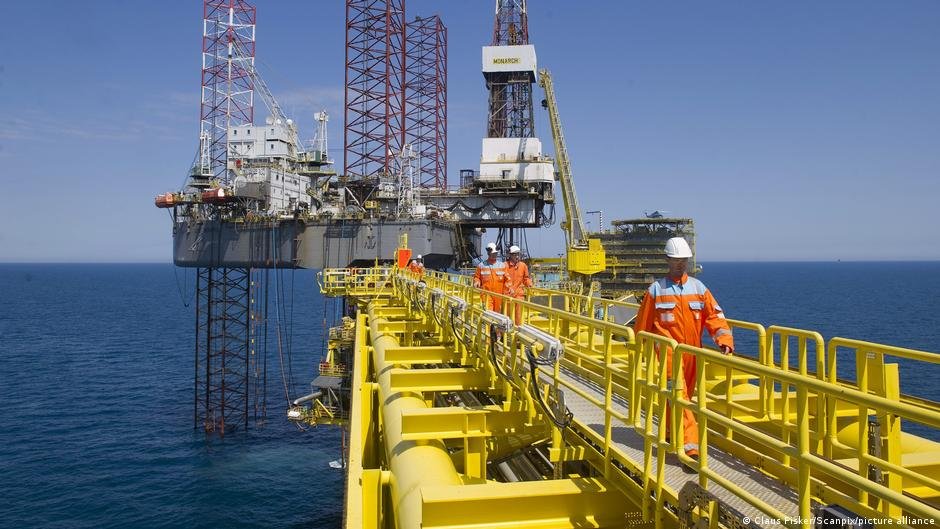
In the US, Donald Trump has again pulled out of the Paris Agreement and withdrawn support for renewable energy in favor of oil and gas. Similar changes are emerging elsewhere, as climate skeptics and denialist parties gain strength in Europe.
In the corporate world, enthusiasm for environmental, social and governance (ESG) frameworks has also cooled amid political opposition and changing market priorities. And at international climate conferences, the scale of lobbying by big oil and gas companies has been astonishing.
“At both COP28 and COP29, fossil fuel lobbyists came by the thousands, dwarfing many delegations, especially those from the countries most vulnerable to climate change,” said Erica Lennon, senior counsel at the Center for International Environmental Law in Washington. This year’s UN climate conference, COP30, in Brazil is no different.
Together, these lobbying efforts have weakened climate policy, says Richard Blanchard, director of the Center for Renewable Energy Systems Technology at Loughborough University, UK.
keep global temperatures down
Under the Paris Agreement, countries promised to slow global warming to a maximum of 2 °C (35.6 °F) above pre-industrial levels, and ideally no more than 1.5 °C.
Now, the UN says the 1.5 degree target has been missed, and current pledges put the world on track to keep temperatures at least 2.6 degrees Celsius by the end of the century. As more fossil fuels are burned, the world is experiencing record-breaking heat and weather extremes.
While a recent study found that climate change would be much worse without the Paris Agreement, the transition to a world powered by clean energy is happening much more slowly.
“People are confused,” says Blanchard. Importantly, “there has been no decline in the amount of oil being drilled since 2015.”
But for some experts, the ferocity of this determination to keep extracting and using polluting energy sources is a sign not of the Paris Agreement’s failure, but of its reach. The sharper the resistance, the more it signals that the fossil fuel sector, which relies on burning oil and gas to sustain its business model, is feeling threatened.
“The Paris Agreement will significantly reduce their profits,” says Blanchard. His lobbying efforts, he says, “are evidence of his defensive position.”
What is working in the Paris Agreement
That defensive position reflects the changing energy landscape. Global investment in clean energy has overtaken fossil fuels every year since 2016. According to the International Energy Agency (IEA), clean energy investments will reach $2.2 trillion in 2025. (€1.9 trillion) – double the $1.1 trillion expected for oil, gas and coal.
Renewable energy is also expanding at a record pace, led by solar and followed by wind. Another IEA report By 2030, clean energy capacity for projects will grow faster in more than 80% of countries compared to the previous five years. China is building on that momentum through massive investments in solar and battery technology.
Some oil and gas giants are investing in green energy, but commitments vary. Blanchard says Exxon has supported carbon capture and hydrogen while boosting oil and gas production. Meanwhile, BP has scaled back renewable projects in favor of more drilling.
Fossil fuels still supply 80% of global primary energy. Even under optimistic clean-energy scenarios, oil and gas will remain essential through the 2030s and 2040s, as renewable generation, storage, and grid capacity increase.
For now, many producers are producing as much as possible before strict climate policies are implemented, or before renewable energy becomes so cheap and reliable that fossil fuels are no longer as attractive.
Blanchard says fossil fuel companies are worried. Market changes or regulations could make their hydrocarbon resources or infrastructure obsolete, leaving them with “stranded assets” with nothing to show for their large investments.
Paris Agreement sent a signal to the world
According to the Paris Agreement, countries are free to set their own emissions targets. The treaty’s only enforcement tools are transparency and peer pressure – a “naming and shaming” system that many see as a major weakness.
But its real power lies not in setting emissions targets, but in enabling industrial transformation, argues Nowroz Dubash, a professor at Princeton University’s School of Public and International Affairs.
“It’s ultimately about emissions,” he says, “but because emissions are the end point, it doesn’t mean it should be the starting point.”
He says that countries want to grow their economies and this requires more energy and more emissions such as carbon dioxide. The goal should be to supply this energy with as little carbon dioxide as possible.
“If you think about it that way, the problem of dealing with climate change is a problem of industrial transition,” says Dubash.
The deal has encouraged some businesses to bet on technologies they might not have tried otherwise.
“The really good news of the story is the fact that, I think, this renewable energy transition is now inevitable,” says Dubash. “The Paris Agreement was part of sending a signal of inevitability.”
International courts are leaving their mark
Critics have long argued that the Paris Agreement will struggle to drive a green energy transition because it only provides a framework and temperature targets for each country to cut emissions.
However, the situation is changing, and “the fossil fuel industry has not kept pace,” says Erica Lennon. If oil, gas and coal companies do not diversify, other companies will step into the void.
Governments also have a responsibility to regulate companies, including fossil fuel majors, and make sure they are not harming people or the environment, says Lennon, pointing to recent important opinions handed down by three different international courts, including the International Court of Justice.
Decisions like this “have put fossil fuel companies on notice,” says Lennon. “So, this is not about fossil fuel companies adopting the Paris Agreement, but about states fully complying with their obligations and regulating polluting industries.”
Edited by: Jennifer Collins
Additional reporting by Katharina Schantz
<a href